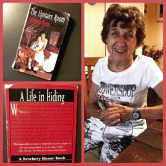

Seven years ago in August 2017, I drove to New York City on a singular mission: to meet and have lunch with a Jewish survivor from World War II, Johanna Reiss. As a little girl, she and her older sister were hidden by a family who placed their lives in peril by doing so.
One week later, to the day, Neo-Nazis made world news as they marched through the streets of Charlottesville, Virginia, waving Nazi flags during a white supremacist rally. I was back in Texas by then but thought of Mrs. Reiss and knew she must have been triggered by those events.
“She knew now that no one could be neutral—not anymore—and as afraid as she was of risking Sophie’s life, she was suddenly more afraid of letting her daughter grow up in a world where good people did nothing to stop evil, where a good woman could turn her back on a friend in need. She reached for the toddler, took him in her arms.” –The Nightingale Author Kristin Hannah’s historical fiction offerings have covered the Dust Bowl, women nurses in Vietnam, and Nazi occupation of France during World War II. In her novel The Nightingale, a French woman risks her life to keep the child of her best friend Rachel, a Jew, after Rachel is crammed on a cattle car headed for the concentration camps.
True to the genre, Hannah’s characters are created, but the settings and plot action are based on moments that did take place. Her storytelling is especially compelling and sobering in The Nightingale, which begins on the Oregon coast in 1995 with lengthy narrative flashbacks to France for the four nightmarish years of swastika control.
Such books are not easy to read or listen to. They frighten me, quite frankly, because I often wonder what this would look like in my world: my daughters snatched from me, seeing my grandchildren starve or freeze, witnessing their innocence destroyed in horrific ways. Hannah’s description of such moments throughout the book conveys the terror that lasted far too long and would have lasted longer had Allied troops not saved the day.
In The Nightingale, many of the French non-Jews thought they were safe. They mistakenly believed that the French Vichy government had their best interests at heart by choosing to collaborate with Hitler.
History shows they were dead wrong, and history is not fiction.
Mrs. Reiss is still living, now 92. I think she would like to have a word about being silent in the midst of war crimes in Ukraine, man-made starvation in Darfur, gang violence and corruption in Latin America, Middle East bloodbaths, and Nazi flags flying in the United States.
It seems today we are quick to demonize a crossdressing man—odd, but not evil—than we are to speak out against hateful ideologies.
We are good people. Let the world see more of that.
Snyder, Texas, native Sue Jane Sullivan is a retired schoolteacher whose thought-provoking commentary appears occasionally in several West Texas newspapers, including The Texas Spur and The Caprock Courier.