
ELLEN PEFFLEY
Why—andhow—topruneconifers
In recent columns was
advice and guidelines for pruningoaksanddeciduous trees and shrubs. Because conifers also may need or could benefit from pruning, today’s column looks at some reasons for pruning these trees.
Deciduous trees are those that lose leaves during part of the year, while conifers, with few exceptions like hemlocks and larches, are evergreen.
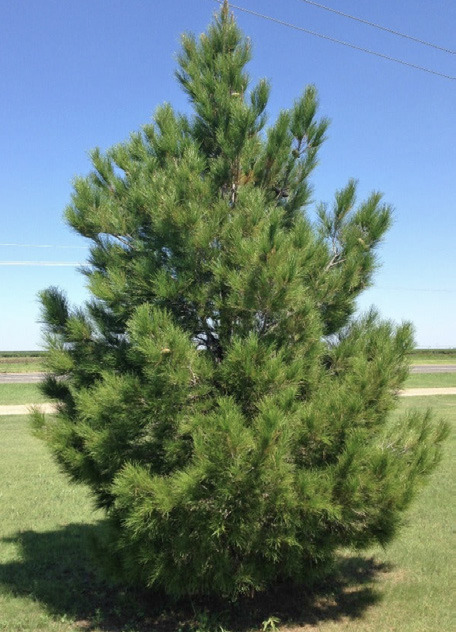
Conifers are perennial, woody, cone bearing plants with scale-like leaves or needles. Examples of conifers include Arborvitae, cedar, pine, fir, juniper, and spruce.
Reasons and timing for pruning conifers:
• Growth that can be removed any time of the year.
• Dead, diseased, damaged, or dying wood. Wood with any of these conditions should be addressed as soon as possible. Always use sharp, clean tools. After making cuts on diseased wood, it is especially important to disinfect the tools when moving from one tree to the next to avoid spreading the pathogen.
• Growth that should be removed in winter or early spring.
• Unwanted lateral branches. Conifers have a defined pattern of growth making aberrant branching noticeable. Growth like long side branches that are visibly not in line with other lateral growth can be pruned to coincide with neighboring branches and restore a clean line.
• Double central leaders. Ideal growth habit of conifers is one, strong central leader (think Christmas tree). Double leaders are formed when the tiny bud at the tip of the central leader is damaged. If growth proceeds unimpeded, cells in the tip bud, called the apical meristem, divide and proliferate tissue that has a strong upright growth. If the apical meristem at the tip is damaged, secondary tissue is formed, and if allowed to continue to grow, will develop into a second, competing, double leader. Lateral branches that develop and extend on the outside of both main stems are heavy, causing immense strain to both leaders. Double leaders cause physical problems to the tree and left untended, can result in damage or death of the tree. A heavy snow, rainfall, or windstorm can cause the leaders to split down the center.
The solution. As soon as it is apparent that a double leader is developing, the competing leader needs to be removed to its origin. Over time, the single remaining leader will resume its upright growth.
Ellen Peffley Harp, a retired professor of horticulture at Texas Tech University, writes about gardening for several Texas newspapers.
Some information from Fine Gardening