
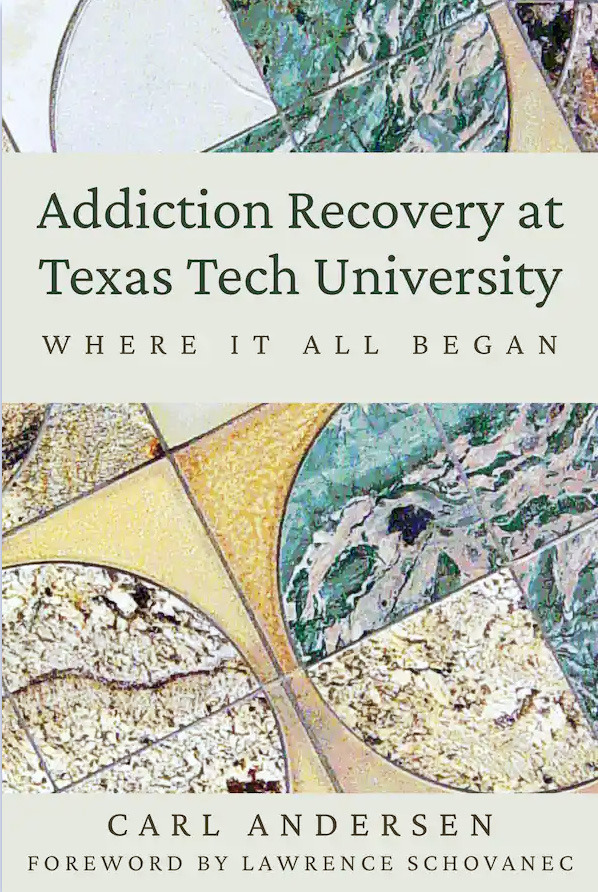
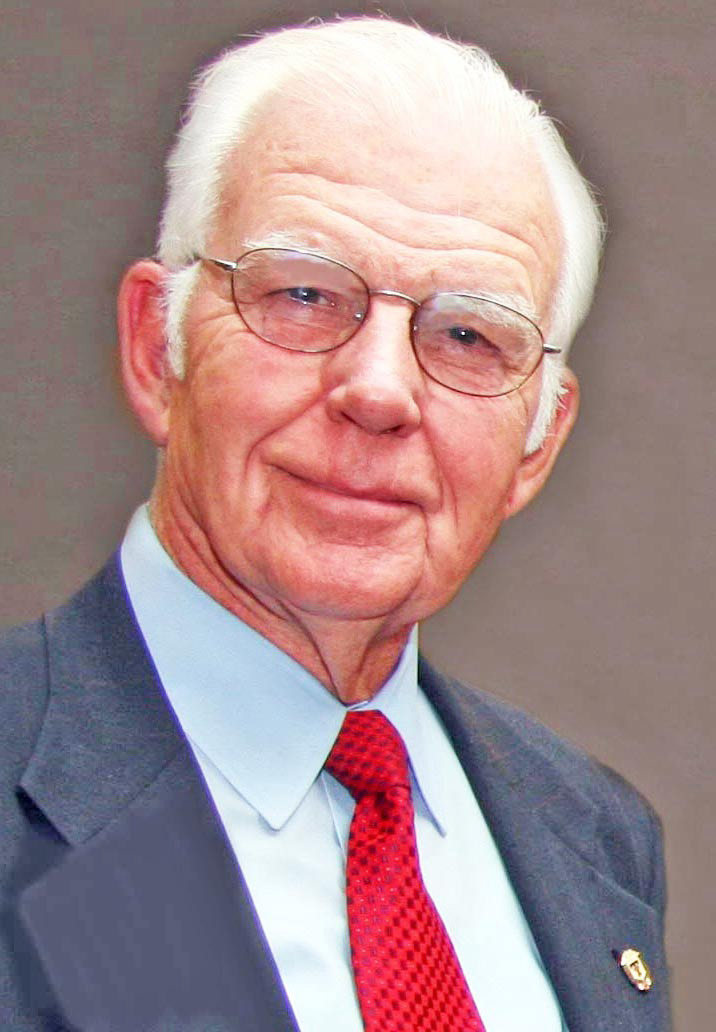
Carl Andersen saw a dream come true during his years at Texas Tech University, and the story is one worth remembering and sharing.
It’s toward that end that Andersen wrote “Addiction Recovery at Texas Tech: Where It All Began,” a book that chronicles the birth, impact and legacy of the groundbreaking Center for the Study of Addiction and Recovery at Texas Tech University. The book, published by Texas Tech University Press, reached store shelves in September and can be purchased through online retailer Amazon in print and digital formats. It tells the story of how the vision for the center emerged from Andersen’s own struggles with alcohol to provide a safe place on campus for those dealing with addiction.
“There were two prime motivations for writing it,” said Andersen, who holds a Ph.D. “One, many of the students who came through the program when I was there have addressed me and asked what started the program. They thought it might have to do with my life and that it should be put into writing. Second, it occurred to me that when I die or lose my memory, which could happen at any time, no one living would have any idea of how the center came into being. The book is the story of the center, the how, why, when and where it came into being.”
Andersen, a native of Sweetwater but who has long had a connection to Dickens County, established the center in 1986. It was housed in what was then known as the College of Home Economics, but is now the College of Human Sciences, providing support services to students in recovery as well as curriculum for those studying to become licensed chemical dependency counselors.
“For years, I knew I should do it (write the book),” he said. “But I just didn’t have the self-discipline to do it. When I started, though, it turned out to be three years of pretty intense effort of getting material pulled together.”
Andersen sought help online, asking that students who had gone through the program write about their experiences through the center.
“I heard from a lot of them,” he said, “and I picked 10 that I thought were the most colorful as far as what was going on. For the most part, those made up short chapters in their words of what the center meant to them and their recovery. The first part of the book tells the history of how it got started and how that had to do primarily with my own alcoholism. The second part looks at what the center does.”
Texas Tech President Lawrence Schovanec provides the book’s foreword and was instrumental in steering the book to the Tech Press. However, before the title could be published, the Covid-19 pandemic took hold and the project was delayed for almost two years. As a result of Andersen’s visionary leadership, the center has played an important role in numerous individual lives as well as in the recovery community. “The streets are filled with recovering alcoholics,” he said. “They have gone to college, flunked out or gotten kicked out or couldn’t pay their loans off. They were out there holding menial jobs when many of them were academically bright. The state they were in, they were a drain on the economy, but many of them have come around to productive jobs. The book includes the story of a cowboy from the 6666 Ranch who came into recovery, then went to medical school and is now a practicing physician. There are a lot of stories in that vein, folks who had washed out but came back in productive roles in society.”
- Log in or Subscribe to post comments.
