
CUISINE & CULTURE
Green-bean casserole seems to be a staple on many Thanksgiving tables. The thing about green beans is that they are a summer garden crop, and the Thanksgiving meal is in the middle of autumn. A more fitting vegetable side dish for Thanksgiving is a fall crop. Perfect for table is one of the Brassicaceae crops, cauliflower.
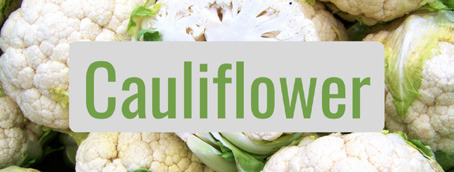
Cauliflower is a most interesting crop. The edible portion of cauliflower is its head, which is a composite of tight uniform curds; curds are immature inflorescences. The scientific name of cauliflower is Brassica oleracea in the botanic group called botrytis. Brassica oleracea is from the Latin meaning “cabbage”; “botrytis” is also from the Latin meaning “like a bunch of grapes.”
Cauliflower is one of the most difficult of the Brassicaceae family to grow. It is especially difficult and unreliable when planted in our area. A constant supply of evenly applied moisture, frequent fertilization and cool temperatures are required to produce a full, tight, white cauliflower heads.
Temperature is what makes it difficult to produce a quality head of cauliflower. Cauliflower is a cool-season crop; it does not tolerate heat or, oddly, cold. Plants require consistent day temperatures in the 60s from germination to harvest to develop quality heads with uniform curds. If there are temperature extremes, heads form curds prematurely that results in “buttoning,” the formation of small button-size heads, rather than forming one uniformly developed head.
White cauliflower is a labor-intensive crop as the curds need to be blanched during the growing process. When heads begin to form and are about the size of an egg, begin the process of blanching. Blanching is the botanic practice of excluding light for the purpose of developing white curds. To blanch cauliflower heads, gather the large wrapper leaves loosely over the developing head, loose enough to leave sufficient space for the head as it increases in size; tie leaves closed with a rubber band. If any light reaches the developing head, chlorophyll will be produced and there will be sections of green in the white curds.
Relaying the cultural requirements for cauliflower can make for stimulating dinner conversation at the Thanksgiving table! Regardless of whether your table has green bean casserole or serves cauliflower as a side dish, good wishes come your way for a Happy Thanksgiving.
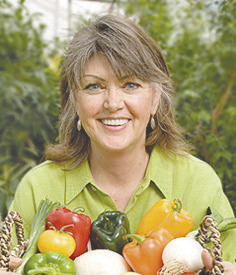
Ellen Peffley Harp, a retired professor of horticulture at Texas Tech University, writes about gardening for several Texas newspapers
- Log in or Subscribe to post comments.
