

This month’s columns have been devoted to do-it-yourself projects. Today’s column has one last idea for the holiday décor before Christmas. It doesn’t take a lot of cash to bring the Christmas spirit into your home—and what can be better than bringing nature into the home?
Here is a list of botanics that are often overlooked as possible for an arrangement, but depending how venturesome the spirit, leftovers can be fun to use.
Common trees and shrubs that can be found in our area.
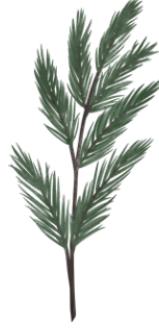
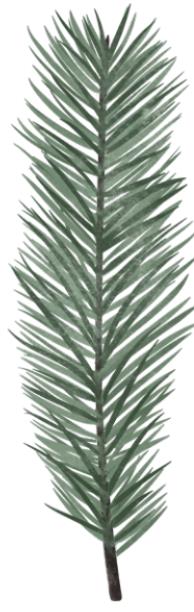
• Pines. Choose several kinds of pines. Some like Italian Stone, Austrian, or Afghan pines have long, narrow needles while piñon needles are shorter. Different pines have needles bound in bundles of two, three or five. Cones can be quite large or small.
• Cedars have barrel-shaped cones on branches
• Arborvitae (Thuja spp.) have scale-like leaves with small cones.
• Spruce (Picea spp.) have sharp, stiff, short needles protruding from tiny wooden pegs.
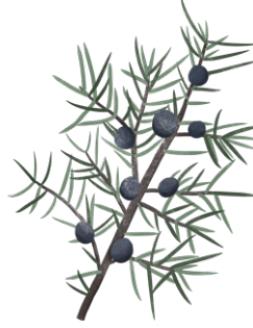
• Juniper (Juniperus spp.) leaves can be scalelike, needle-like, or both depending if the growth is juvenile or mature. Strong smell. Cones are berry-like and fleshy.
• Holly (Ilex spp.) leaves can be glossy or dull, serrated or smooth, rounded or ovate. Branches can be heavily thorned or smooth. Berries are shades of red. Very showy.
• Magnolia. Leaves are thick, fleshy evergreen. Seed pods resemble cones. When mature bright red berries are enclosed in the pods, released when the pods open. Unusual in an arrangement. Pods are hard when dry.
• Chinaberry (Melia azedarach) is deciduous but bears fleshy, round, yellow-brown fruit.
• Photinia. Leaves of red-tip Photinia are dark green, large, glossy, ovate in shape, smooth margins, thick. Young foliage is bright red.
• Euonymus (Euonymus spp.) Evergreen. Leaves can be dark green, or golden depending upon species. Leaves are medium length, 3 inches long.
• Crape myrtle. Winter leaves are dark green, turning bronze and red in the fall. seed pods persist in the fall and with the exfoliating bark both will add something unique to an arrangement.
• Chinese pistache. (Pistacia chinensis). After leaf drop the red berries of female trees persist.
• Oaks (Quercus spp.). Leaves of semi-evergreen red oaks have turned red and showy. Look around any oak and collect loads of acorns.
Let your imagination run as wild as you forage with new botanics for the holiday.
Ellen Peffley Harp, a retired professor of horticulture at Texas Tech University, writes about gardening for several Texas newspapers.
- Log in or Subscribe to post comments.
