
In last week’s column were suggestions for planning a vegetable garden. This week’s column shifts the focus to starting a flower garden. Many of the requisites for a successful vegetable garden apply also to a flower garden.
Water source. Regardless which water delivery method described below is used for the flower garden, the best use of water is in the morning hours when evaporation is low.
• Drip irrigation uses the least amount of water but is the most intensive to set up. Drip is the most desirable method of water delivery not only because it uses the least amount of water but also because it delivers water directly to the root zone.
• Sprinkler watering is an option but leaves of the plants are wetted, which may increase the likelihood of foliar diseases; less water reaches the root zones because of the interference of the foliage.
• Flood irrigation in furrows is the simplest option but wastes water because water is delivered to the entire area not just the roots.
Mulch. Mulching reduces water evaporation by creating an impediment between the soil and the atmosphere. It has the extra benefit of reducing weeds as well.
• Organic. Bark chips, pine needles, and straw decompose over time adding additional organic matter.
• Inorganic. Plastic mulches are effective but disposal is a concern.
Wind. Most flowers do not withstand strong winds. Winds can whip off petals in a flash. For this reason consider placing blooming plants in a protected area from the prevailing southwest winds.
• Containers can often be protected by strategic placement on a patio.
Perennials or annuals? Here are just a few possibilities.
• The anchors of a garden are perennials. Before adding a perennial to the garden consider that the plant is perennial—it will be in the same location for the life of the plant. Prepare the soil by deep tilling and organic matter amendments. Some blooming perennials that are mainstays in a garden are bearded iris, Dutch iris, dahlias, gladiolas, daffodils, tulips, Alliums, yarrow, dianthus, peony, scabiosa, salvia, daisies.
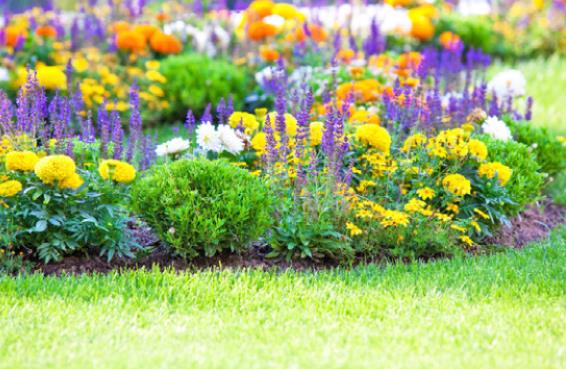
• Annuals give a garden a splash of color. Black-eyed Susan, Echinacea, petunia, sage are examples that establish best from transplants. Annuals that are best established from seed include sunflowers and sweet pea; reseeders that reappear each spring include marigold, cosmos, zinnia, larkspur.
Ellen Peffley Harp, a retired professor of horticulture at Texas Tech University, writes about gardening for several Texas newspapers.
- Log in or Subscribe to post comments.
