
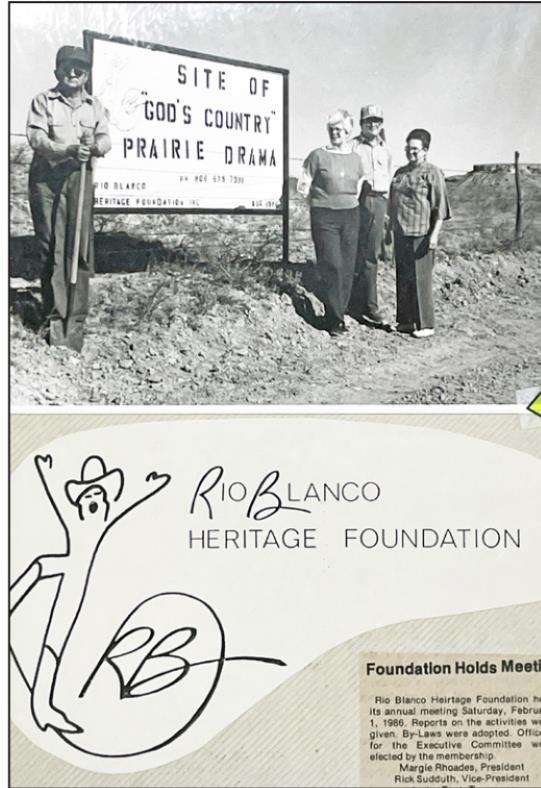
Crosby County folk always knew they inhabited a special place. Embracing the scenic and historical riches of Blanco Canyon—visited by such towering figures as Coronado, Quanah Parker and Ranald S. Mackenzie—and claiming a heritage of settlement going back to the Quakers, to German-American settlers “Uncle Hank” Smith and his wife, Elizabeth “Aunt Hank” Smith, the rural county on the South Plains had always celebrated arts and culture, and they had plenty of area talent to do it with.
As the county’s 1986 centennial (handily, also the sesquicentennial of the State of Texas) approached, a group of these hardy citizens including Pat Brown of the Crosby County Pioneer Museum hatched a plan for an outdoor musical celebration along the lines of “Texas” in Palo Duro Canyon and especially the “Fandangle,” produced in Albany by community volunteers.
“Anything that would get the community together to have fun was sorely needed,” the late Brown told the Lubbock Avalanche-Journal in 1986. “If the community wasn’t totally involved then it wasn’t for us.”
Brown crafted the script, which embraced the region’s story from the arrival of Paris Cox’s Quaker settlement to Elizabeth Smith’s role as the county’s first postmaster, to the story of cowboys on the plains, to the dedication of the county courthouse.
By summer 1985 the project, under the aegis of the Rio Blanco Heritage Foundation, had set plans for preview scenes the next spring.
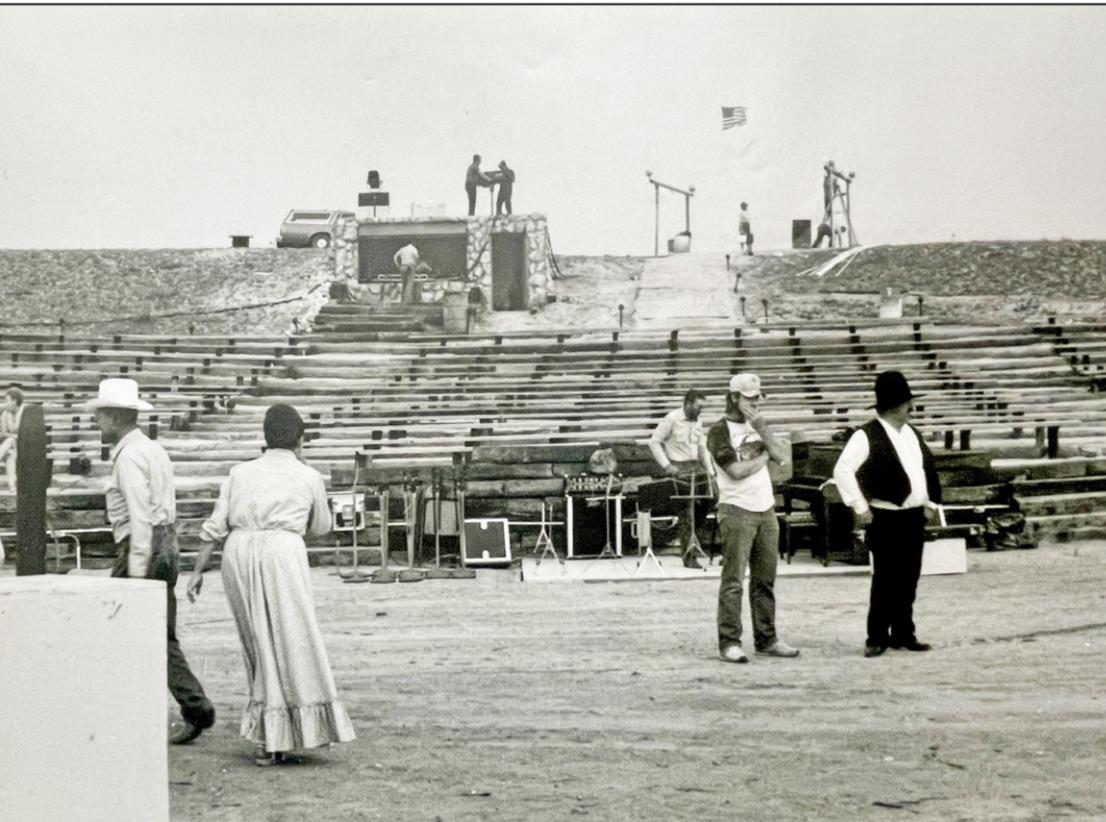
Land had been leased. An 11.8-acre ste 11 miles north of Crosbyton, adjacent to FM 651, under contract from Viola Brown, provided a sweeping view of Blanco Canyon and the Hank Smith homesite. Clearing and grading, stage erection, construction of production booth and seating, were all done by local volunteers.
The show debuted in August 1986, running Friday and Saturday nights, and continued for ten more seasons.
“The entire project is a labor of love on the part of people not only in Crosby County, but the area,” read Avalanche-Journal editor Jay Harris’s newspaper column of August 25, 1986. “Pat Brown, director of the Education Project of the Crosby County Pioneer Museum, wrote the script. Rick Sudduth, Jane and Zama Morris composed, arranged and presented the music. The director of the show is an old hand at such things. He is Dr. Don Williams, vice president for academic affairs and dean of [then] Lubbock Christian College.”
Williams, the piece explained, was stage director for “Texas” for seven years in the wake of his doctoral disseration at Texas Tech and also directed productions at Lubbock Christian. Jacques James was the assistant director.
“But, there are hundreds who helped make a community dream come true,” Harris’s piece continued. “There were those who built the stadium on the slopes of a natural berm on an 11-acre site. Someone had to do the sets, the authentic period costumes right down to the cowboy chaps and bonnets. Others got involved in everything from publicity to serving as ushers to directing traffic.”
Visitors traveled from near and far to enjoy the natural setting and the rousing stories of the frontier in script and song. The amphitheater seated 750, according to one year’s program, and tickets were $7. Show time was 8:30 p.m.
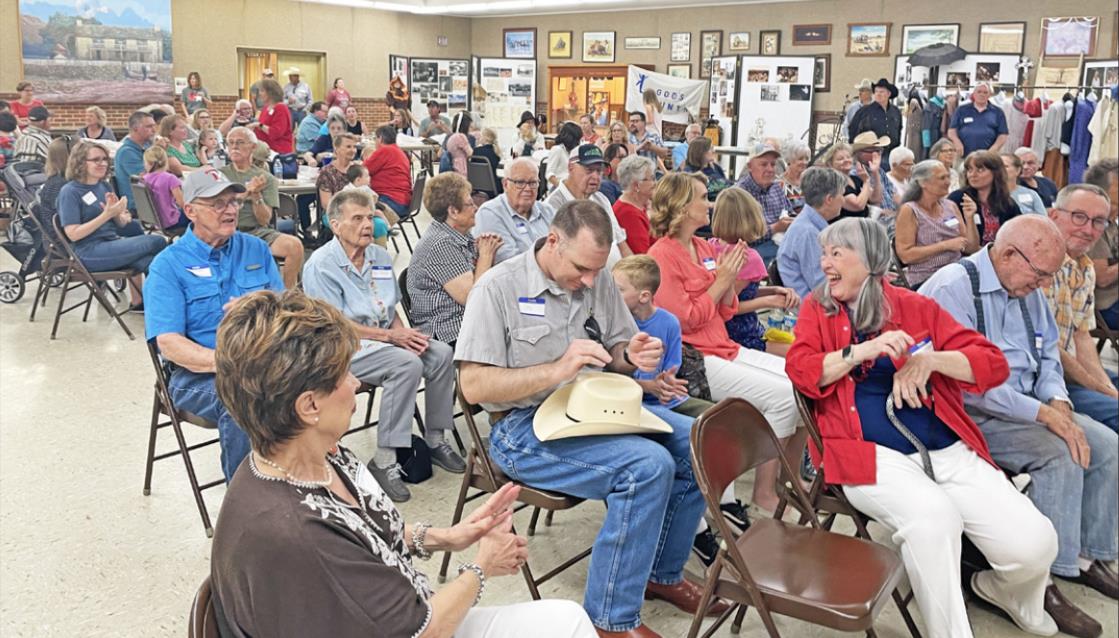
Although by 2022 many of the original participants had already passed away, including Pat Brown in September 2021, the prospect of bringing as many of the players as possible together for a reunion caught the imagination of museum leaders and local historians. They put out a call for a gathering on July that would also involve an impressive display of artifacts and photos and coordinate with an unveiling of a new mural at the museum authentically depicting the 1871 Battle of Blano Canyon by artist Ron Kil.
Director Williams was one of those who eagerly participated, traveling out from Lubbock to the community where he spent so many evenings coaching, rehearsing and eventually directing the show.
With Crosbyton Chamber leader Martha Kirk, Williams brought to a promotional appearance on local TV beforehand a cutout of the “Blanco Bob” dancing cowboy mascot.
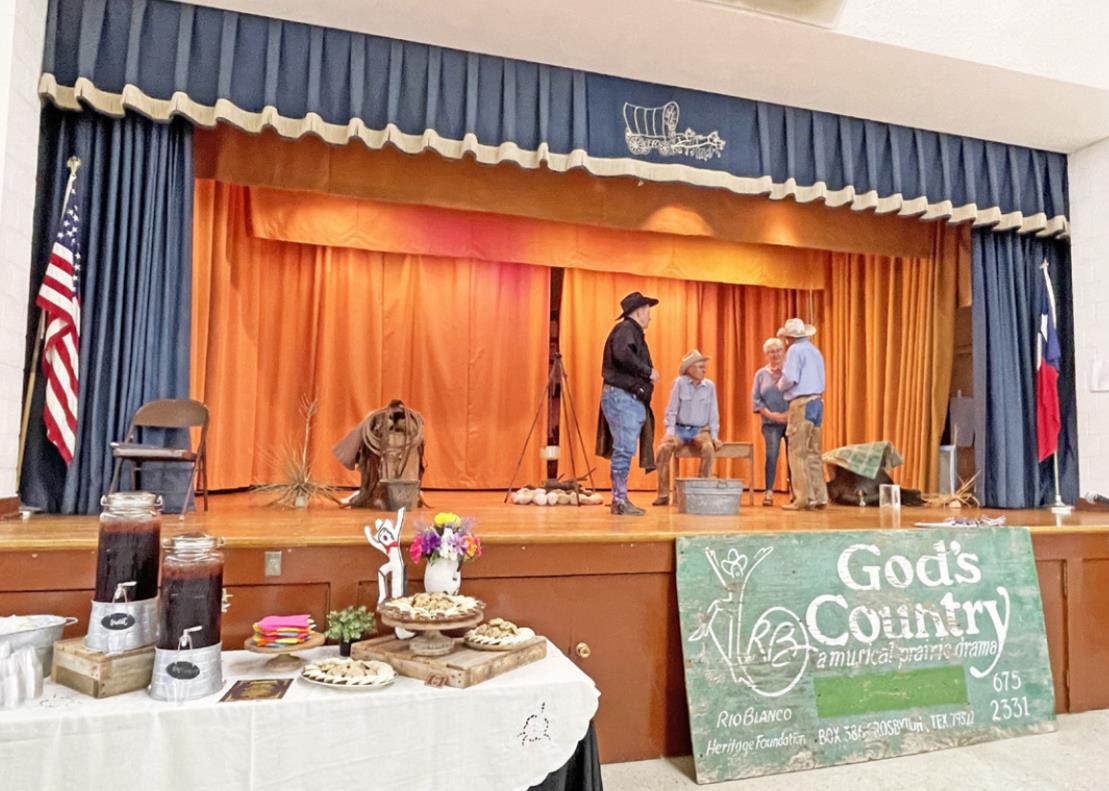
At the reunion, which began at 11 a.m. at the at the Crosby County Pioneer Memorial Museum auditorium, with informal visiting and a viewing of the exhibition, Williams warmly greeted old friends. Dozens of participants of all ages recalled the roles they played, on stage of behind the scenes. James Taylor of Ralls— now with a numerous family of his own—had played one of the kids. Kyle Hulme of Spur played the mail carrier—on horseback.
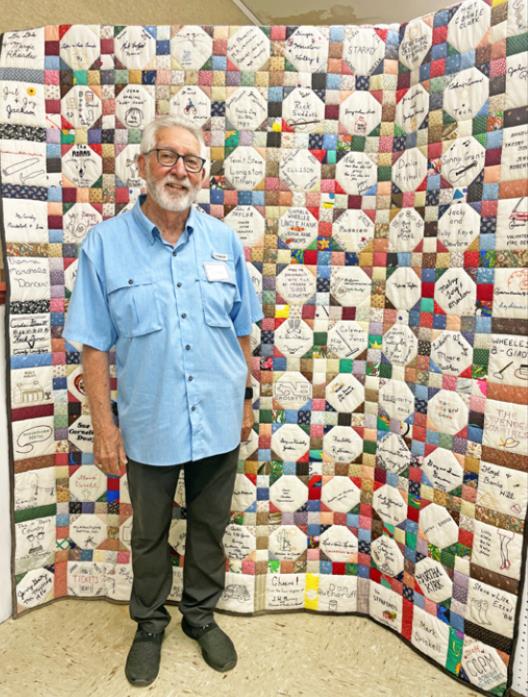
Award-winning photographer Ann Taylor of Lubbock also returned to her Crosby County roots for the occasion, recalling the publicity photos she took in the early going. “Looking back, I’m surprised at how good they are,” she noted. Those black-and-whites form an important part of the rich chronicle of the undertaking; many were on display July 2, along with artifacts such as props, costumes, pieces of sets, and a collection of scrapbooks and other documents.
Alums of the show performed several highlights of the show, including the cowboy skit, a comedic favorite; the opening number and the Quaker courtship duet; and the theme song, in which the audience was invited to sing along. A short film, “God’s Country Through the Years,” was shown. A fund-raising auction for a pair of custom leather chaps brought a top bid of $1,000.
Parts of the exhibition will remain on display for a few weeks yet, said museum director Ana Lowrey (who is herself a descendant of settler Hank Smith).
The museum, including the Wayne J. Parker for Native American Studies (where the new mural is mounted) is located at 101 West Main St. in Crosbyton. Call (806) 675-2331 for information.
- Log in or Subscribe to post comments.
