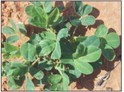
Peanuts Have “pegged,” and harvest in West Texas is around the corner. Gardeners who have never grown peanuts might think about them for next year’s garden, as they make a great rotation crop. Even if peanuts are not on your food list, they’re a perfect summer garden crop because they are members of the Fabaceae (formerly Leguminosae) family, along with beans and peas.
The fascinating and unusual characteristic of a peanut plant comes after fertilization. The immature ovary is called a “peg.” An immature peanut embryo is in the tip of the peg. As the embryo enlarges, the peg swells, then lengthens, dips down and grows away from the mother plant. The peg forms a small stem that extends down to the soil. When the peg penetrates the soil, the embryo turns horizontal to the soil surface, continues to develop, and begins to take the form of a peanut as it matures. The plant continues to grow, eventually producing more pods.
A second reason to include peanuts in a summer garden is that peanuts are legumes and have the unique ability to fix nitrogen, metabolizing atmospheric nitrogen.
Peanuts are unlike other crop plants. The peanut is not a nut but it is grown from seed, specially grown peanut kernels. Prior to setting in the ground, hydrate seeds by soaking overnight. When soil temperature reaches 65°70°F place seed in full sun, about 2 inches deep, 2 inches apart.
The life cycle of a peanut plant is unique: seedlings emerge in 7 to 10 days with developing green foliage with ovate leaves. Seedlings grow slowly until the root system is established; as temperatures warm, plants quickly grow. Yellow blossoms emerge about 40 days after planting. Flowers are self-pollinating; once pollinated and fertilized, their petals drop, and an immature ovary begins to develop. Seeds develop inside the pod, which is an underground fruit.
From planting to harvest, the growing cycle of a peanut takes 100 to a full 150 days to produce a crop. Keep soil moist through the filling stage when the embryo matures into a kernel. When harvest approaches, allow soil to dry. Gently lift under the plant to dislodge the pods.
A third reason to grow peanuts is in homage to “The King”—since peanut butter and banana was Elvis’ favorite sandwich!
Some information from nationalpeanutboard.org
Ellen Peffley Harp, a retired professor of horticulture at Texas Tech University, writes about gardening for several Texas newspapers.
- Log in or Subscribe to post comments.