

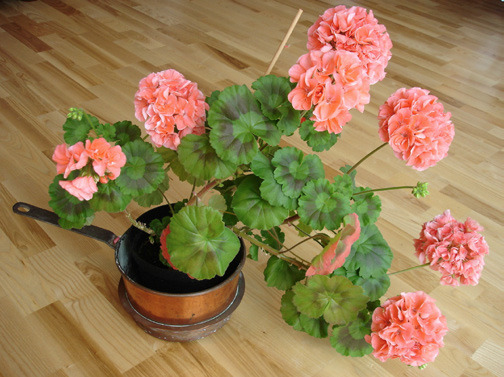
Last week’s column discussed using Pelargonium as a possible botanic deterrent for pesky mosquitoes. The Pelargonium species that were mentioned in the column were those that had a citrusy odor when leaves were crushed and in large numbers could be a deterrent for mosquitos.
A gardening friend agreed on the mosquito repellent characteristics of the citrusy Pelargoniums. She let me know that she found Pelargoniums effective in keeping mosquitos at bay on her person while working in the garden by stuffing some of the leaves in the sleeves and plant legs. We know that mosquitos can quickly find any exposed skin and the Pelargonium leaves, coupled with their smell, are a great discourager.
In today’s column is more information about Pelargoniums, commonly called geraniums.
What is the correct term for these summer garden bedding plant favorites? We find them in patio pots, hanging baskets, at the front porch, and they make great bedding plants as well.
The actual, botanic geranium belongs to the genus Geranium, while the commonly called geranium is botanically a Pelargonium.
A little more on the true geraniums, which may clarify or may muddle the discrepancy in word use. True geraniums are cold-hardy perennials, unlike our garden favorite Pelargoniums that are tender, easily damaged by freezes.
The confusion is centuries old. The Pelargonium we call geranium were introduced from South Africa to Europe by Dutch traders. The new plants closely resembled the European cold hardy Geraniums and botanists grouped them together. The Swedish botanist, Carl Linnaeus, classified them as Geranium.
It was sometime later that the new South African, tender plant classified as a Geranium were not the same as the European plant. The new South African plants had deeply lobed leaves, flowers were less conspicuous. They were reclassified as Pelargonium. The genus Pelargonium comes from the Greek pelargos, which means a stork, refers to the long, sharply pointed shape of their seedpod, which resembles a stork’s bill.
However incorrect, in North America the true Pelargoniums are commonly called and marketed as geranium. However, when travelling to Europe, especially the United Kingdom, true Pelargoniums are commonly referred to as pelargonium.
So, what is the bottom line to gardeners in West Texas? It is always good to know the correct usage of botanic terms, even though we continue to call these plants geraniums.
Some information from plants.usda.gov
Ellen Peffley Harp, a retired professor of horticulture at Texas Tech University, writes about gardening for several Texas newspapers.
- Log in or Subscribe to post comments.
