

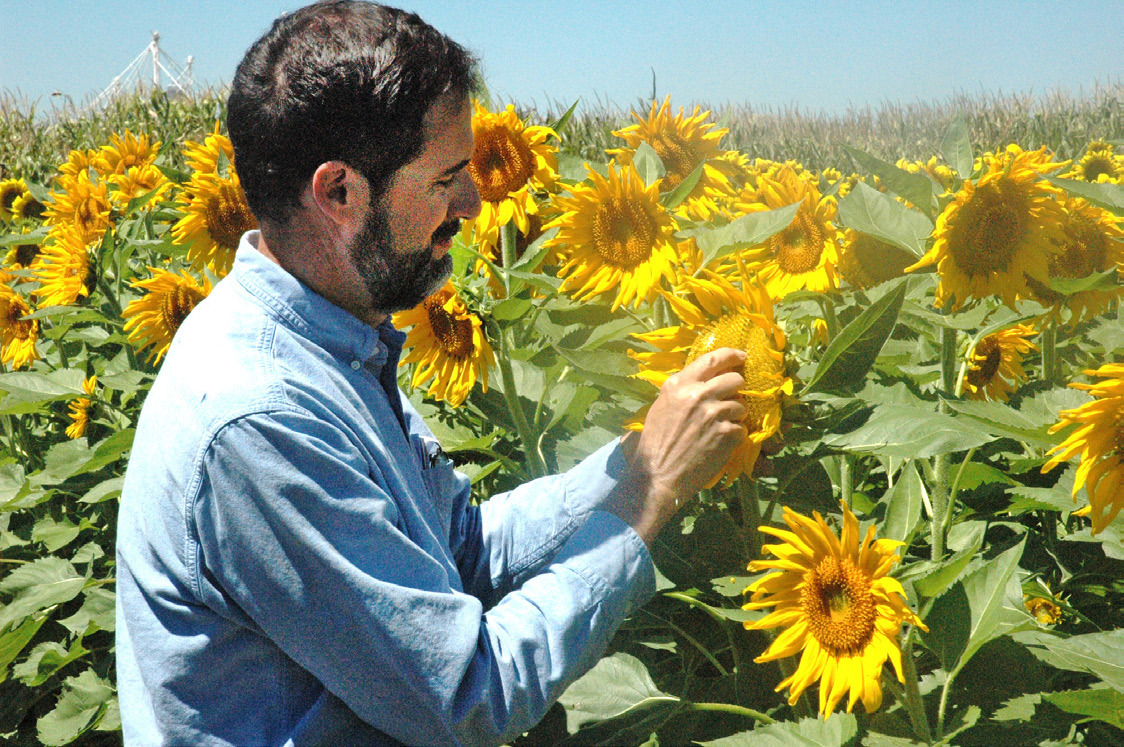
Harvesting sunflower seeds for next season is an easy gardening activity. Many gardeners let seeds mature on the plant and fall in place, expecting volunteer to establish where ever they fall, giving a natural, more organic appearance to a garden or landscape. Other gardeners like to have a set spot for their sunflowers.
Sunflowers are composite members of the Asteraceae (formerly Compositaceae) family. There are hundreds of varieties of Helianthus annuus, the common sunflower. All are annuals, germinating, establishing, maturing, then dying in one growing season.
Some have been bred to flower on a single stalk and bear one large single flower. Many of the refined new varieties have been bred to be sterile, shedding little pollen. These are suitable for floral arrangements. Older varieties are multi-stemmed, setting new buds on each node, which are borne on multiple branches, giving a broad span. Flowers on older volunteer sunflowers are multiple, smaller and produce prolific pollen. They are still used in floral arrangements but with the caveat that the area below the arrangement will be blanketed with yellow pollen.
It is the sunflower head that is harvested. When heads begin to nod down and droop, this is the main signal that the heads are ready. The back of the heads will have lost their green and turned brown. Foliage on the flower stalks will have dried.
As flower heads senesce, the petals dry and drop, leaving only the seeds in the head. Itself. At this stage seeds are mature. Birds flocking around heads is a sure sign that seeds are ready for harvest.
Intact heads for floral designs or dried arrangements need to be harvested before this stage. Left too long on the flower stalk, seeds are easily dislodged.
Heads can be covered with cheesecloth or mesh to protect from birds. Covering with paper or plastic bags is not recommended, as the plant is sill living and moisture will collect in the bags and may promote molding.
Cut heads leaving several inches of stem below the head, hang upside down in a dark, well-ventilated spot. Cover to collect premature seed dropping.
Separate individual seeds by shaking heads, hitting them against the side of a pail, or rubbing heads together. Separate chaff from seeds, let dry and save in a dark place in a paper sack. And next year, enjoy a new crop.
Ellen Peffley Harp, a retired professor of horticulture at Texas Tech University, writes about gardening for several Texas newspapers.
- Log in or Subscribe to post comments.
