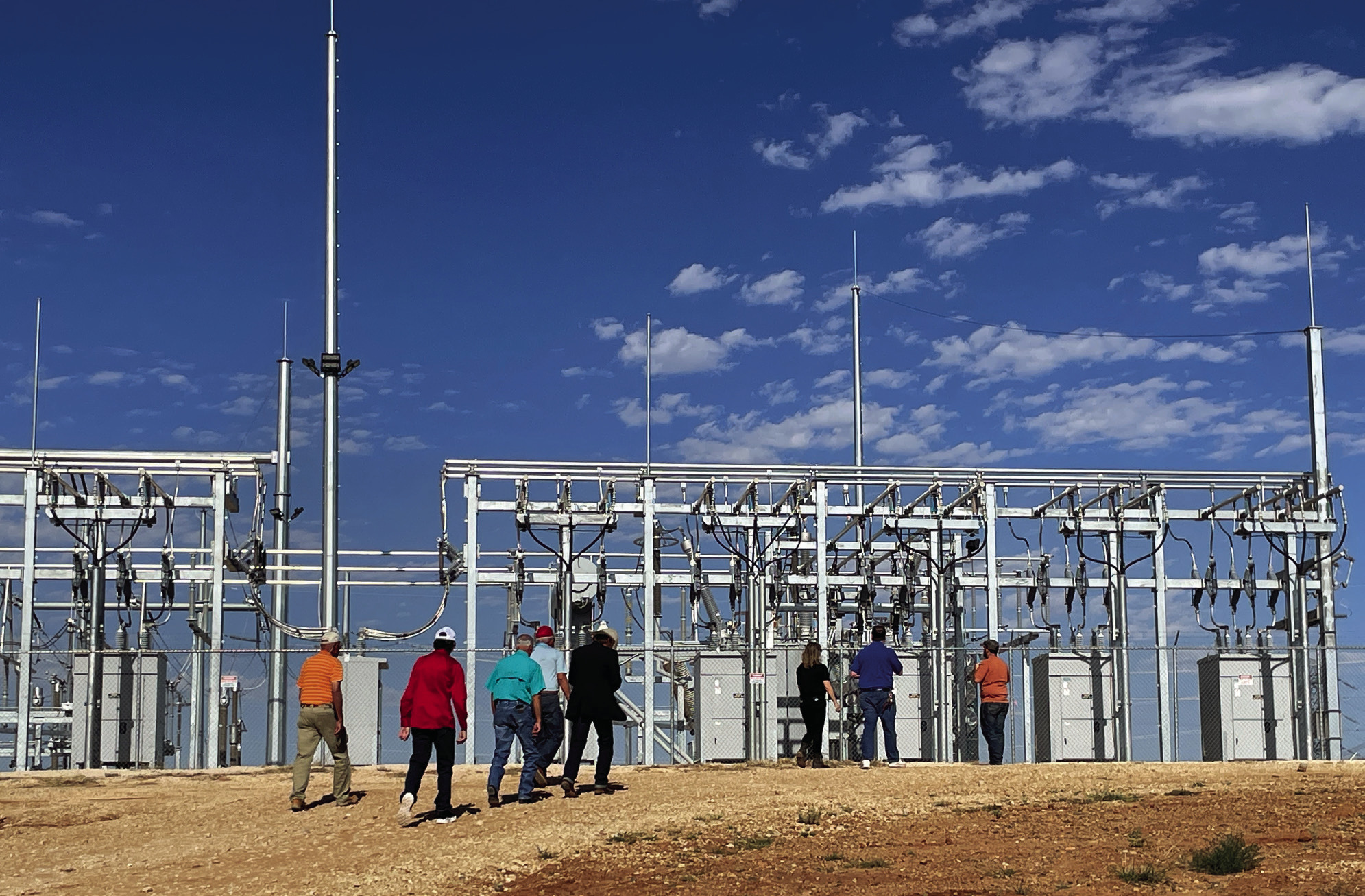
Last Thursday, Dickens County commissioners were welcomed to a site tour of Galaxy Digital’s Helios cryptocurrency plant near Afton—and The Texas Spur was invited along for the ride.
Interest in the facility and its Bitcoin-mining operations has been high since the announcement of Argo Blockchain’s groundbreaking investment in fall 2021. While Argo rolled out the red carpet to elected officials and staff, legislators, and the general public for its energization event in May 2022, by fall of that year the company was struggling after an industry downturn many called the “crypto winter.”
To the rescue came New York–based Galaxy Digital, an initial investor in Argo’s venture. Under the leadership of Galaxy CEO Michael Novogratz and head of mining Amanda Fabiano, by January 2023 the new firm took over Argo’s interest and made the Helios plant its US flagship operation. Galaxy kept Argo’s original pledges of twenty local jobs—and a commitment to restore the historic public swimming pool in Dickens County’s largest city, Spur.
While the swimming pool has proved a bigger challenge than anticipated due to a shortage of qualified contractors, Galaxy has maintained the twenty locally based staff positions, fifty percent of its Helios workforce.
Publisher Kay Ellington and I met a few of those in person on Thursday’s tour.
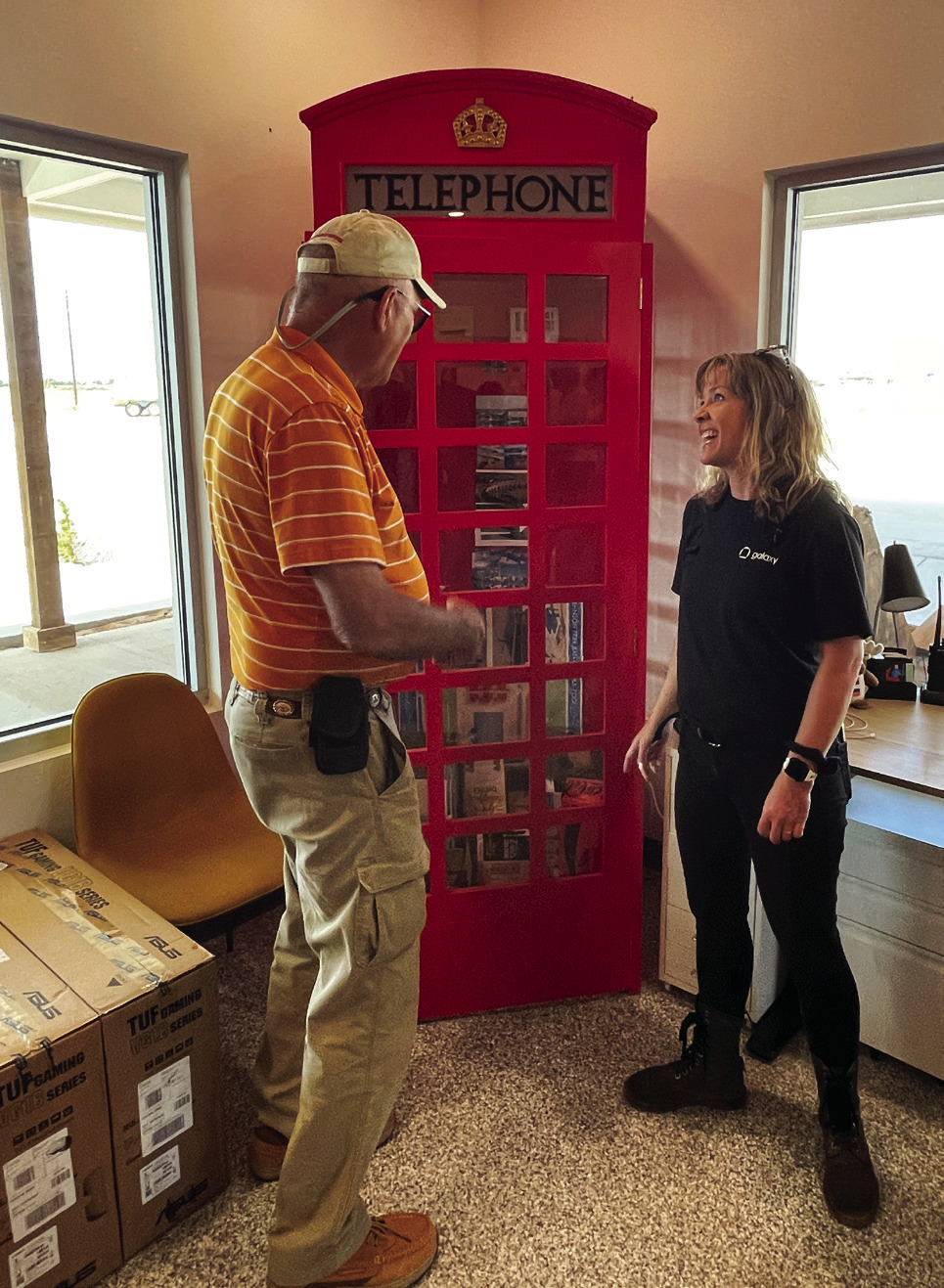
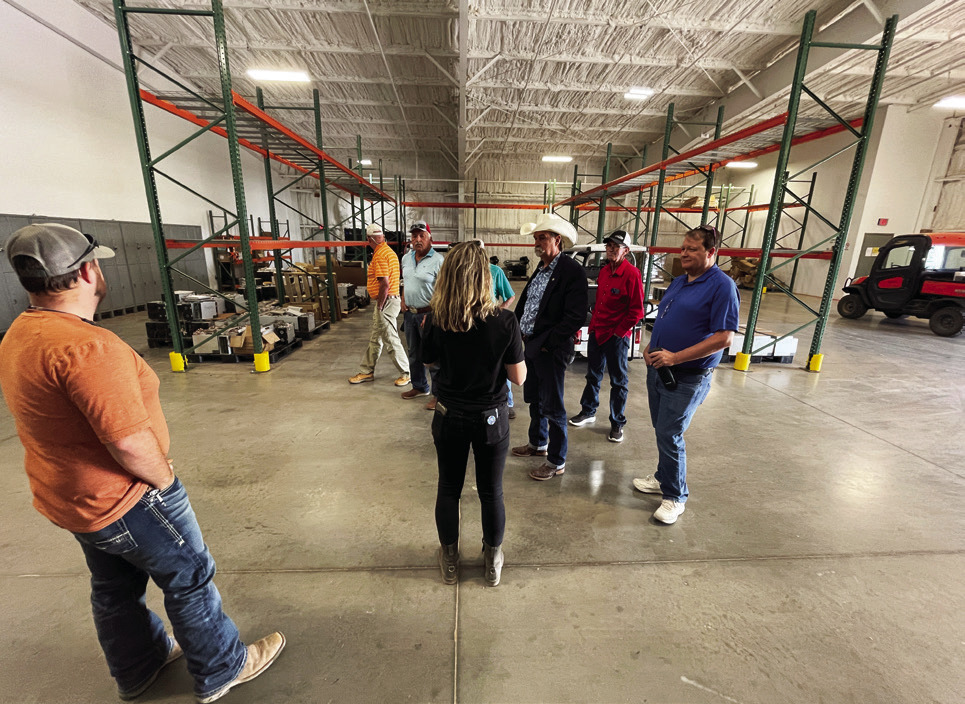
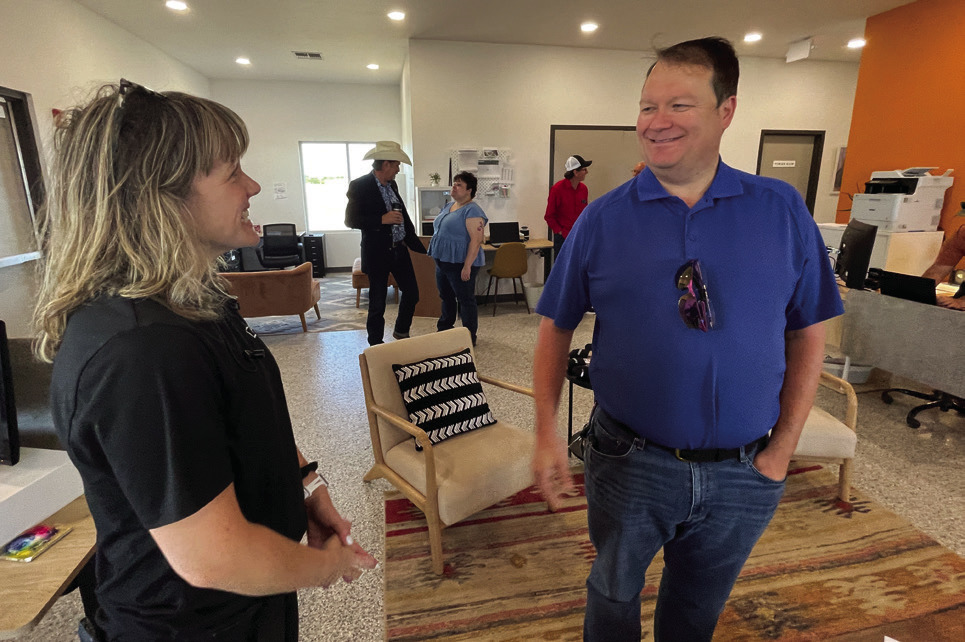
Our host for the morning was business operations manager Kate Harris, a Spur resident who came here for a job with Argo and grew into her current role with Galaxy. Megan Stuckwish, human resources manager, was also on hand at the office, and Johnathan Gabel, construction project manager, answered county officials’ technical questions.
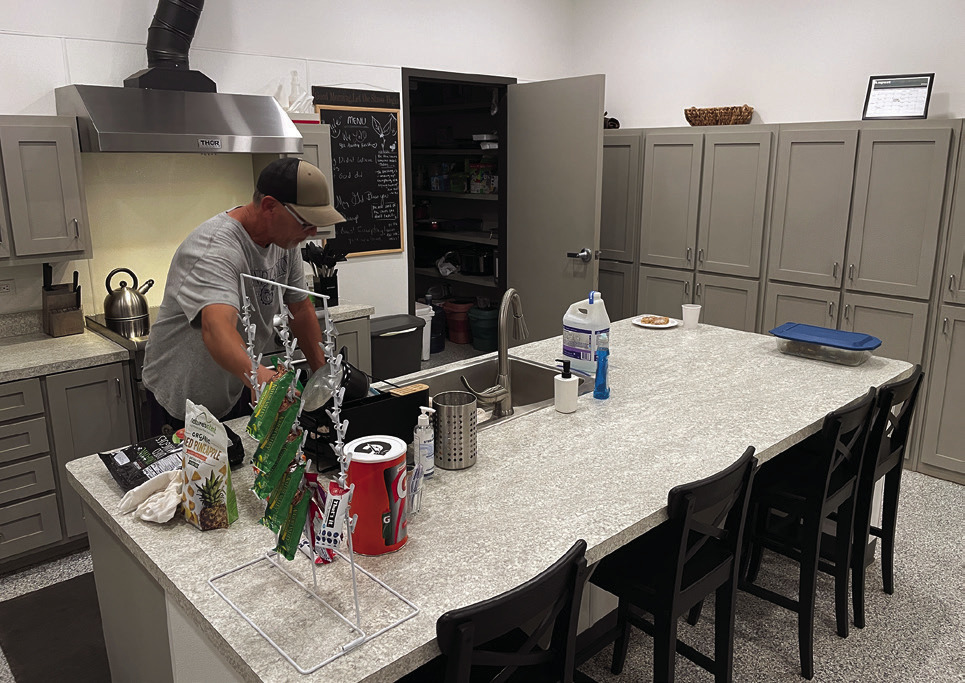
Briana Sturgis, a Spur resident since 2019 and formerly with The Texas Spur, also works in the newly constructed headquarters. She joined the Argo team in 2021 in a community service capacity and also made the transition to Galaxy. Sturgis showed us around the staff lodging, which includes three comfortably outfitted bedrooms (one of which includes an ensuite bath), a shared bath, and an elegant, home-style kitchen where meals are available at a variety of hours, cooked up by facilities host Kristi Ward.
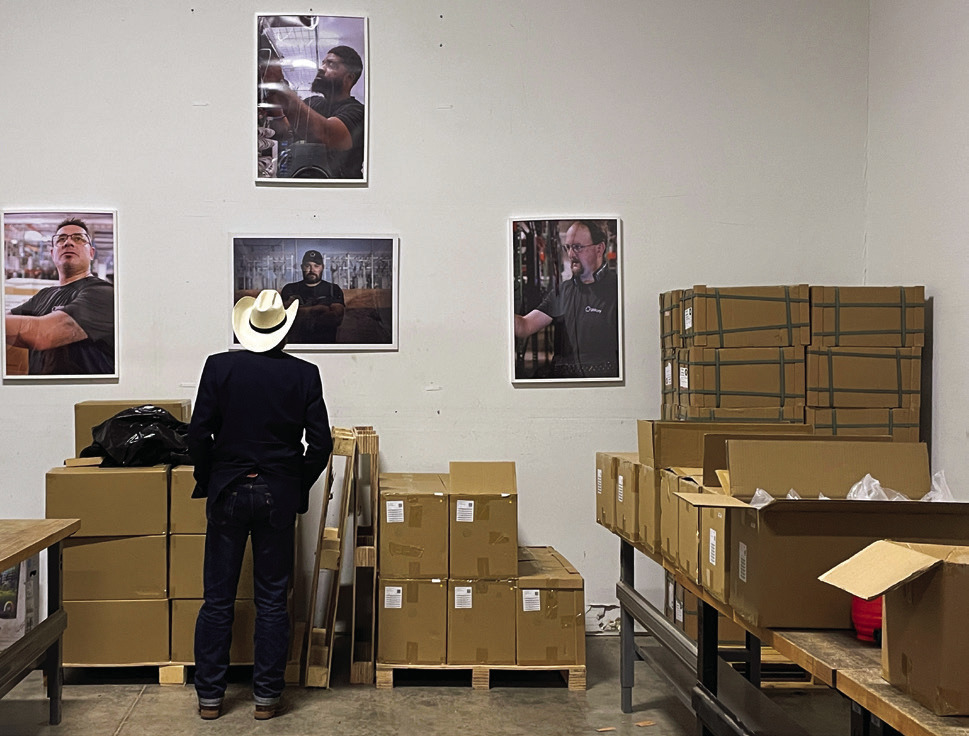
The clean, welcoming corridors and workspaces feature framed photographs by Jeff Sturgis of Spur’s Madcap Media, of Galaxy staff in their work environments.
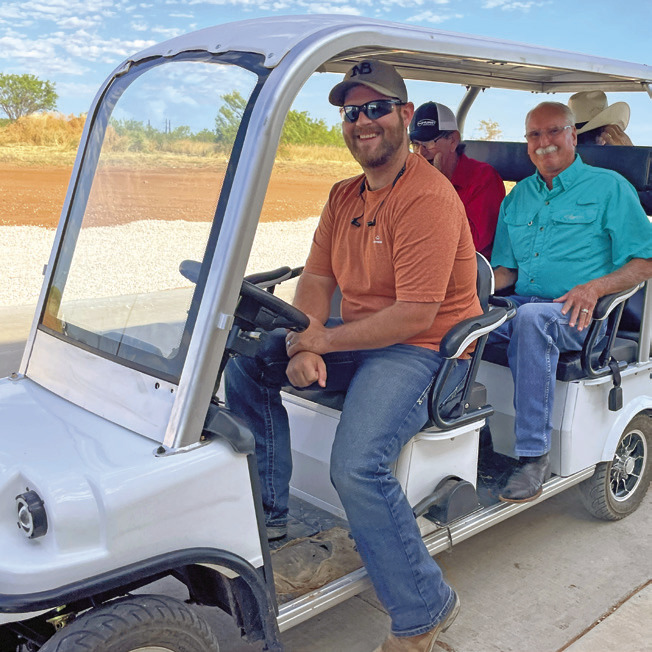
Outside, Dickens County commissioners Greg Arnold, Charlie Morris, Mike Smith and Dennis Wyatt enjoyed the cool breeze of the veranda as they loaded up into golf carts with County Judge Kevin Brendle, County Attorney Aaron Clements, and us journalists.
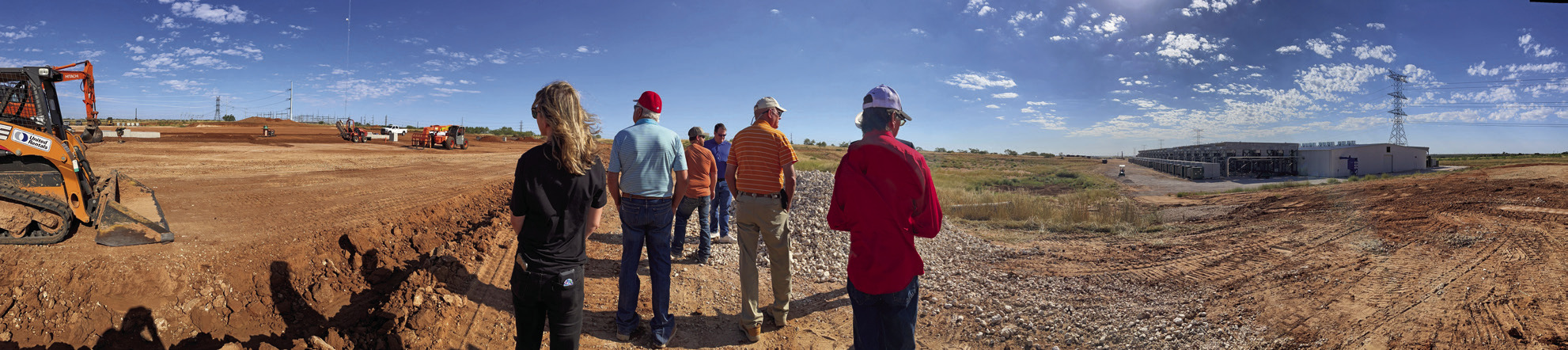
It’s a bit of a trek to the mining plant, which measures about the length of three football fields and the width of one, all under one roof—but the carts make it a much easier undertaking now that a paved road leads all the way from the facility entrance off FM 112 past the office and on to the main building.
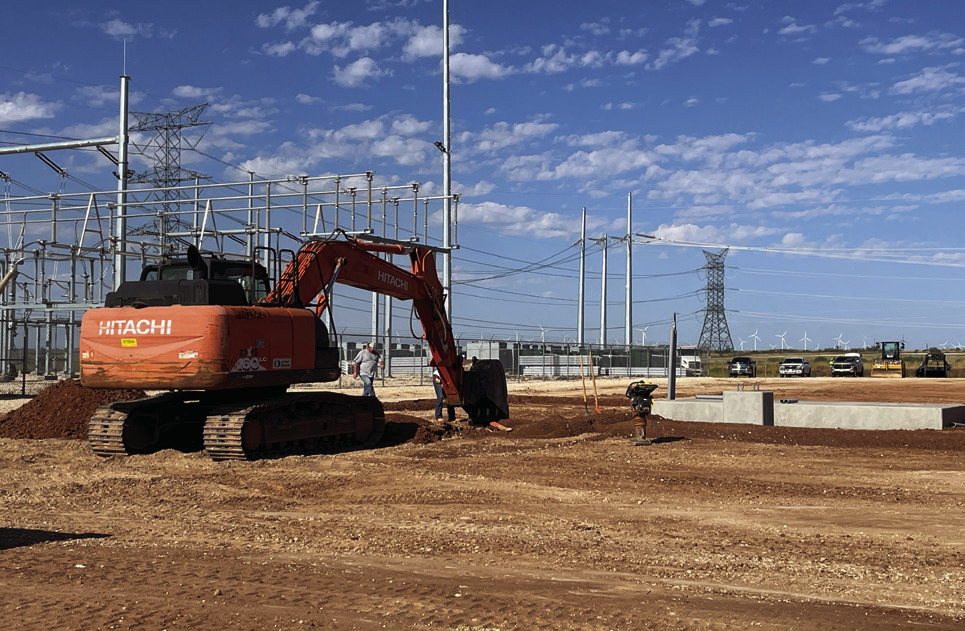
Construction pushes ahead inside and out, even on a hundred-degree summer day. A fan ventilation system has been installed on the roof ridge and is being finished out. Heavy equipment grades the site for the plant’s next phase of mining units, which will be housed in air-cooled container buildings.
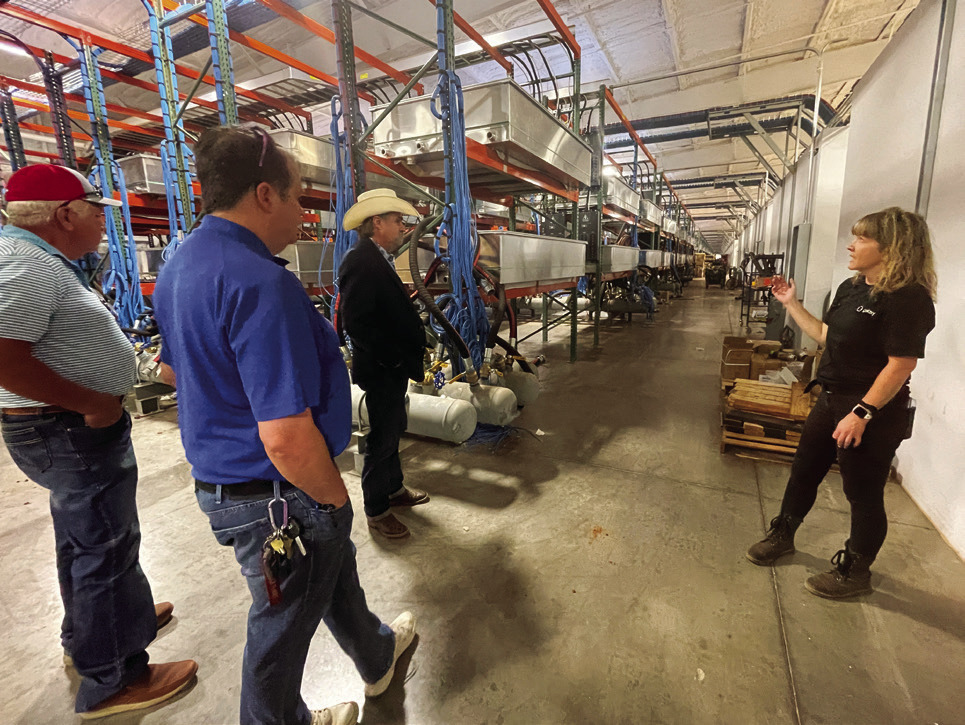
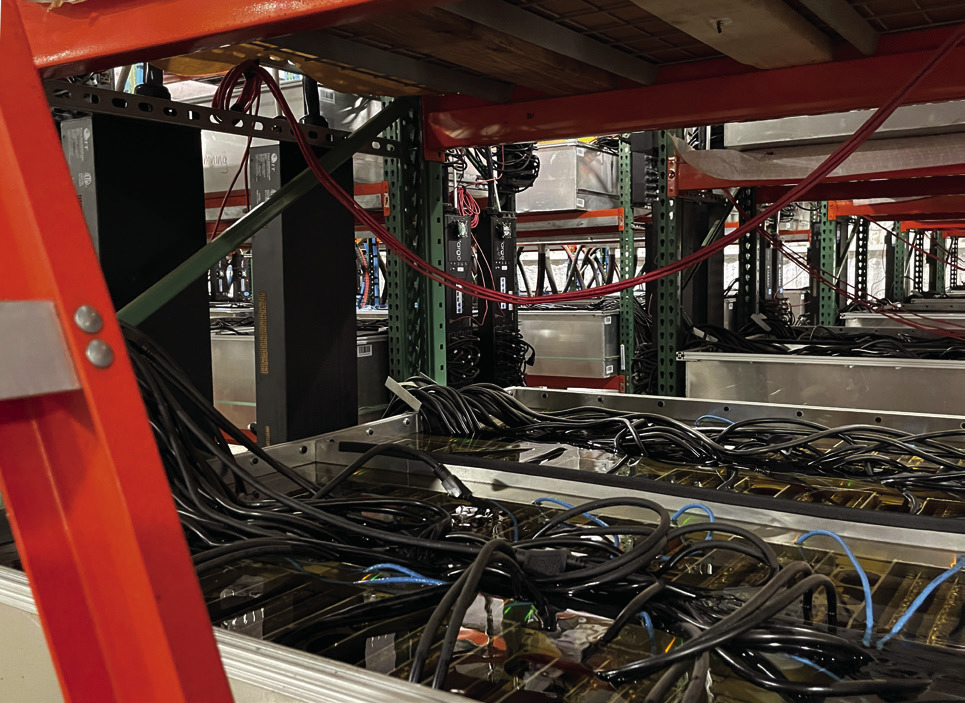
In the cavernous space, much of the southern half of the building that stood empty a year ago has now been filled with mining units, the original purpose-built Antminer and WhatsMiner units acquired by Argo. (Galaxy took over some 13,700 of these.) Since the operation was designed to provide cooling of machines by immersion in a dielectric fluid, Harris explained, engineers have been busy removing the computers’ fans and refitting them for
the fluid tanks.
“Would you say that plan has worked?” Brendle asked Gabel.
Gabel affirmed its success. “Efficiency is already proven now,” he said, but it will be a while longer before enough data is gathered to compare long-term. The next phase 1A, Gabel said, will feature air-cooled units.
Heat generated by the powerful computers is an issue througout the building, Gabel said, hence the improved cooling mechanisms. Temps can climb to 130 degrees inside despite insulation. But when it’s also hot outside—like today— and the Texas energy grid calls for slowdowns in nonessential uses—Galaxy happily complies, pausing operations for a few hours most afternoons. A dedicated ERCOT specialist staffer, Blake King, keeps the power cycle working efficiently.
Cleaning, in dusty West Texas, is also a daily undertaking. “We clean half a pod (a unit of mining computers) every day, and it takes 180 days to complete a full cycle,” said Gabel. “We also test regularly for corrosion.”
At Helios, Galaxy mines cryptocurrency for its own investment and also hosts operations for other clients, including Argo. A thirdparty crew is also on site, cleaning and recovering the disabled Antiminer fans.
“Having this much space allows us to diversify in different ways,” Gabel said—such as running a repair facility, or functioning as a traditional data processing center.
Commissioners took the time to quiz Gabel and Harris on a wide variety of technical matters, from utility needs, jobs training, construction, related enterprises nearby—such as battery storage and solar power—to the ever-present issue of county road improvement.
And the benefit of all this activity in rural Dickens County—even for area residents who don’t quite grasp the concept of crypto— is steady employment and steady tax revenues.
“With expansion comes jobs,” said Gabel.
And from our media standpoint, we appreciated the opportunity to watch so many of those jobs in action.
- Log in or Subscribe to post comments.