
Since temperatures are in the 90s it may seem strange, but it is time to plant fall gardens. Cool season crops are grown in fall gardens, and many are the same crops grown in spring gardens. The big difference between fall and spring gardens, aside from the obvious seasonal difference, is the quality of the produce. Fall crops are usually superior to spring crops because plants are harvested when temperatures are cooler.
Even with our heat this summer, visualize the months of September and October with day temperatures that are dropping, but days are still bright and sunny, and nights are cool. These are the perfect temperatures for fall crops to flourish.
Fall gardens should be planted between mid-July and mid-August when soils are warm, which speeds germination and emergence of seed, allowing seedlings to establish quickly. To be sure the fall crops get the number of days required for optimum growth, crops need to be in the ground before the first of September.
Some considerations before sowing seed:
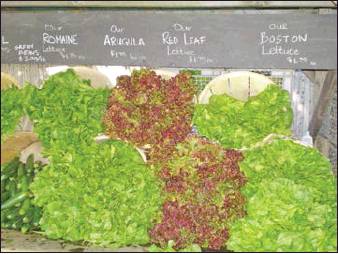
Choose the proper crop. Grow only cool-season plants. These have leaves or roots for the harvested portions. They are sown from seed, are easy to grow, and can be harvested young as “baby” vegetables or left to full maturity for higher yields. Potential leafy crops are any of the lettuces — bibb, romaine, red and green oakleaf; Asian greens — Chinese cabbage, Napa cabbage, mizuna, bok choy; other greens — arugula, Swiss chard, kale, red and green mustards, collards, spinach; and root crops like radishes and those that can stay in the ground after frosts like carrots, parsnips, beets and turnips.
Prepare land: Start with land that is free of weeds, especially seed heads. Discard spent summer crops that are producing poorly or diseased. Till the ground to break up any compacted or hard soil, add well-composted organic matter such as manure. Seed of cool season crops are generally quite small, so it is important to have soil that is free of clumps.
Practice crop rotation: Fall gardens have the advantage of alternating botanic families by following summer crops that are in different botanic families. Crop rotation is critical for optimum plant growth and is the easiest and most effective approach for managing disease-causing microorganisms in the soil.
If you haven’t tried fall gardening, it is one of the most satisfying times of year to be outside.
- Log in or Subscribe to post comments.