
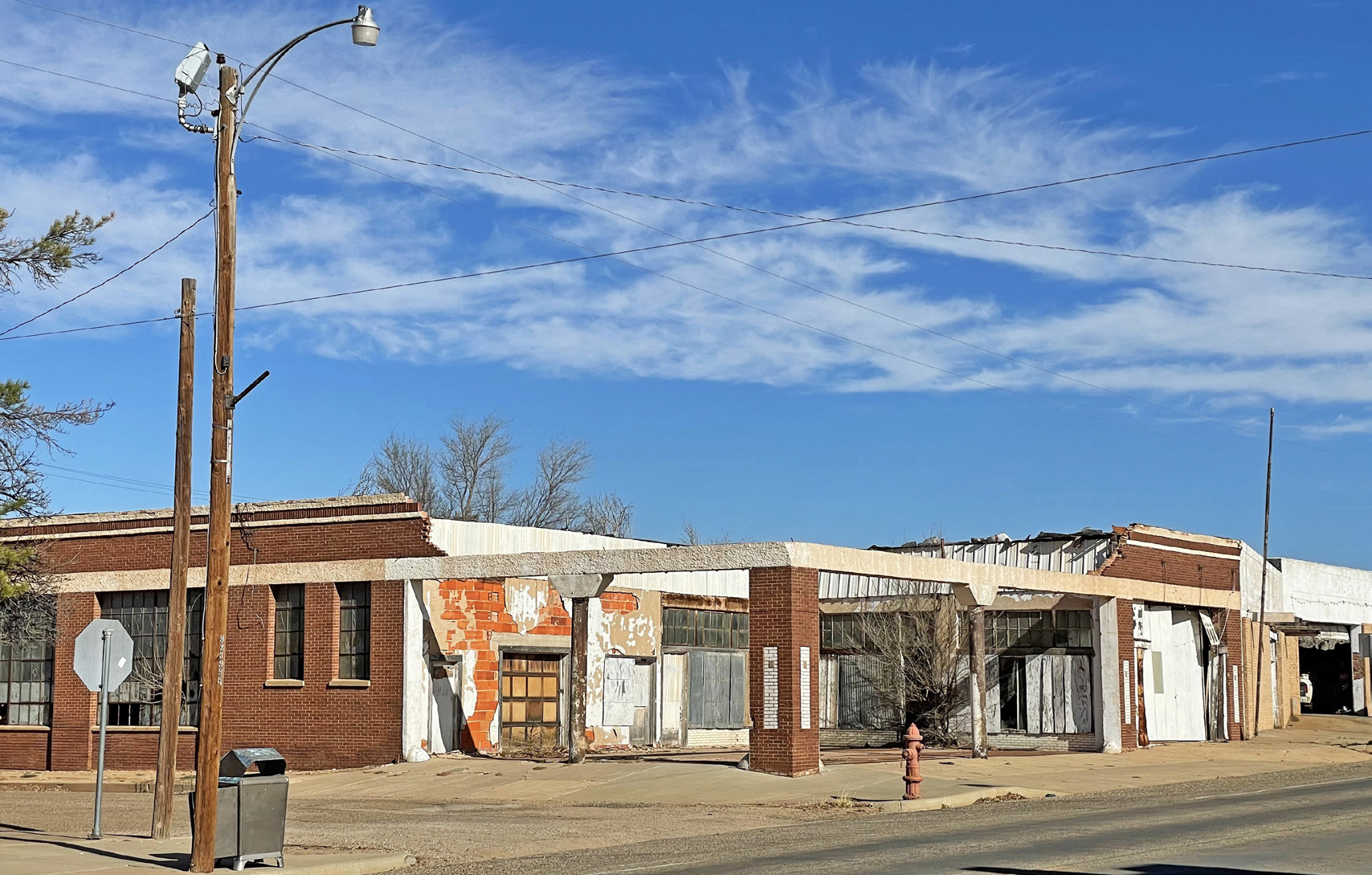
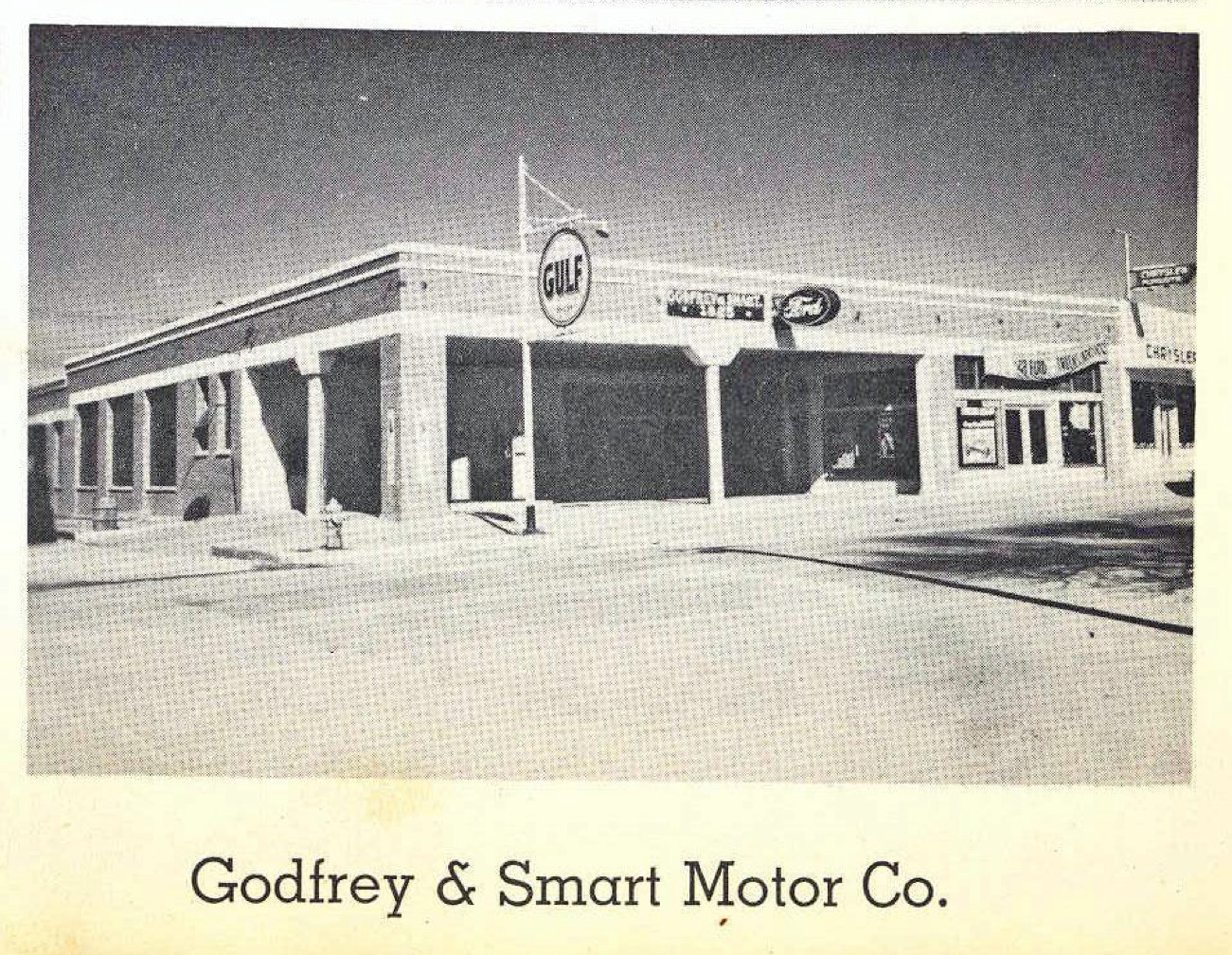
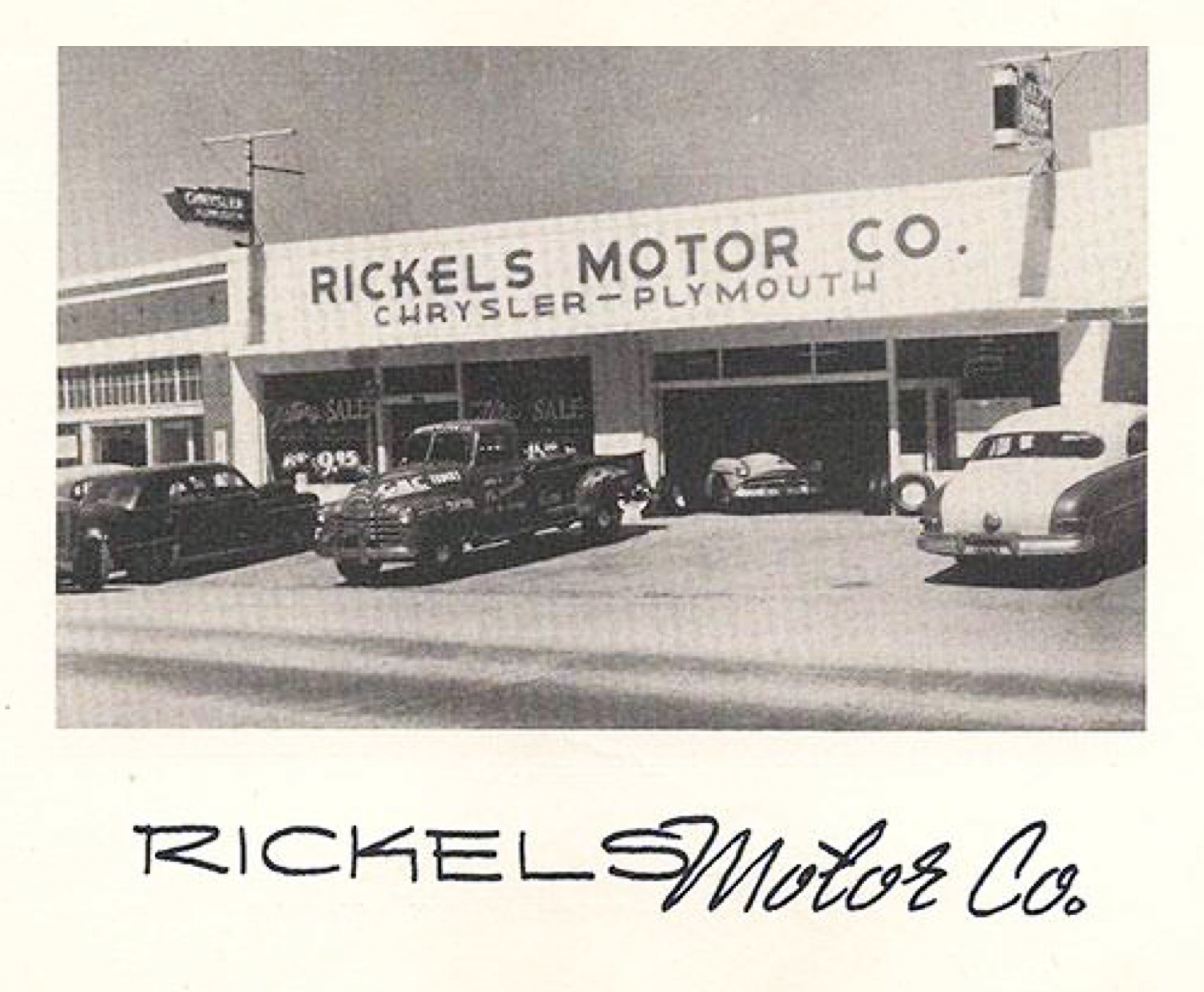
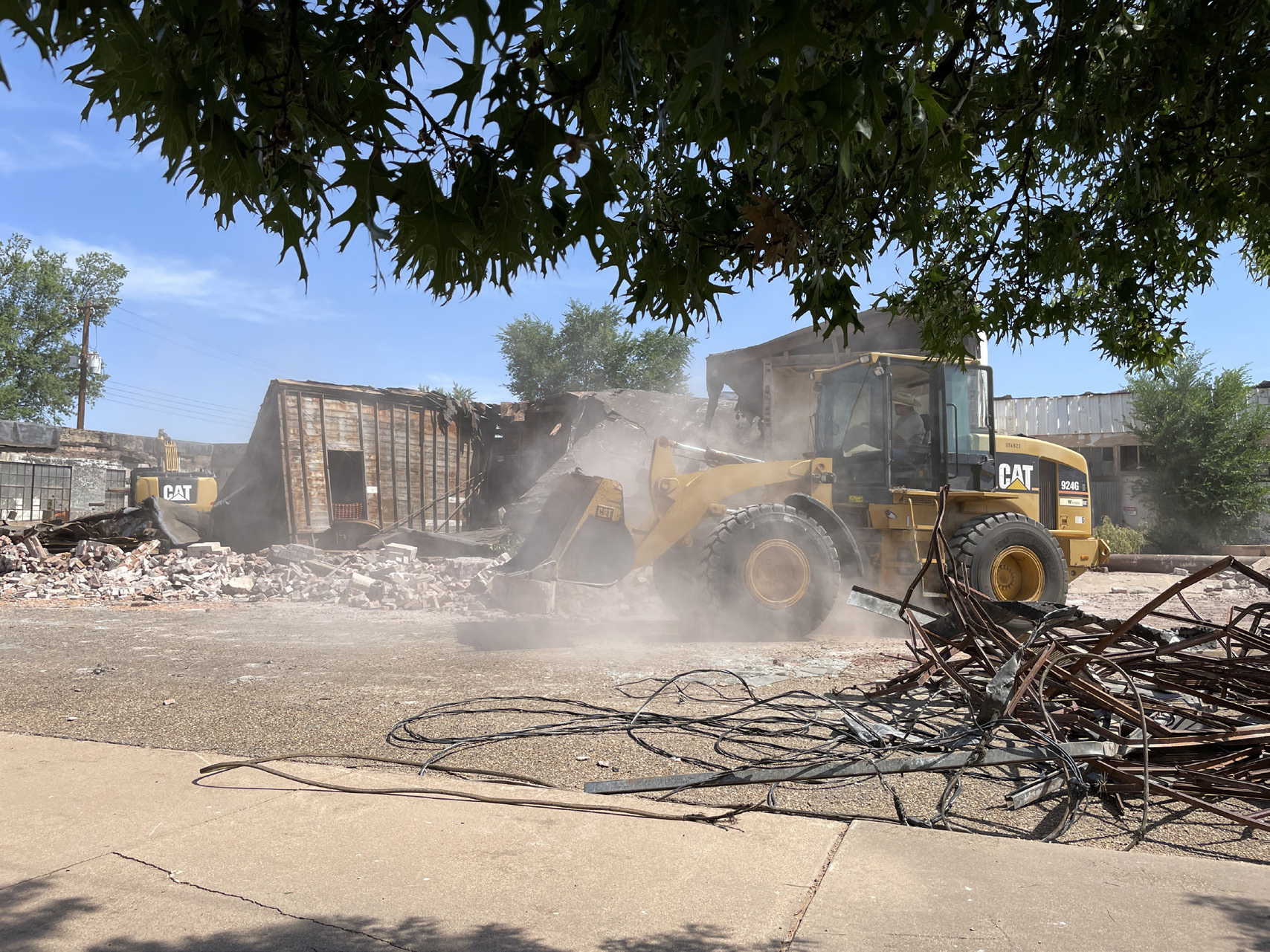
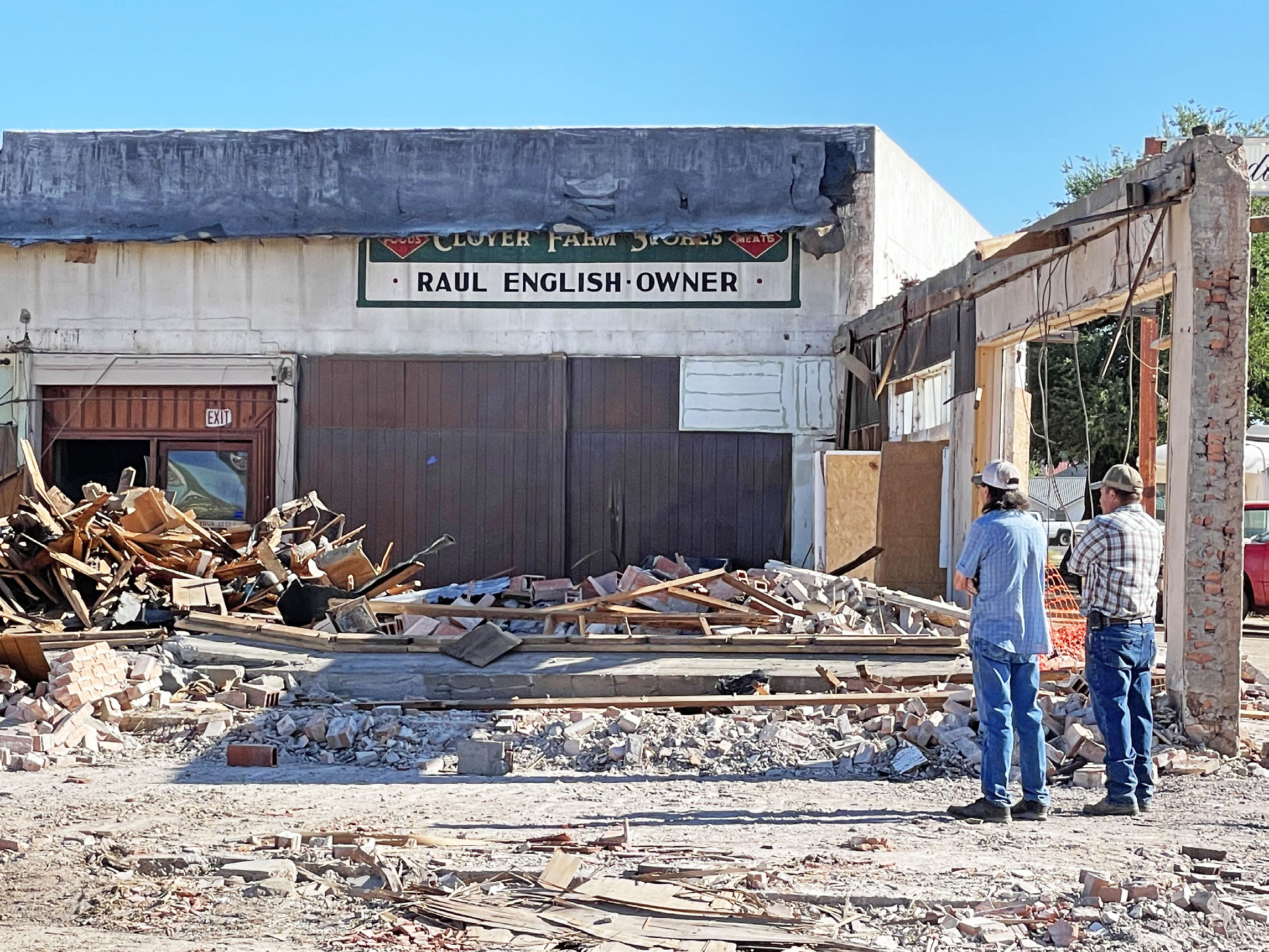
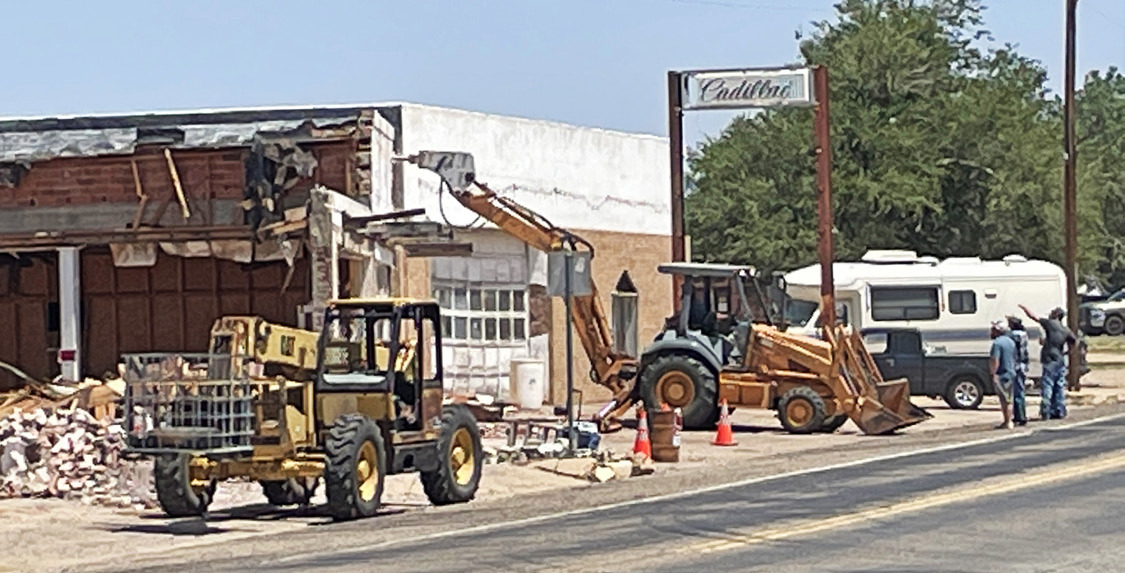
Texas, seeing the plans on paper earlier this year was one thing. But watching heavy equipment bring down the old Godfrey Ford and Rickels GM dealership buildings on Burlington Avenue in mid-July made it real.
In place of two century-old structures with caved-in roofs, Spur would soon be getting a state-of-the-art fire station, situated in the heart of the city.
The new firehouse comes courtesy of longtime Spur residents and community leaders Eric and Linda Swenson. The couple shies away from credit or publicity, instead crediting the coalition of property owners and volunteer leaders who have shepherded the concept from the spark of an idea to unfolding reality.
From the project’s inspiration in fall 2021 to a complex transfer of donated property in spring of 2022, the plans have rapidly taken shape. (For the genesis of the fire station project, see “Swensons to build state-of-the-art firehouse for Spur,” The Texas Spur, Feb. 24, 2022.)
Visitors to Spur for Homecoming week will instantly appreciate the transformation of the site. But only those present during the stretch of 100-degree-plus heat in mid-July 2022 can appreciate the effort it’s taken to get this far.
Community teams up to clear site “We were really lucky on the silver lining to this drought,” explained Dickens County commissioner Charlie Morris, who has served on a volunteer basis as project lead. The extended dry spell gave road crews time to accomplish necessary site preparation during summer, he said. Determined not to hold up the eventual work of the engineers and general contractor, Morris said, he pushed the workers hard for those two grueling weeks starting July 18. Spur volunteers “didn’t want the builders to be waiting on us.”
It took about three weeks, back in June, to clear the building with hitting any vertical supports with moving equipment, Morris said.
Owners of the two affected buildings, Benny Ball and Dennis Wyatt, carefully cleared out anything they wanted to keep after donating the physical property to a nonprofit, Friends of Spur Texas Volunteer Fire Department, that’s taking responsibility until time for the facility to be turned over to city ownership.
Out came old vehicles, scrap metal and parts, company records, many of which were saved and turned over to the Spur Dickens County Museum. Gone was anything that could be recycled. (One bizarre artifact was kept—the mummified carcass of an opossum left hanging from a rafter, now displayed in Morris’ maintenance shop.)
Donations in cash and in-kind “In a small community everybody knows everyone,” said Morris—and the fire house project has benefited from cooperation of multiple agencies, businesses and workers. “You had the firefighters, Cap Rock, SPEC—they kept saying, What can we do? and would see the need.” Spur fire chief Wess Abbott, a volunteer with Spur but a career firefighter with the Lubbock Fire Department— and, with Morris, a director in the Friends nonprofit—coordinated tasks and donations.
South Plains Electric Coooperative provided funding for excavator rental via a $10,000 grant, and also loaned its bucket truck for employees Kevin Swaringen and Ronald Todd (also a Spur firefighter) to take down a nearby tree and other aerial debris. Other advance preparation included removal of a colony of bees from the garage next door on Third Street, by beekeeper Jon Shipp of Spur. Part of the grant was used to rent a skid steer from Yellowhouse Equipment of Lubbock, to clean out debris inside before demolition began in earnest. An excavator was also rented from Cody Shafer at a discounted rate. Then the nail-biting parts of the process began. The roof of the Godfrey Building was removed first and the roof material broken up for extraction, Morris explained. Crews attached chains to vertical beams, tied tow ropes, got the front-end loader, out and pulled beams down, collapsing the roof of the empty building. The large tugboat rope they used was provided by resident Cody Schmidt, who had obtained it from Coast Guard disposal.
Dickens County did not charge for its labor or equipment, said Morris. Although all six county road hands participated at one time or another, county commissioner Mike Smith, who is CDL licensed, drove a truck nearly every day of the project to free up a road and bridge employee for existing commitments. Walls come tumbling down
Once the roofs were gone, sturdy brick walls were collapsed using similar techniques.
Heavy equipment was provided by operators Joe and Les Fincher, who donated their labor. The Finchers also brought their tele-loader to the site, to handle enormous concrete beams in pieces by the bucketful. Jimmy Whitefield, CEO and general manager of Cap Rock Telephone, provided a backhoe with a jackhammer, a critical piece of the puzzle to avoid damaging the remaining Wyatt Tractor building while taking down the other two structures that shared a common wall.
The most nerve-wracking part of the project, according to Morris, was bringing down the Rickels walls without damaging Wyatt’s stillin- use building. “Dennis is very smart, very analytical, and would talk about how to do it,” Morris said. Ronnie Bilberry cut through the roof with a chain saw and then meticulously parted the west wall and east wall from the shared wall between the Rickels and Wyatt buildings.
Treasures unearthed
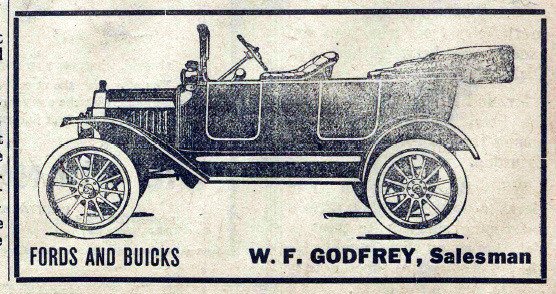
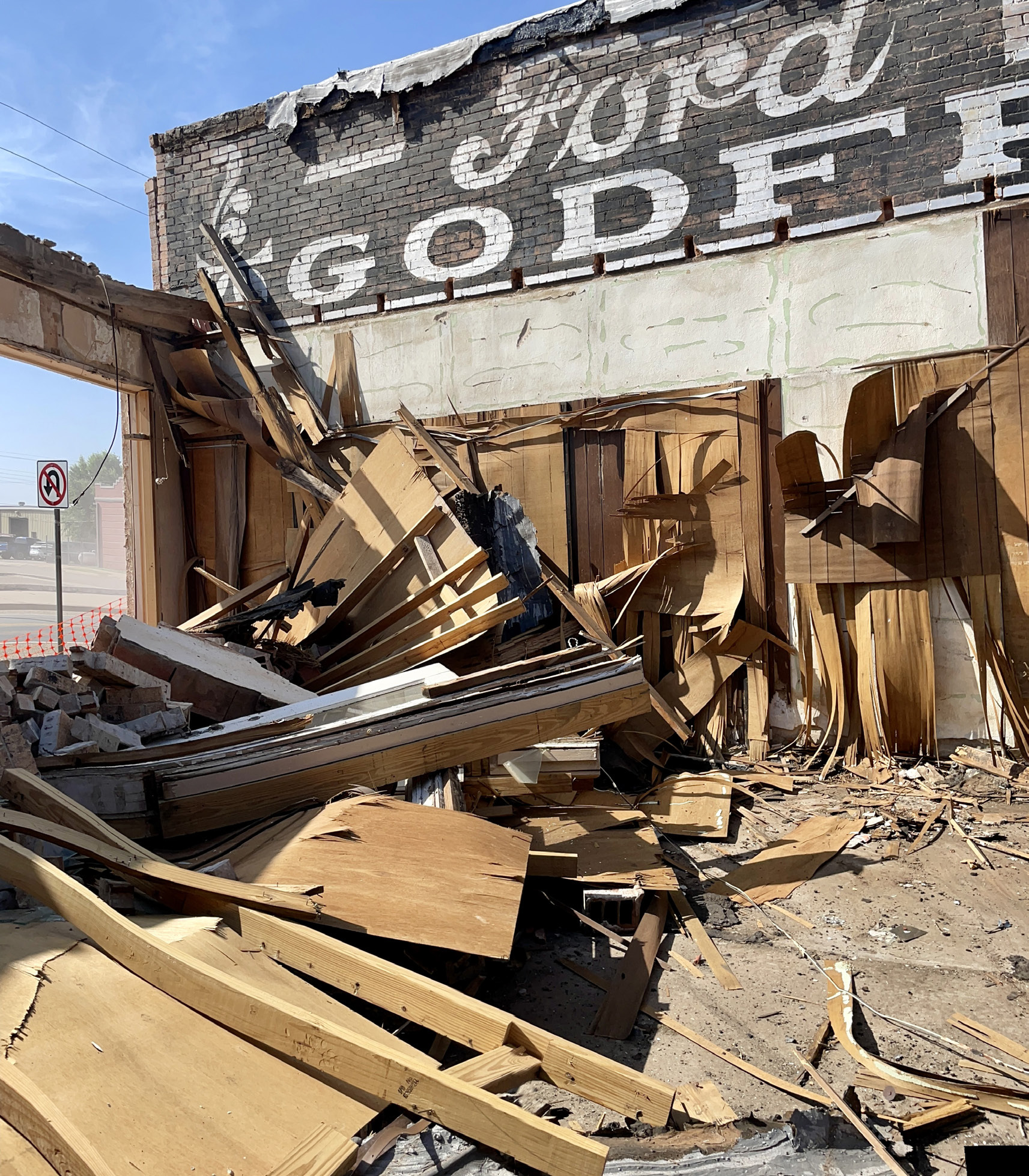
It was in the midst of separating the Godfrey and Rickels buildings that a hundred-yearold artifact was revealed. A Godfrey & Smart 1922 advertising mural, which had not seen the light of day since it was covered over when the neighboring Rickels building was expanded, appeared unscathed by any ravages of time.
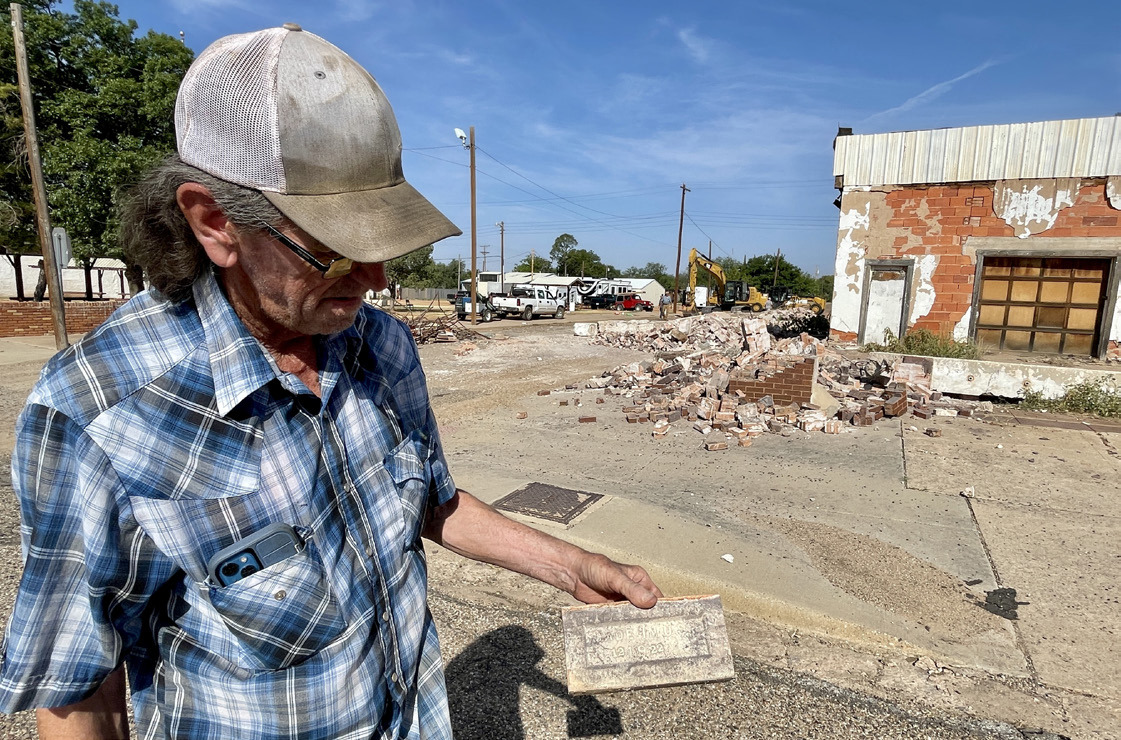
Regrettably, the project crew “didn’t have skill or time or knowledge” to retain the mural, which was painted directly on brick, said Morris. But several photographers— including professional Rick Boales—captured images during the two days the artifact was exposed before that portion of the building was brought down. Dennis Wyatt salvaged bricks—both common brick and decorative, glazed bricks stamped with the 1922 date of the Rickels Building construction. (Wyatt has already donated at least one to a worthy fund-raising cause, in the public library’s recent silent auction.) Another advertising mural in pristine condition, the sign for Raul English’s Clover Farms store, survived and was retained on the side of the Wyatt building. Concrete flooring then had to be broken up and hauled off, but again Morris felt the team was lucky, discovering only a minimum of iron rebar that would have complicated the project. “There was a ten-foot-deep 14x17 basement with rebar in roof; we filled it with sand and water to settle it,” Morris explained. An estimated 150 dumptruck loads were needed to haul off the remains of about 10,000 square feet of singlestory buildings. “It went so much faster than we thought,” Morris said, with no injury and only minimal damage to any equipment.
Next steps in site preparation
Now that local workers have wrapped up demolition and site clearing, Morris said, it would be up to the general contractor, architect and engineers to estimate fill dirt needed. Dickens County plans to provide fill dirt, while Mortenson Construction, which is engaged on the nearby Texas Solar Nova project, will do leveling and packing required for a complex “type S” slab with floor drains. All salvaged brick, concrete, and other hard material was stockpiled on city property for use in future road repair projects. The City of Spur will benefit from “a tremendous volume of salvage materials for future use,” said Morris. “There was method in that madness.” County commissioners, road hands, and farm and ranch people with experience in practical problem-solving contributed to the two-week effort, said Morris—and “everything worked as planned.”
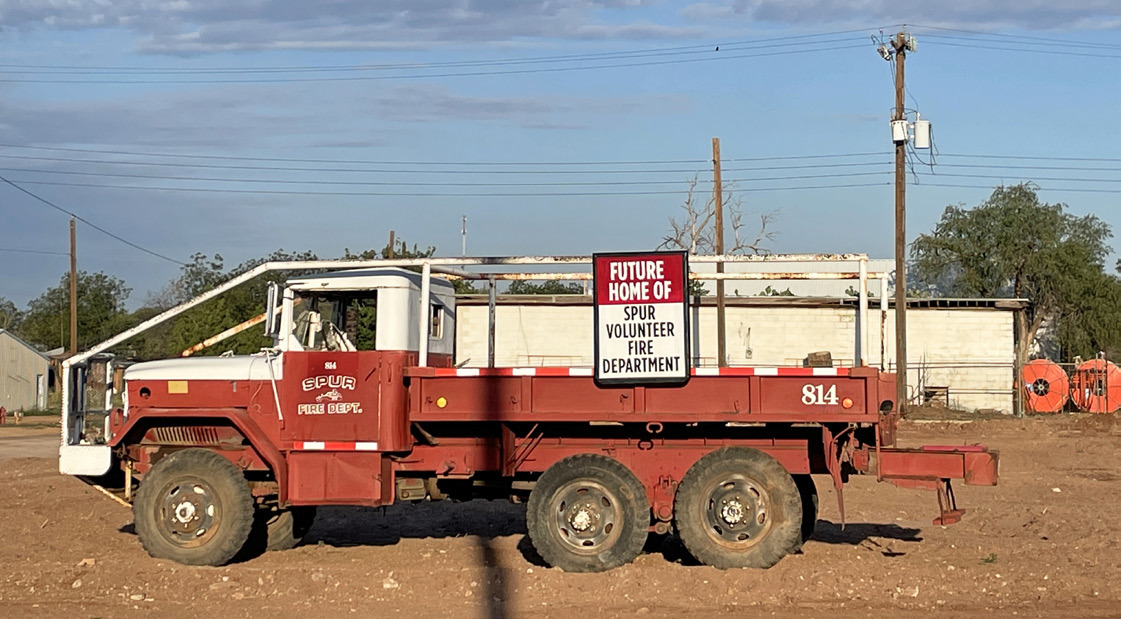
Fire chief Abbott confirmed last week that the civil engineer has been onsite and doing studies. “Progress is moving on,” he said, even though all that’s visible right now is the department’s old brush truck proudly bearing a “Future Site” sign. Abbott explained that once the civil engineers are done with their part, then the structural engineers will get together with them. They’ve already met with the mechanical engineers; civil engineers were on site last week and recommended removal some of the old footings, and the county has already completed that task.
The architectural firm is MWM Architects, Inc., of Lubbock, and the general contractor is Dusty Ratliff with All Texas Builders, Inc., also of Lubbock.
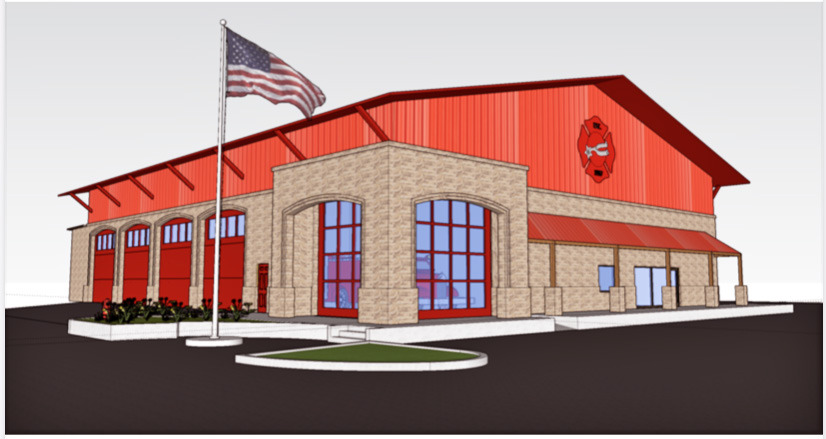
Firehouse of the future
The architect’s updated building plans were shared with the team recently, modifying the rough design Abbott had sketched out last spring.
The story-and-a-half steel building features design enhancements in keeping with Spur’s historical downtown and a providing a public display space for the city’s 1924 pumper truck, “Old Betsy.”
The combined firehouse site—almost a quarter of a city block—will provide an adequate and convenient location for an 8,000-square-foot firehouse/training classroom with kitchen facilities, featuring drive-through vehicle bays. Plans will encompass all regulatory and safety features, proper dimensions for bay doors, requirements for interior and exterior lighting, ventilation, ADA compliance, and the like. The exit bays will likely front on third street directly across from Rickels Park, said Abbott, allowing the station to be the focal point of community gatherings on special occasions such as the annual Homecoming pep rally. “This is going to be a topnotch, state-of-the-art fire station,” said Morris, who feels that Spur’s facility will be comparable to those in much larger cities. “We were going to have to demolish the Godfrey Building; this just accelerated the process.”
- Log in or Subscribe to post comments.
