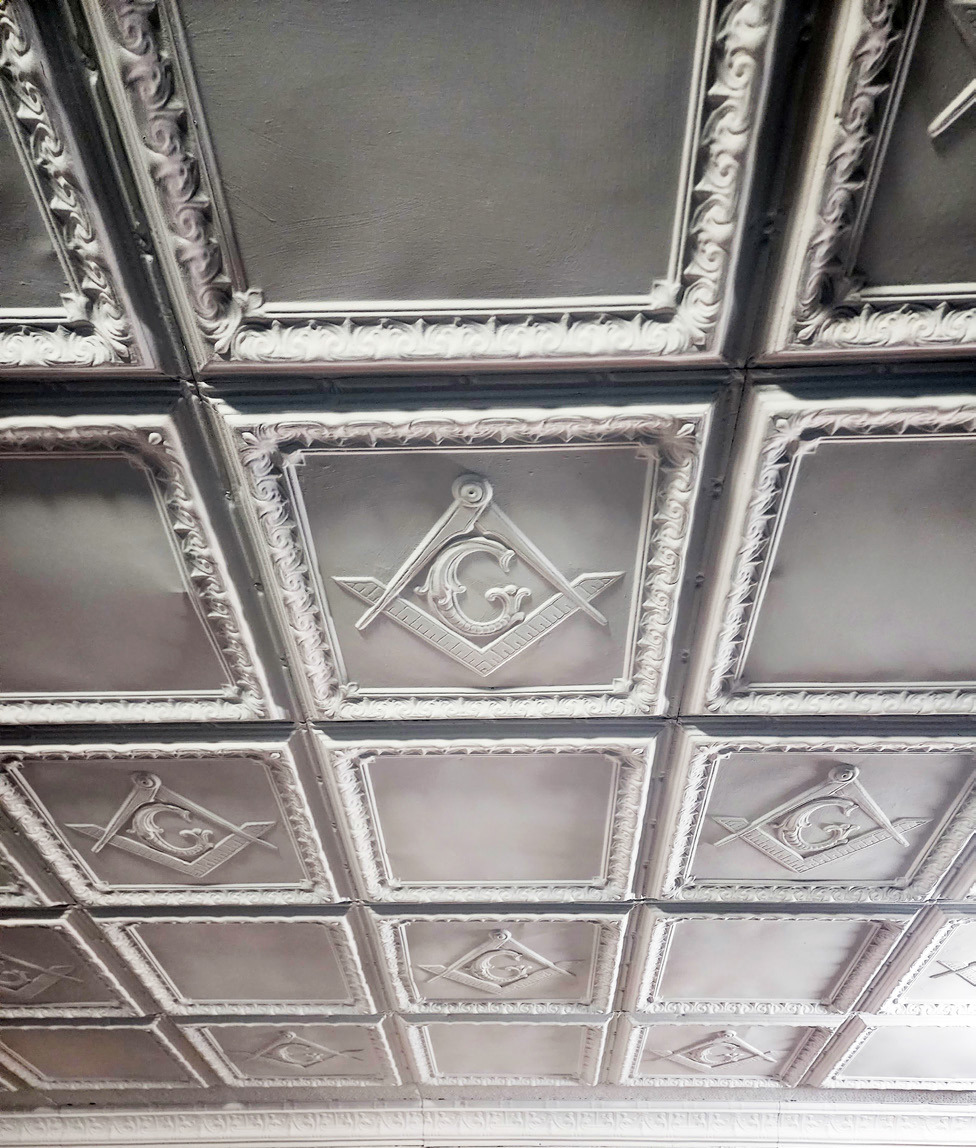
Early history of Freemasonry
Freemasonry is one of the oldest fraternal organizations in the world and exists in nearly every country in the world. So, what exactly is Freemasonry?
Ask 100 Masons what Freemasonry means to them and you will get 100 different answers.
Freemasonry, its values, beliefs, and teachings, cultivate within each man differently. At his core a Freemason is a man of good moral character who professes a belief in God, a man who desires to better his community, treat all with compassion, and more importantly to be the best version of himself.
The Lodge represents not only the physical building but the members who encourage each other with brotherly love. Freemasonry in Motley County, 125 years ago, had a profound impact on the early organization of the county, local government, business and schools.
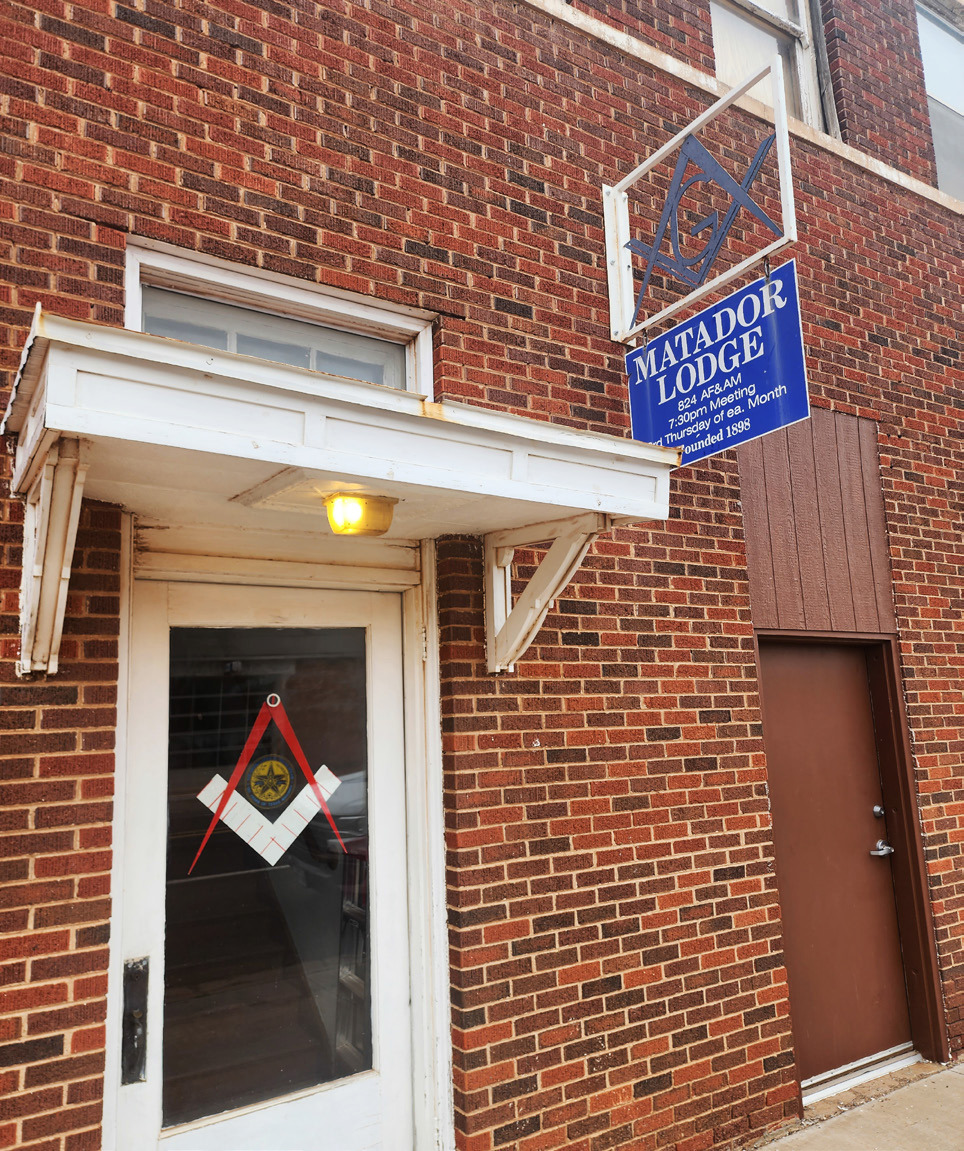
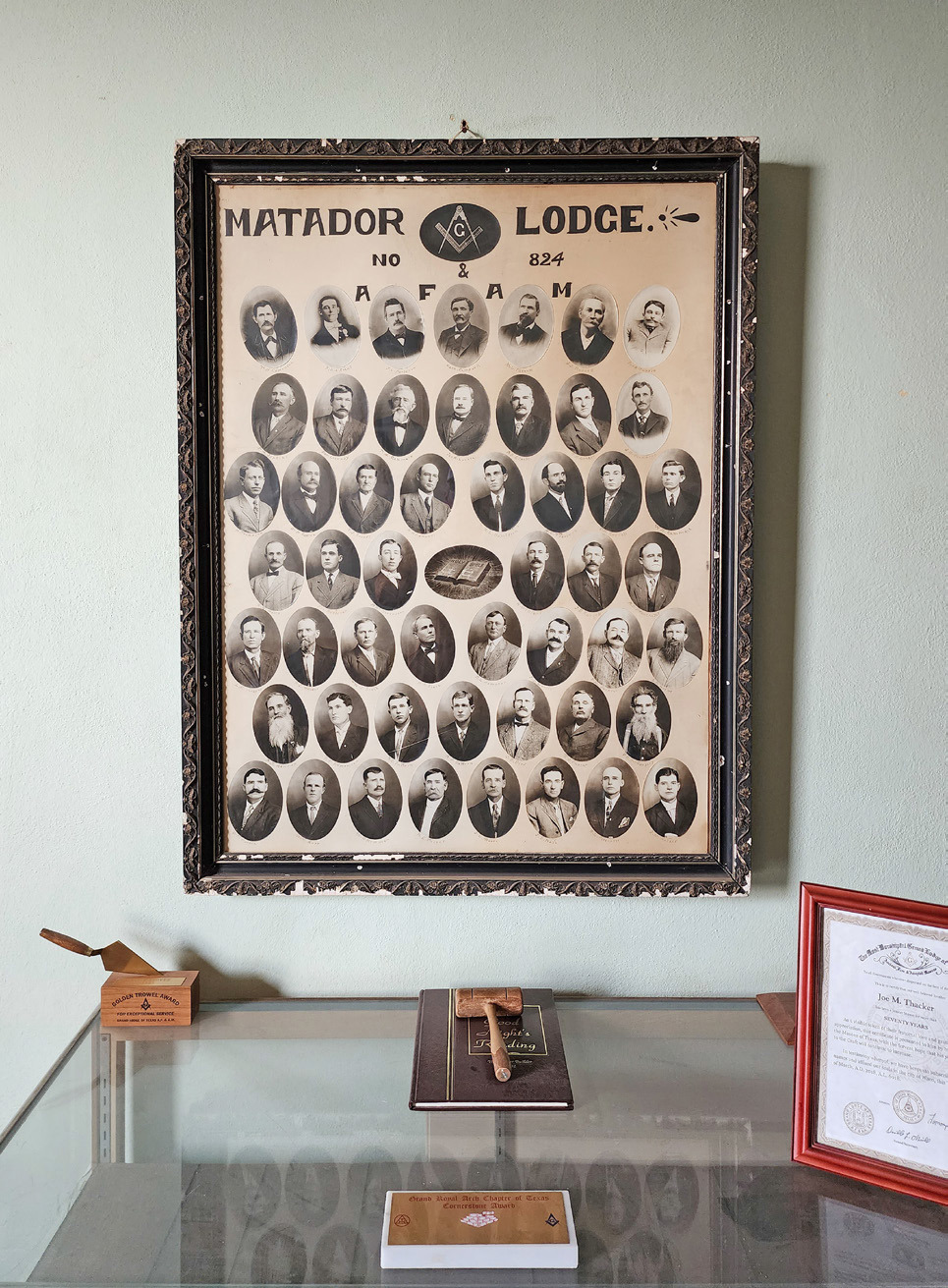
Origins of the Matador Lodge OnOctober4,1898,three men traveled on horseback to Floyd City Lodge #712, in Floydada, Texas, to petition for Dispensation to the Grand Lodge of Texas. Early frontiersmen and pioneers of the county felt the need to further their Masonic work, and ten men signed the petition. The petition was presented to the Grand Lodge at the Sixty-third annual session and was granted, Matador Lodge #824 was set to work on October 22, 1898. Formal authority to meet as a Lodge was granted to Matador Lodge #824 125 years ago, seven years after the formation of Motley County, 53 years after Texas was admitted as a state, and 63 years after the first Grand Lodge of Texas convened. On August 17, 1898, two lots were purchased on the south side of the square, by donations from the lodge members, the Matador Land and Cattle Company, and other groups, from Mrs. M. H. Dickson. The wooden building, formerly the Southern Hotel, was two stories tall, with the bottom portion used over the years as a school, a county courtroom, and the judge’s office. The top floor was used as lodge room for both the Masons and the Order of the Eastern Star Matador Chapter #66. The building, now the current site of offices of the city of Matador, burned down in December 1925. The original Lodge charter was destroyed.
The Matador Land and Cattle Company deeded to the Matador Lodge #824, on February 20, 1903, 10 acres east of the town of Matador to be used as a cemetery for the inhabitants of the county, and on August 16, 1913 a committee was appointed to hire a surveyor to survey and make field notes on the land. On April 24, 1926, F.M Eiring was appointed to meet with other organizations of town to organize a “Simetary” Association. That land is now the East Mound Cemetery. It is believed that the first Masonic burial service held by the Lodge was April 14, 1900 for Brother John H. Cox. Lodge minutes on that date indicate that the “purpose of the meeting was to attend the funeral of Brother Cox whom had passed the night before around 10 pm. Lodge was opened and the ante-burial service having been concluded a procession was formed and marched to the place of the deceased and then taking possession of the body and conveying it to the cemetery where the usual forms and ceremonies on such occasions was gone through with.” Lodge records indicate that J. L. Burleson and C. H. Harper were appointed with power to pay for the funeral expenses for Brother Cox, and the Lodge would reimburse them. Several headstones within the cemetery bear the Masonic square and compass.
During the early 1900s the Matador Lodge was very active, membership increased, and the Matador Chapter #66 Order of the Eastern Star was organized. Minutes describe processionals for installation of officers from the lodge to the church and note that “a sumptuous repast was served to the public as arranged for by the committee” with the cost of the “meet” (meat) $10.60.
In March 1904, five brethren, R.D. Forbis, C.C. Cobb, W.B. Pinson, G.W. Jackson and J.A. Pinson, asked for demits to form a lodge at Dickens, Texas.
On September 27, 1904 a special session of the Grand Lodge of Texas met in Matador to lay the cornerstone for a new courthouse. Throughout the next few years chairs were purchased, repairs were made to the building, and committees were formed to purchase a desk, safe, and organ. Discussions were frequent about building a new Temple but never acted upon; a Delco system was purchased to replace the gas lamps; and a concrete sidewalk was added to the front of the building. Late in 1921, Masons from Roaring Springs petitioned Matador Lodge to form a new Lodge. The charter was granted; eventually the Roaring Springs Lodge #1171 would merge back with Matador Lodge #824 on November 20, 1992.
A new home
After fire destroyed Matador’s first Lodge Hall, on April 6, 1926 lots 21 and 22, Block 114, the site of the current Lodge, were purchased from John C. Russell and wife Olive, and R. H. Thornton. A committee was formed, consisting of J. F. Jordan, J. E. Russell, and E. H. Thorton to assist the secretary in selecting furnishings for the new Temple. Minutes indicate that Brother E.D. Smallin was to receive $10.00 for “service rendered on plans of the new hall as he had been hired for that purpose.” Meeting minutes from July 31, 1926, indicate that brethren voted “to have a barbecue and entertainment in honor of opening the new Temple.” It was also voted on at this meeting to prohibit the use of tobacco in the Lodge room.
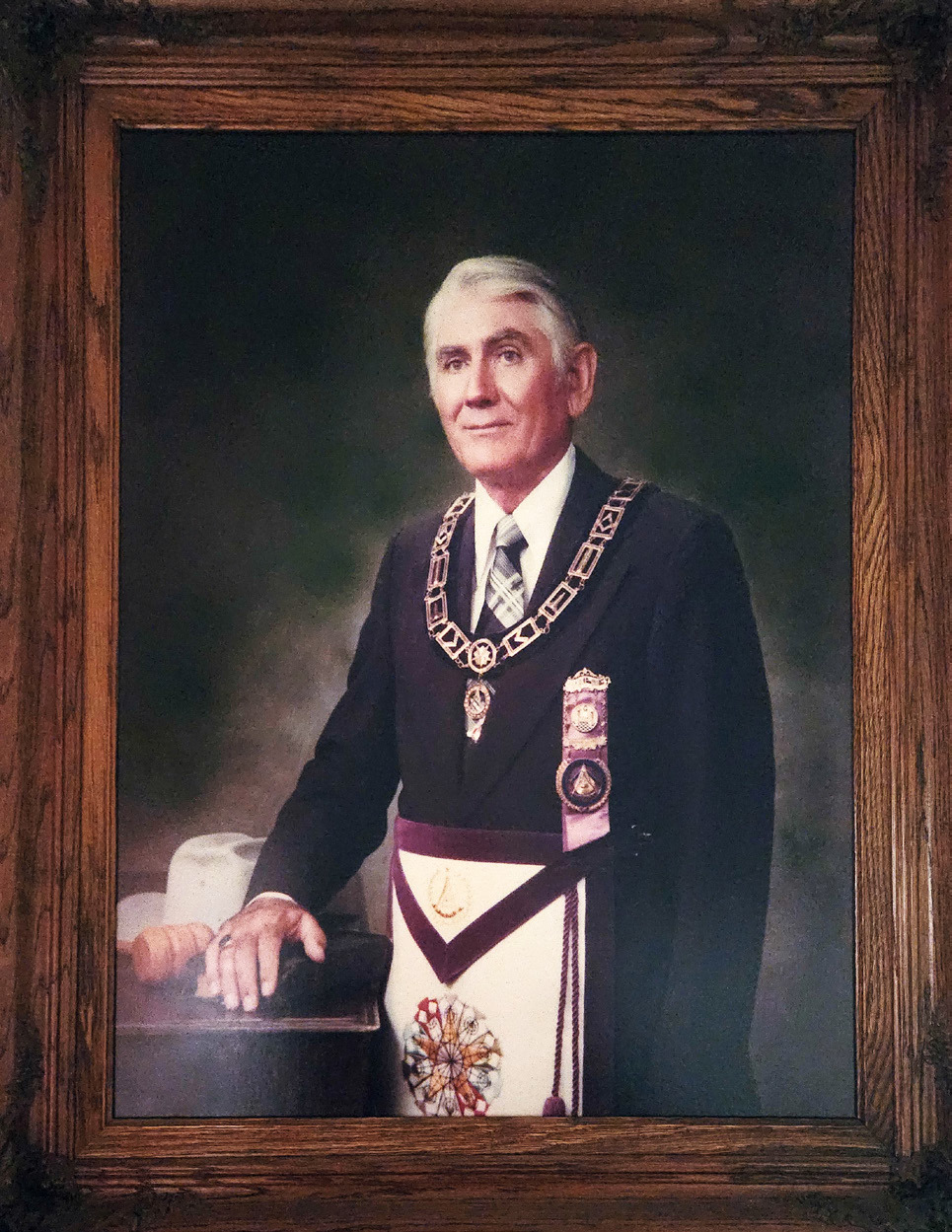
For the next 97 years things remained relatively unchanged: meetings were still held every month and membership had booms and declines. Mountain and sea oyster feasts were numerous over the years beginning in 1946, serving as many as 111 people in 1950. Many brothers over the years served as District Deputy Grand Master, whose job is to visit every lodge in the district, and convey words of instruction from the Grand Lodge and Grand Master of Masons in Texas. On December 3, 1977, R. Furman Vinson was installed as the Most Worshipful Grand Master of Texas; he also served as the Grand Commander of Knights Templar of Texas. Several brethren over the years have served in political capacities, including Elbert Reeves and G. E. Hamilton, who both served as state representatives. The MatadorLodgehasalsopresented numerous awards to students and non-Masons in the community who have distinguished themselves through their service.
Ranchers, farmers, judges, sheriffs, railroad tycoons, merchants, preachers, commissioners, brothers, husbands, fathers, sons from all walks of life for 125 years have called the Matador Lodge home, some affiliating and some raised to the sublime degree in the very Lodge that stands today.
Historical sources
The above information was compiled from minutes of the Matador Masonic Lodge #824, a very well organized three-ring binder found within the Lodge and presumed compiled by Beverly Vinson.
Historical sources include: Arrington, Fred. “A History of Dickens County: Ranches and Rolling Plains.” Nortex, 1971.
Traweek, Eleanor. “Of Such As These.” Wichita Falls Nortex, 1973.
Minutes of the first meeting
Minutes of the first meeting had in attendance brothers W. L. Browning, W. B. Gilpin, J. J. Russell, J. R. Williams, J. C. Lisenby, T. N. Cammack, J. S. Thomas, T. N. Edmondson, J. L. Burleson, and F. E. McCaughey.
Visitors to the first meeting were District Deputy Grand Master, 62nd Masonic District, Right Worshipful R. C. Andrews, Floyd City Lodge #712; J.T . Burrus, Floyd City Lodge #712; H. H. Campbell, Ennis Lodge #369; E. A. Foster, Stonewall Lodge #704; W. F. Kelly, Fisher Lodge #703; H. R. Black and R.Y. Black, Crystal Falls Lodge #614; John McBain, St. Fergus Lodge #466, Scotland; and A. B. Newman, Fort Richardson Lodge #320.
On January 21, 1899, J. B. Bartley, Floyd City Lodge #712, was deputized to install officers and set Matador Lodge to Labor under Charter #824. The first slate of officers was W. L. Browning, worshipful master; J. L. (John L.) Burleson, senior warden; Jack Luckett, junior warden; T. N. (Thomas Newton) Cammack, treasurer; John McBain, secretary; and W. B. Gilpin, tiler.
Members affiliating between November 26, 1898 and June 9, 1900 before the Lodge obtained it charter were A. B. Newman, E. A. Foster, W. F. Kelly, W. F. Cloyd, R. A. Haley, C. H. Harper, Jack Luckett, W. A. Newman, J. M. Campbell, J. W. Smith, J. D. Morriss, W. H. Rattan, L. D. Sowell, Z. V. Smith, F. M. Jinkins, J. R. Moore, S. D. Horne, J. W. Tollison, W. B. Johns, D. W. Scott, and T. G. Duncan, originally of The Bruce #593, Friockheim, Scotland.
Signers of the original petition W. L. Browning of Plainview Lodge #709.
“Bud” Browning was a prominent rancher and business owner in Dickens County. His brother, James N. Browning, was lieutenant governor of Texas from 1898 to 1903.
J. C. Lisenby of Whitesboro Lodge #263. John C. Lisenby arrived in Motley County via two covered wagons driving 100 head of cattle in May 1892. He planted some of the first cotton grown in the county.
F. E. McGaughey of Henrietta Lodge #454.
Notes found in the binder indicate that F. E. Mc-Gaughey was a saddle maker born in Ireland in 1839; he died September 10, 1915 in Matador. He is buried in East Mound Cemetery, where his tombstone shows no date of birth or death.
T. N. Cammack of Woodville Lodge #61.
Thomas Newton Cammack, during his time with Brown’s Regiment of Texas Cavalry, might have traveled through Motley County and in 1891 settled northeast of Matador. T.N. had a mail route for several years from Matador to Espuela with return by Beckton, and a later route from Childress to Tell, then to Tee Pee City. He was the sheriff and tax collector, 1900-1902.
J. S. Thomas of Eureka Lodge #371.
T.N. Edmonson of Armstrong Lodge #445. Thomas Neal Edmondson arrived in Motley County in 1891. He was county commissioner in 1892.
J. L Burleson of Armstrong Lodge#445. John L. Burleson was a prominent rancher and businessman who served as county treasurer from 1896to 1903. His wife, Albina Dionicle, was known as “Mother Burleson” because she would travel in a wagon to help deliver babies. Motley County football is played on Burleson Field, named in her honor.
J. J. Russell of Blum Lodge #607 was the author’s great-great-greatgrandfather and the father of J. E. “Ed” Russell, lawman and sheriff of Motley County from 1910 to 1922, thrice past worshipful master of Matador Lodge; and father of Bud Russell (a 50-year member of the Blum Masonic Lodge), chief transfer agent for the Texas prison system who once hauled Clyde Barrow and 115,000 other prisoners during his career.
J. R. Williams of Newton Lodge #136.
W. B. Gilpin. William Bond Gilpin came to Motley County in 1891 and filed a 160-acre claim near Flomot. Gilpin was elected judge of Motley County in 1894 and also operated a gin for several years owned by fellow Masons T. G. Duncan and Jack Luckett. In 1908 he opened a store front in Poet, Texas, later changed to Gilpin.
- Log in or Subscribe to post comments.