

In last week’s column were suggestions for tree placement and preparation of the hole in which the tree will be placed. In this, our final tree-planting column for the season, will be suggestions on proper planting and staking.
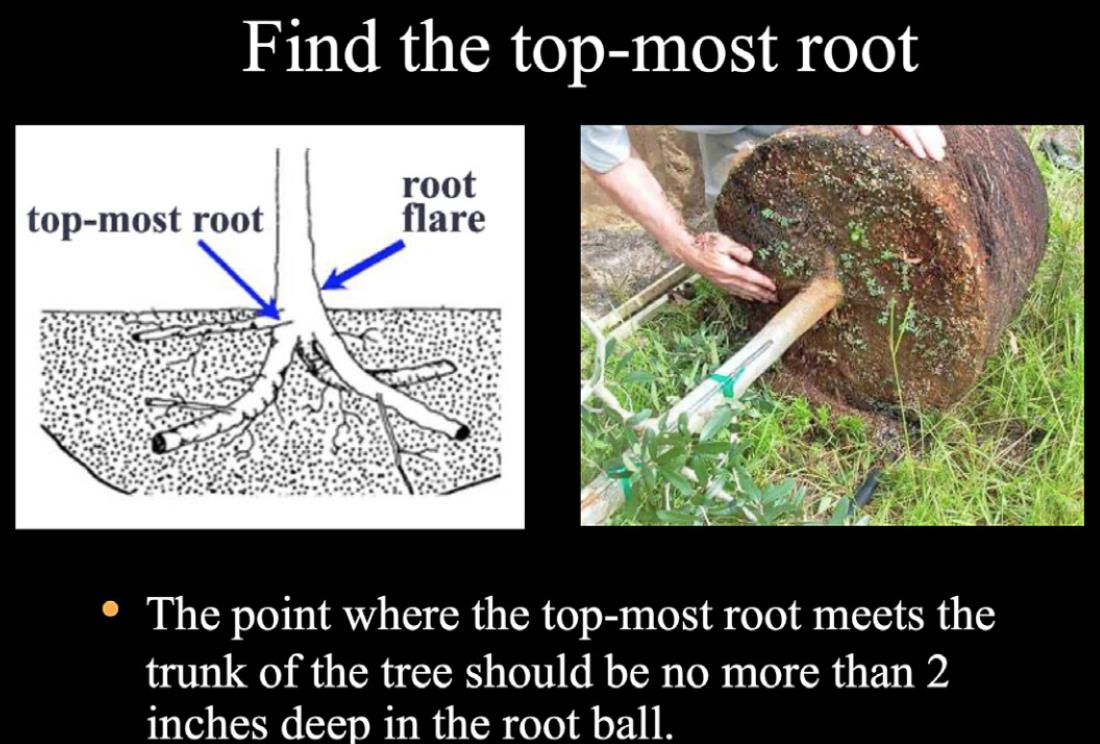
Ball and burlap trees. Remove burlap and any wire that covered the root ball. Take note of the root flare, the area at the base of the trunk where roots extend or flare out. It is critical that the root flare is visible after placing into the hole. If the tree is placed too deeply, the root flare will be below ground level, which is a dangerous practice as the growth of the tree is slowed and may cause rotting in time.
Container-grown trees. Trees that have been grown all season in a container will have two issues. First, roots will have become compacted as the growing area was restricted to the pot. Likely roots will have grown long but since they were restricted have circled the pot. These roots need to be trimmed, extended, and placed so they flare out from the trunk. Often trees will suddenly decline and die, the cause being roots that were still growing in a circle and never extended into the soil profile. Second, there may be few healthy roots—healthy roots absorb water and will be white; brown, spindly roots have little water absorbing capacity. Disturb the root ball, allowing for aeration of the root ball, which will encourage new root growth.
Planting the tree. Place the tree with intact root ball in the hole, keeping the root flare exposed. Adjust the angle of the tree so that it stands upright from all angles. Fill the hole by backfilling with native soil. Create a berm around the perimeter to form a well and water thoroughly; keep adding water to eliminate air bubbles. Tamp gently around the trunk and if soil has settled, add additional soil.
Staking the tree. To keep tree upright, stake by placing flexible material such as canvas strips or old stockings loosely about halfway up around the circumference of the tree. The soft material will reduce abrasion of bark yet allow the tree to sway in the wind without bending. Use two stakes for trees up to 4 inches in diameter, three stakes if larger than 4 inches. Never attach stakes to the tree itself.
- Log in or Subscribe to post comments.
