
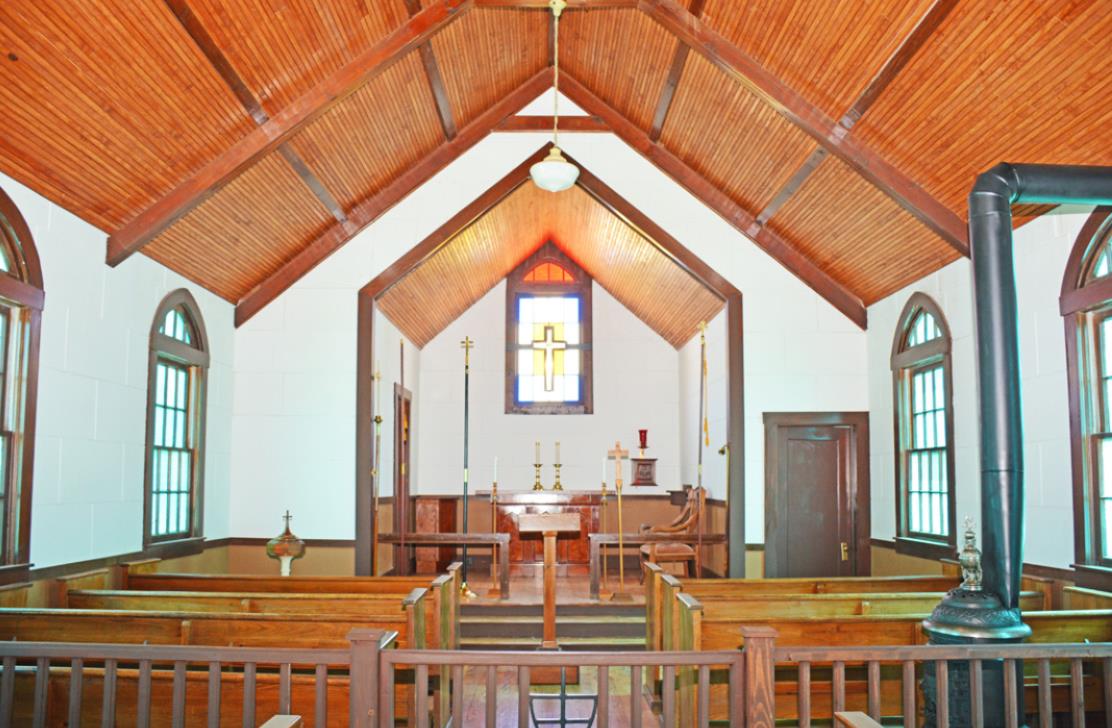
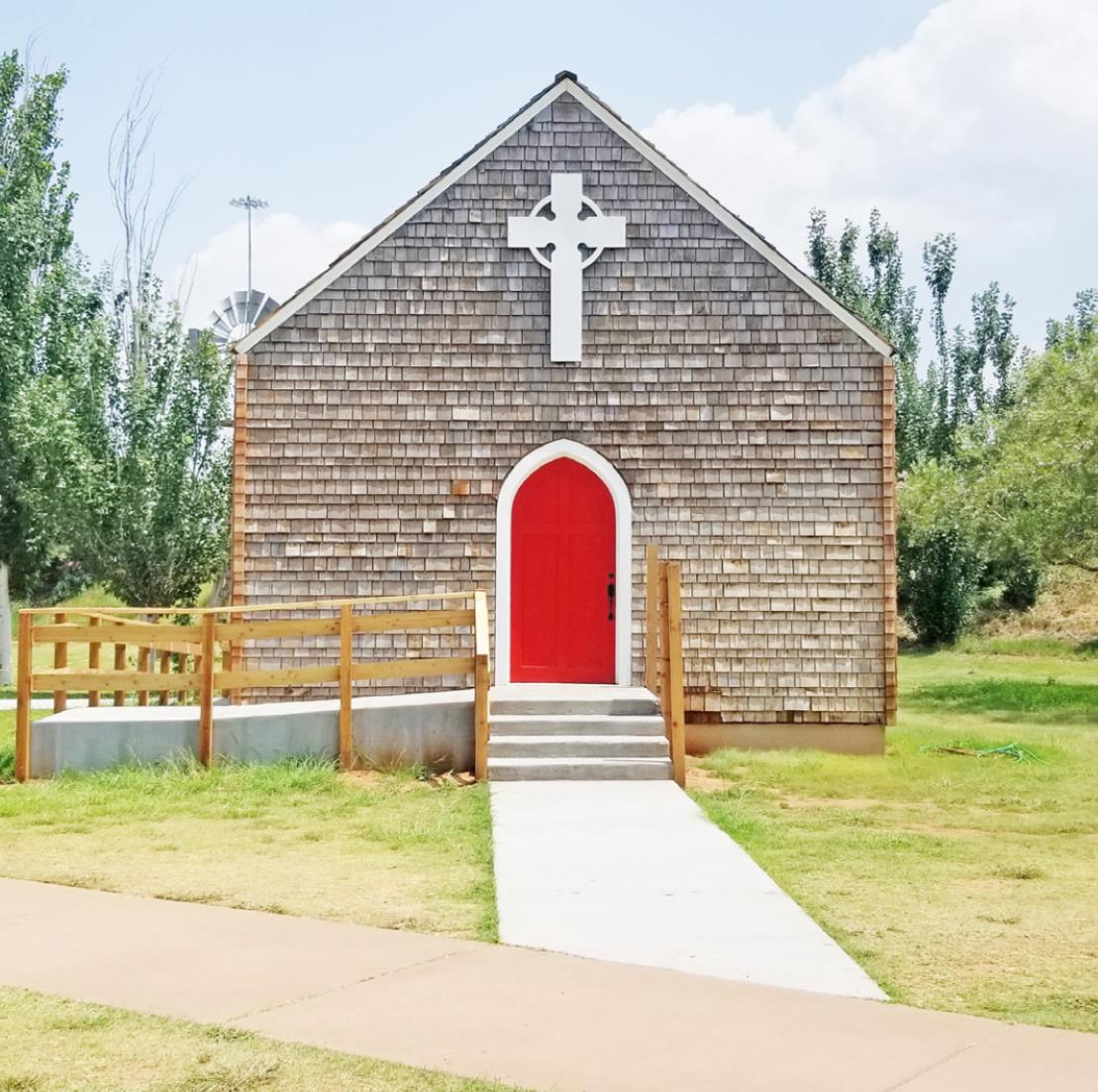
The journey of this little gothic-styled wooden church building has crossed a swath of West Texas over nearly a century—but it’s landed now in a permanent home where visitors can appreciate its ties to the ranching history of the West. The National Ranching Heritage Center (NRHC), which relocated Spur’s historic Trinity Mission to its outdoor museum on the Texas Tech campus last fall, will dedicate the church Friday, Sept. 17, as part of its outdoor park of historic ranchrelated buildings. The NRHC had obtained the structure via a gift from the Episcopal Diocese of Northwest Texas, moved it on a flatbed trailer from its latest home in Brownfield, and began working diligently on research and restoration. Sometime in the early 1920s the fledgling Episcopal congregation of Spur built the structure, for which they had begun raising funds since 1911. Early Spur residents Carl and Kate Senning were instrumental in obtaining authorization to form a congregation back then, but communicants relied on the other denominations in town to lend meeting space until they could build their own house of worship.
“Carl Senning did not live to see this church built,” said NRHC curator Scott White, citing a letter found in diocese records. Since Senning died in 1918, White and the NRHC team relied on this information as well as clues in the building itself to date the church a few years later than originally thought. “When the church was created, it didn’t mean there was a building — this group of people got permission to create a congregation.” Thus, “circa 1920” is “as close as we can come to a date,” said White.
Research also turned up partial, but tantalizing, ties to the Spur Ranch, which provided the town lot at 2nd and Burlington on which the building sat. A later quitclaim deed recorded in Dickens County stipulated that if the building were ever to cease being used as a church, the land would revert to the ranch, said White.
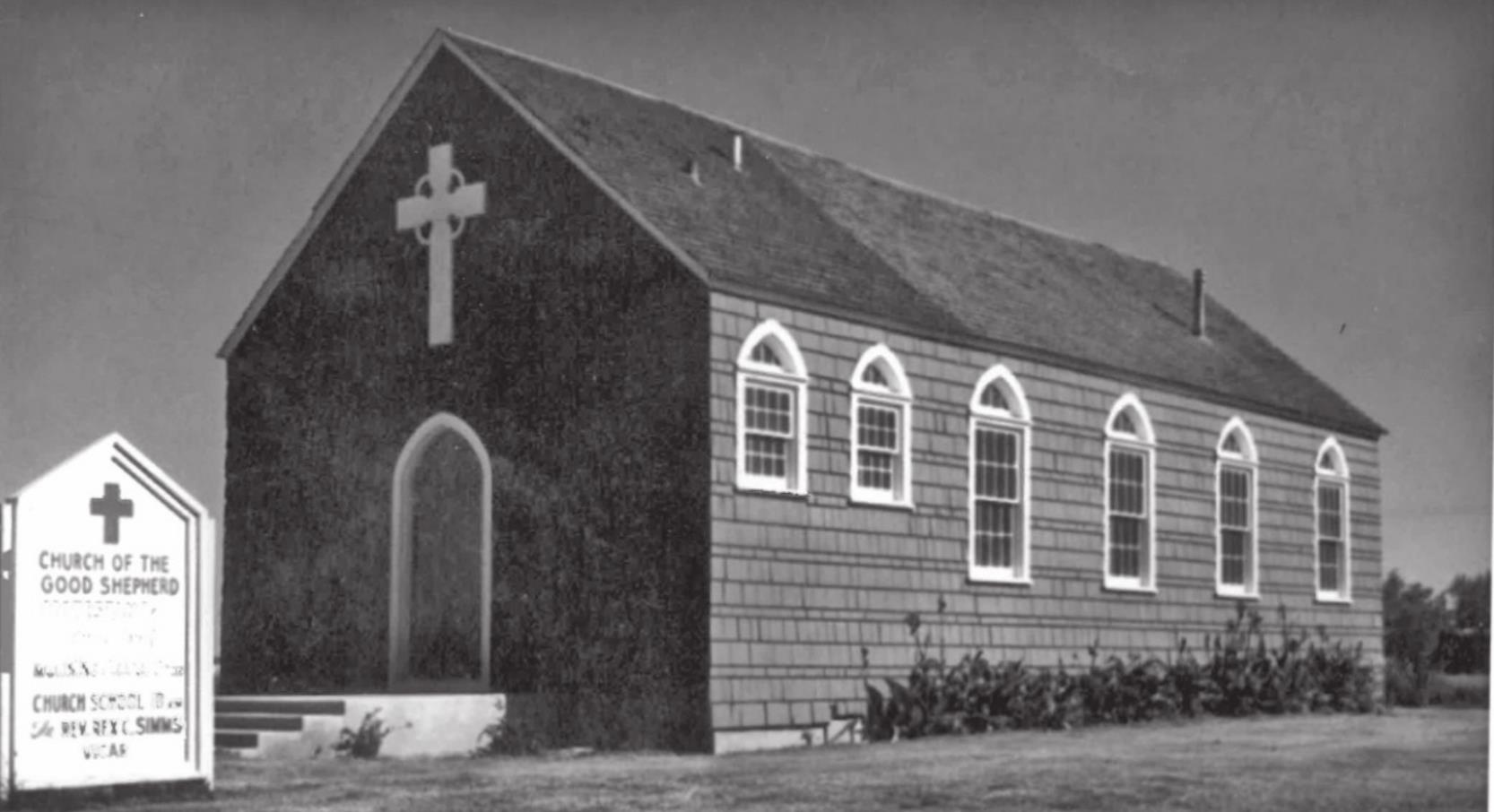
The building did remain a church continuously—though not in the same location. It was moved in the late 1940s to Hereford, where a mission congregation was in need of a meeting house, and later to Brownfield, where it was rechristened the Church of the Good Shepherd (as in the black-and-white image, above). Services were held in the building through Christmas of 2018. Earlier photos, according to White, have not surfaced, and only a few documents—such as a roster of weddings and baptisms—have come to light.
The building materials themselves have helped to tell parts of the story.
“The wall coverings on the inside are a type of fiber board that was made from sugar cane pulp by Celotex,” White exlained. The product is a fiberboard made from bagasse (sugar cane waste after extraction of the juice), first produced in a Louisiana factory in the 1920s. The material used in the church building, said White, was common in 1920s, prior to the company adding asbestos to its materials.
Each time the building was moved, it was remodeled, but additions actually preserved the integrity of original materials, said White. Restorers left the original eletrical wiring in the walls, for instance, even while adding new. Siding that had been added revealed period structures when removed. Even the furnishings were still in place—and left there. Only the front door, White said, had been previously reconstructed.
The museum’s historic maintenance crew worked on many weekends to get the structure ready, according to NRHC social media. The east and west windows recently received a special treatment to provide a stainedglass appearance. The NRHC has also made enhancements to the access ramp to improve wheelchair access.
The public is invited to attend the dedication of the Trinity Mission Friday, September 17, at 10:00 a.m. RSVP to Lea Ann Lust at the NRHC at (806) 834-0713, or lea.lust@ttu.edu. Visit ranchingheritage.org/ explore/outdoor-historicalpark/trinity-mission/ for more information on the building.
- Log in or Subscribe to post comments.
