
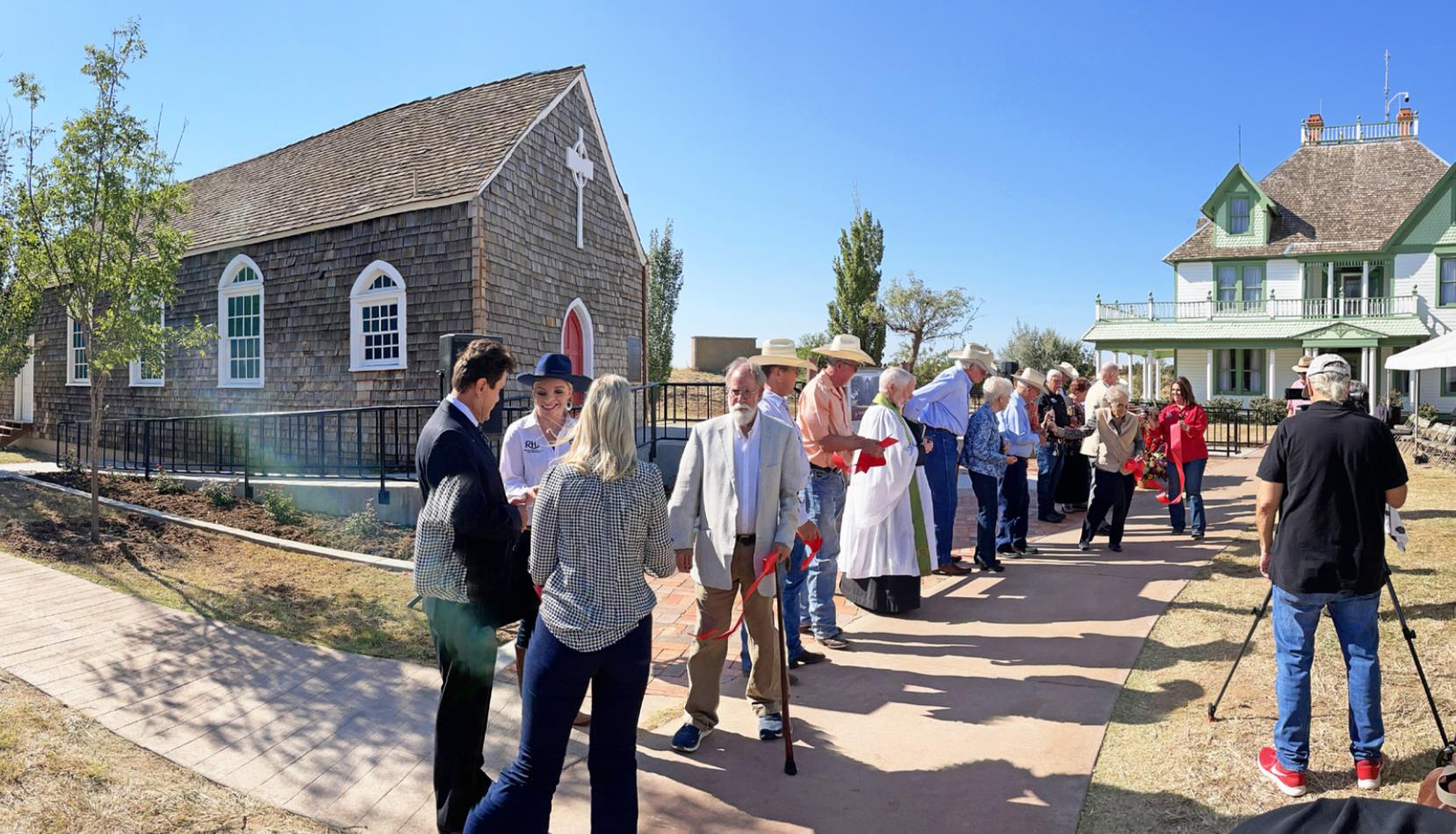
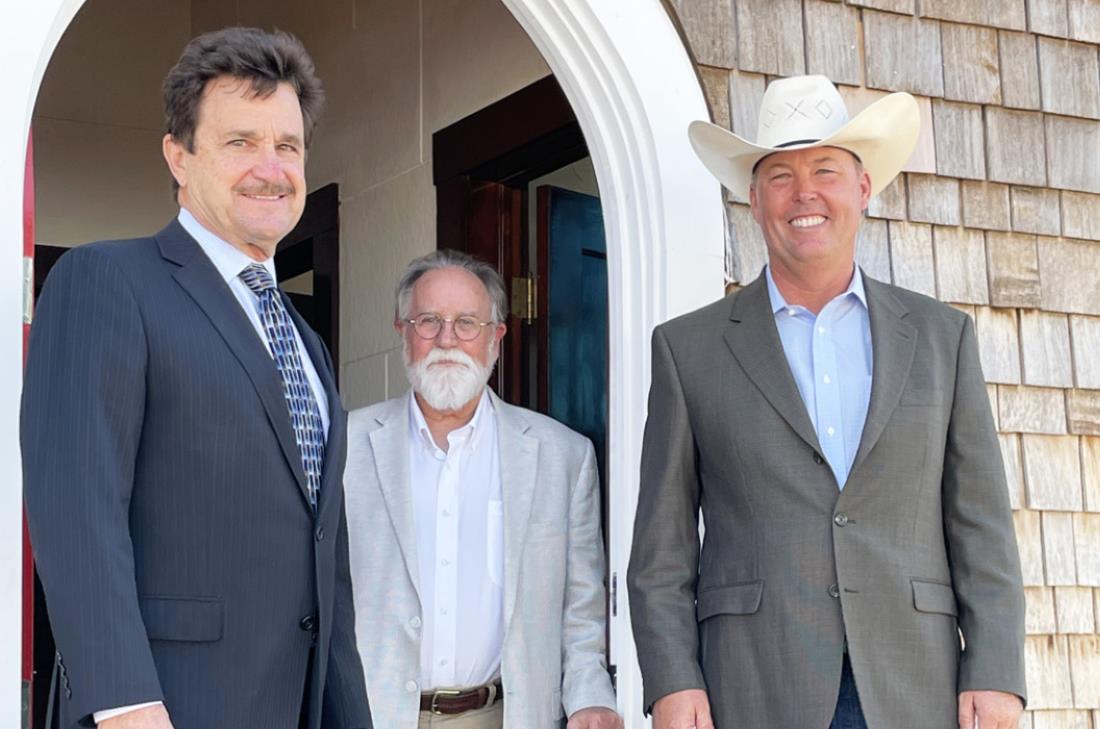
Friday morning, Sept. 17, proved a near-perfect day for the dedication of an outdoor museum piece at the National Ranching Heritage Center on the Texas Tech campus in Lubbock as representatives of the center, the Episcopal diocese, and ranchers and historians and volunteers celebrated the restoration of the Trinity Mission church.
Throngs of well-wishers turned out in Western or period dress—or just their casual Sunday best—to hear the story of the well-traveled church, to thank donors, and to get a look for themselves. NRHC executive director Jim Bret Cambpell, Texas Tech University president Lawrence Schovanec, retired Episcopal chaplain Edson Way and others took their turns at the lectern as VIPs and guests enjoyed seating underneath two large tents on the NRHC grounds. Following remarks, leaders and donors cut a large red ribbon and President Schovanec flung open the doors to visitors.
NRHC curator Dr. Scott White, who along with curator Robert Tidwell took the lead in extensive research and guidance of the restoration project over the past year, addressed the history and significance of the building, which had been constructed in Spur sometime in the 1920s.
The building was in remarkably good structural shape, said White, given its multiple moves and several renovations. Many original components of the exterior—including its wooden shingle siding—were reusable. The restored interior is also mostly original, with the exception of the ceiling and wall bead board, which replaced damaged fiber board panels.
Even the original pump organ was tracked down from a family in San Antonio and given back to the church, explained White. The church’s wooden altar—constructed from the bishop’s own bedstead—still graces the chancel. Added carpet was removed, and the wooden pews and floors were carefully refinished; metal railing details were taken from the church’s previous home in Brownfield and incorporated into the current design.
The church’s roots date to 1911, when early Spur residents under the leadership of Carl and Kate Senning began raising funds for a building. The Trinity Mission was erected sometime in the mid-1920s, according to dating of materials and the few archival records that exist.
White’s only regret throughout the restoration process is that no photographs of the church in Spur could be found—despite vigorous efforts of Dickens County and Spur historians and officials to locate clues. “The research is far from over,” said White, who expects that visibility of the church on the Ranching Heritage Center grounds will help turn up images and records in unexpected places.
Situated toward the back of the 19-acre NRHC campus alongside the elegant, two-story Victorian Barton house, the Trinity Mission fulfills a longstanding dream of Texas Tech leaders, including former presidents Clifford B. Jones of Spur and Grover E. Murray, under whose administration the museum complex was launched.
“Grover would have loved to see this day,” said his widow Sally Murray, who was among Friday’s guests.
Visit ranchingheritage.org/explore/outdoor-historical-park/trinity-mission/ for more information on the church, and the museum’s hours.
- Log in or Subscribe to post comments.
