
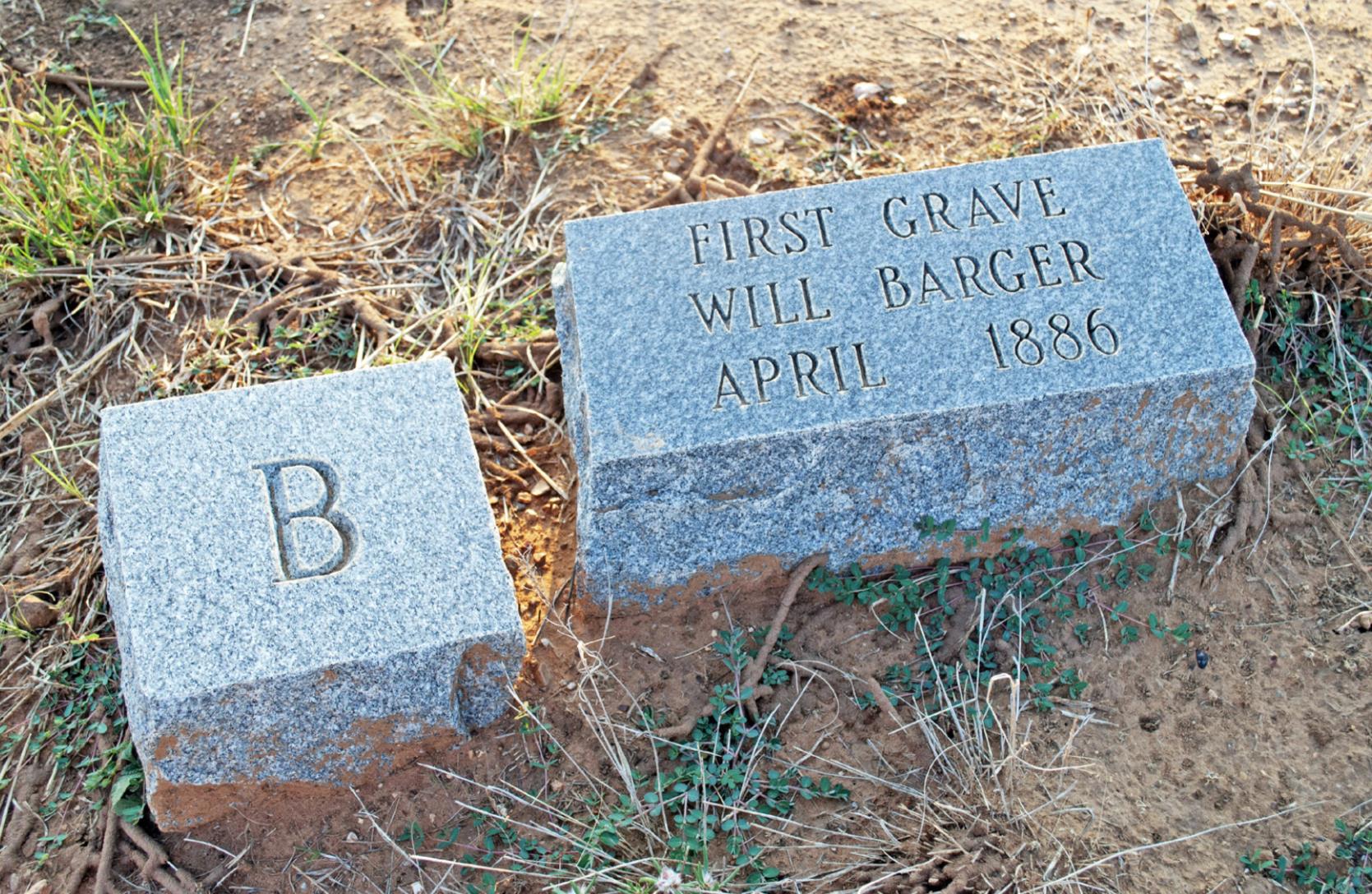
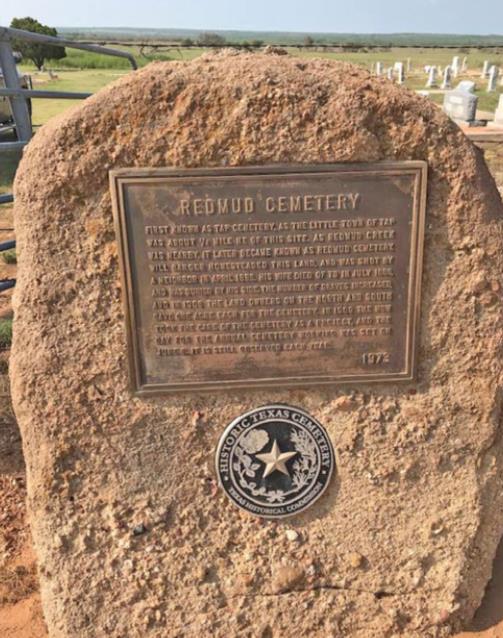
The first man to be buried in Dickens County’s Red Mud Cemetery, in 1886, was killed by a neighbor who’d pumped him full of buckshot in an argument over a horse.
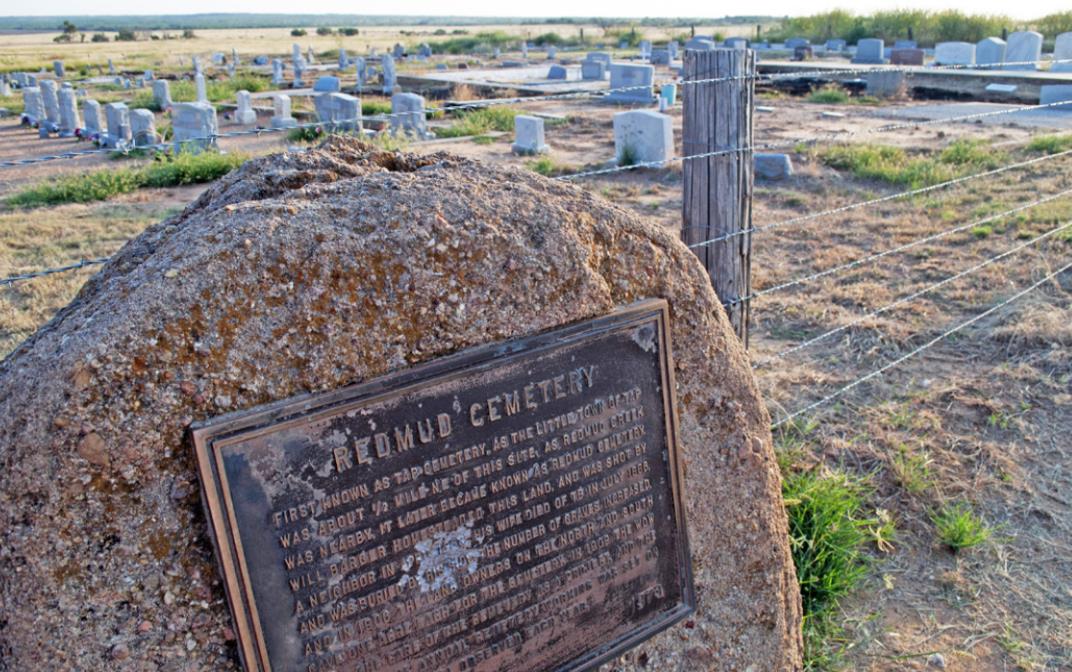
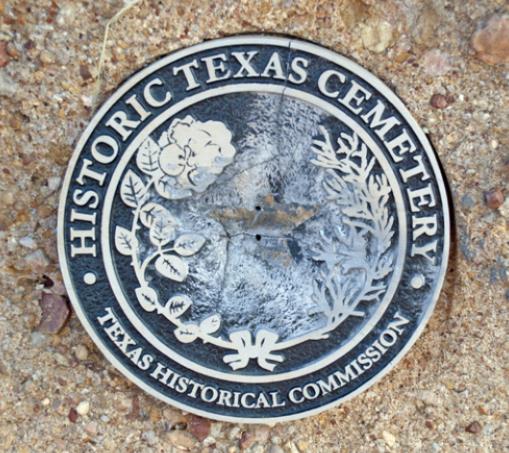
Last week, according to cemetery caretaker Harry Bob Martin of Spur, vandals desecrated the site’s two historical markers—coincidentally with double-aught buckshot.
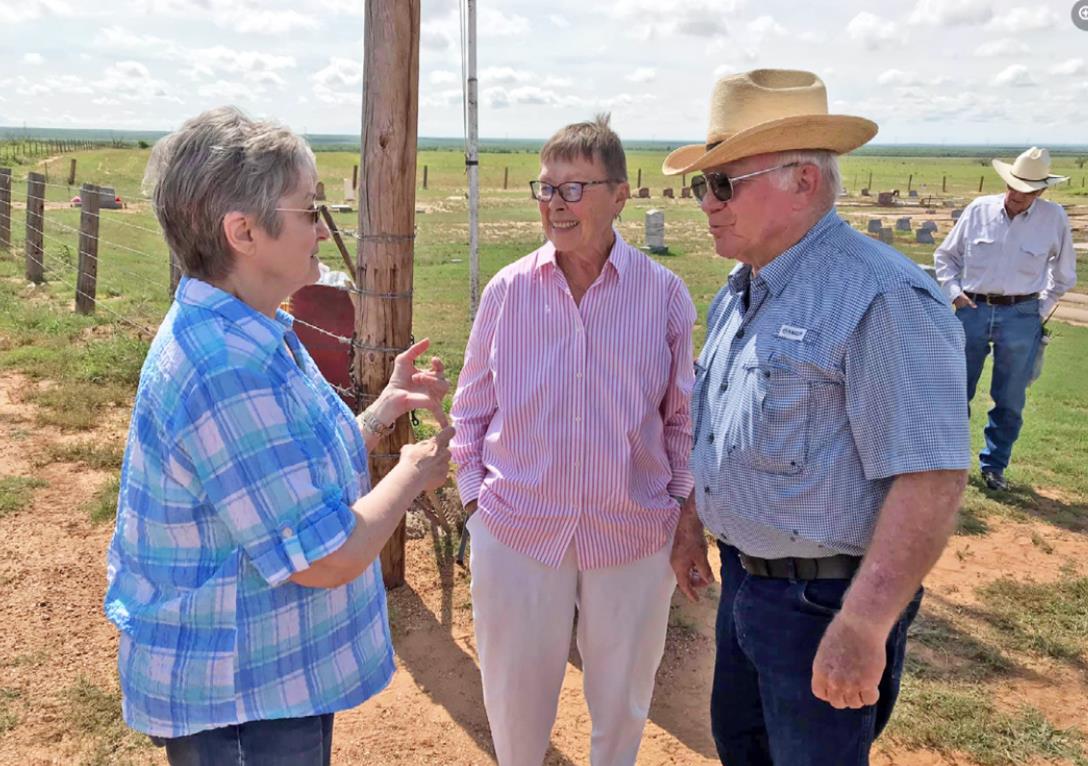
“I’m mad,” said Martin, a third-generation sexton of the two-and-a-half-acre site in the county’s southwestern corner, one of the oldest cemeteries in the area. Martin said that families have been caring for the property for many years, gathering on the site each June and enjoying dinner on the grounds afterward.
The bronze markers aren’t cheap—and these days, with the longtime manufacturer out of business, very difficult to replace. Local history groups raised money to purchase and install the markers at Red Mud in 1972 and 2001.
“The round medallion runs about $300,” Martin said. “The large plaque—who knows now?” Recent estimates for large Texas Historical Commision markers, similar in shape and construction to the damaged cemetery plaque, were about $1,800.
At Red Mud, both markers had been set securely into a large sandstone base, a method that helped discourage rifle shots that have frequently defaced pole-mounted markers around the state.
Martin says that he believes gunshot damage to the trash barrel at the gate was a precursor to the plaques themselves being used for target practice. He noticed the hole in it about six months ago. But only last week did he spot the vandalism of the markers. Some tombstones appear to have been knocked over as well.
Martin called the sheriff and notified the cemetery board, which has authorized a reward for information.
Many Dickens County residents and descendants recall the cleanup days when every man would bring a hoe and every woman a contribution to a meal that would be consumed underneath a brush arbor nearby. The cemetery, though remote from any organized community today, offers a commanding view from an elevation overlooking Little Red Mud Creek, the source of its name.
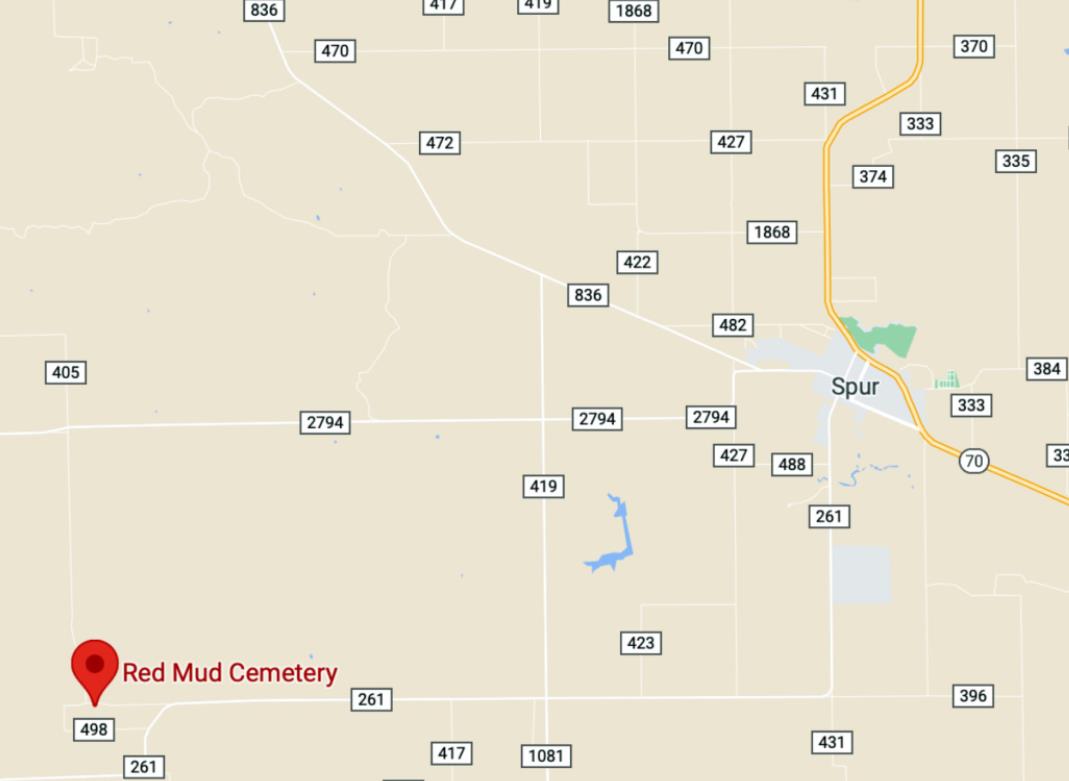
To get to Red Mud, plug the address “211 CR 496” into your GPS—and keep trusting your map as you drive 12 miles southwest of Spur on SH 261, then continue a ways on the dirt road. Cross the cattle guard and keep going. You’ll soon spot the iron archway and the flagpole on the right, and up the hill on the left, a picnic shelter used for modern-day reunions.
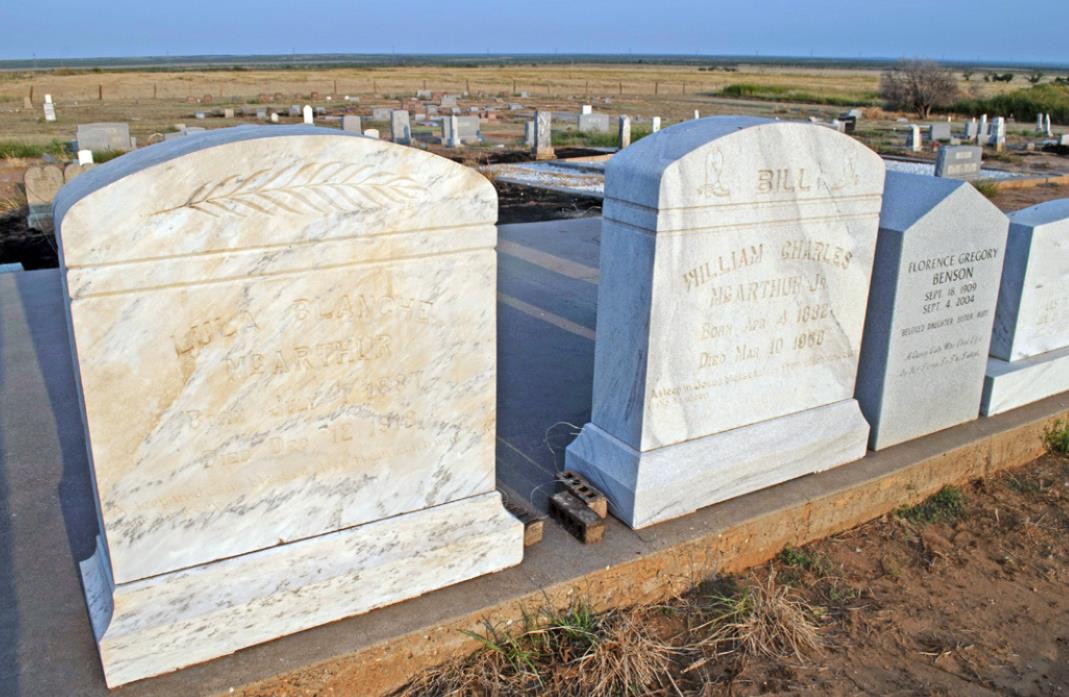
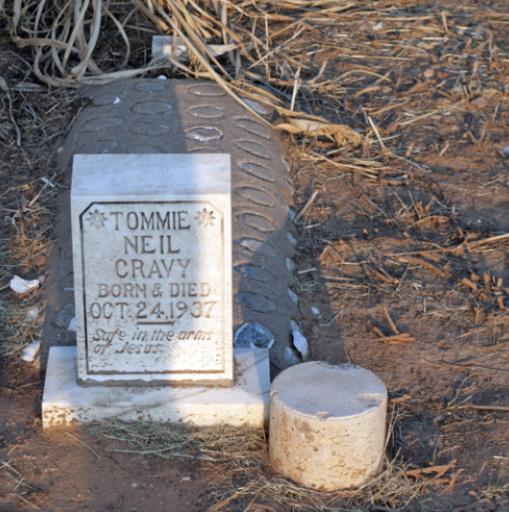
Some 372 souls are known to be buried at Red Mud, in graves marked by monuments both great and humble.
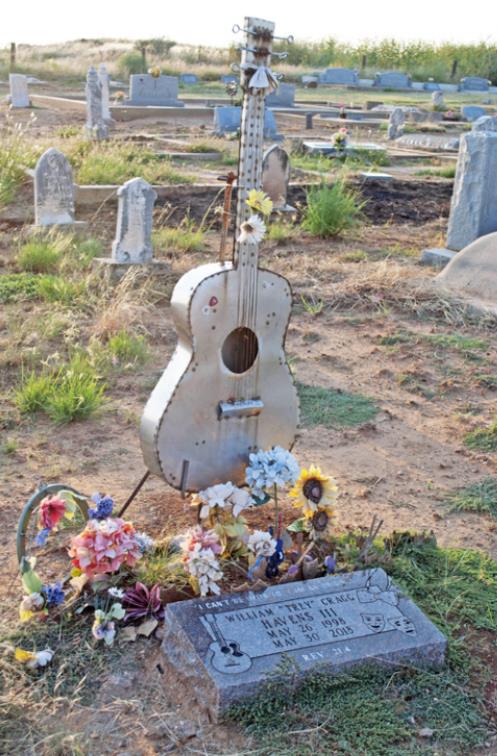
A rustic slab of sandstone marks the final resting place of “Woodson Child.” Mounds of concrete decorated with seashells cover graves of Selfs and other long-ago families. A fanciful metal guitar marks the 2018 gravesite of William “Trey” Cragg Havens III, barely twenty at his passing. Colorful tributes brighten the monument to the late Spur schoolteacher Sue Maben.
“Other graves of tragic interest,” wrote Georgia Martin Pace in an article available on Rootsweb, include “a Kindbro child who died from eating rat poison. The Ples Nutt child who was accidentally shot and killed. Dock Hoover, Dick Deen and Billie Sacks who were killed by horses. Gordon Wilkerson who was drowned. Bessie (Fuqua) Stoneman who was fatally burned when her house was destroyed by fire. Alice Howell burned to death when her clothing caught fire. Elza Cross kicked by a horse. Lee Fry who was drowned while in the service. The Hinson child who ate poison and others perhaps I have forgotten.”
Pace notes that there are “four old Confederate soldiers and two old Rangers buried here. H.C. Cravey, L.G. Garrett, Mr. J.H. Sparks, and A.J. McClain, who was the first county judge. Rangers were J.I. Greer and R.D. Williams.”
Also known as Tap Cemetery, for the post office that once served a nearby hamlet, the site was designed a Historic Texas Cementery by the Texas Historical Commission in October 2001. A complete roster of burials may be found at http://sites.rootsweb.com/~txdicken/redmud/burial.htm
Harry Bob Martin has served as cemetery sexton since 1997, with his wife, Mary, filling the role of board secretary. They and many others have devoted countless hours to preserving this place of eternal rest an a treasure of Texas history.
Martin hopes someone will promptly step forward with information.
Unlike the matter of Jess Adamson—who in 1886 went unpunished for shooting Will Barger dead, because no county had yet been organized— maybe this less serious but equally needless misdeed can be set to rights.
- Log in or Subscribe to post comments.
