
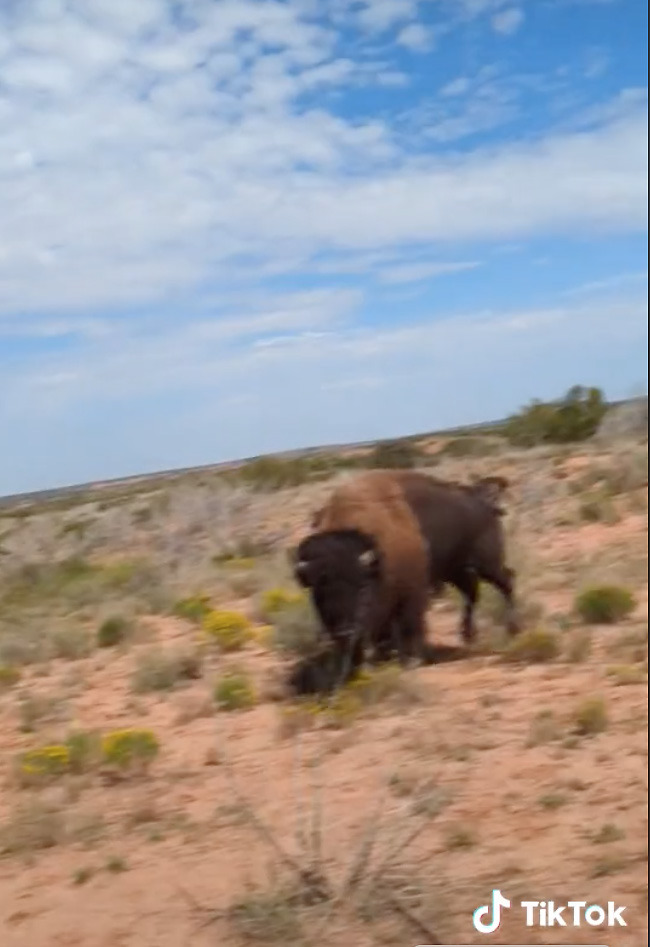
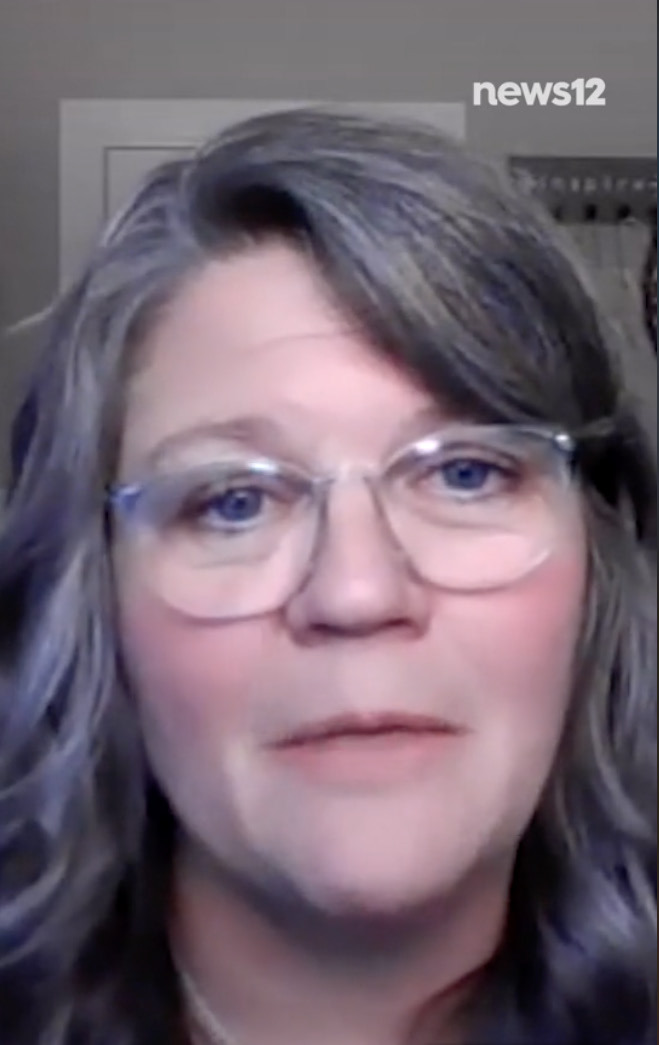
What began for Rebecca Clark of Boyd, Texas, as an eagerly anticipated week-long camping vacation at Caprock Canyons State Park the first week of this month ended October 4 in rescue and hospital care after injury caused by a charging bison. By now you’re probably one of the more than 2 million viewers of the episode worldwide, which Clark caught on cell phone video and posted on TikTok. Clark, who describes herself as a 54-year-old empty nester who does TikTok of her outdoor adventures, told the Caprock Courier she’s doing “miraculously well” after the too-close encounter. “I’ve hiked a lot of places and done a lot of things, but I did not do due diligence at a place that wasn’t as familiar to me,” she explained. Clark isn’t alone in underestimating the speed and power of the American bison, or in not taking seriously enough the recommended 50-yard separation that’s posted in parks where herds roam free.
That’s half a standard football field distance, if you need a rule of thumb.
Caprock Canyons State Park superintendent Donald Beard, who was first on the scene to render first aid to Clark, reminds visitors they should never approach bison. Caprock Canyons is home to the official state herd since 1997, and the animals roam across trails and roads as well as in faroff pastures and in the brush.
Clark, who praises the care she received from Beard and other first responders, said, “We all need to take responsibility for our own safety; these parks are there for us to enjoy and we have to do our due dilignence.”
A surprise encounter.
Clark, who is recovering well at home with wound care for a three-and-a-half-inch gash in her back, described for the Caprock Courier her experience on the park’s Eagle Point Trail that Tuesday morning.
In her first video of the day she posted she was headed up to Eagle Point. She’d texted her son. “I started toward the lake, and halfway I came across a herd,” she said. “I’m filming the scenery—keep it going, walking, okay, well, they (bison) are on the trail so I’m going into the bushes.”
There, she encountered more bison, startling them. It took her about five minutes to get through the patch and back on the trail. Soon she spotted a few isolated members of the herd. She knew better than to go back in the brush, and she had her video on zoom as she passed a group that seemed to be ignoring her but crossed the trail.
“But I was way too close even so,” she said.
Recorded on video. “ I don’t want to deal with them, I just want to keep going,” her voice says in the video. Her camera kept rolling as one bison turned and charged in her direction. Its horn caught her in the middle of her back as she ran for cover. The video clip shows that she dropped the phone, while calling out in alarm.
The scarcity of cell phone service—always a risk in remote parks, Clark, said— meant that she couldn’t get a call out, but she realized text messages could be delivered. She texted numbers of her sons and friends even as 9-11 asked for coorindates she didn’t have. When a resourceful colleague in an entirely different state reached local help for Clark, she was able to identify where she was on the trail, and ranger Beard was on site within about 40 minutes of the attack, Clark said. She was able to reply when she heard her name being called out.
Lucky break in the breaks. The yellow bandana on her hiking stick also aided him in applying pressure to the wound, Clark said. Though initially in shock and afraid she’d been paralyzed, once she realized she could move her limbs she didn’t know she was bleeding from a six-inchdeep gash.
EMTs and an air ambulance first transported Clark to the Childress hospital and then on to the trauma unit in Wichita Falls.
“The doctor said (the horn) couldn’t have hit in a better spot in my back, said Clark. “But it went in the middle of back, and pulled skin out. No internal organs or muscle tissue was damaged.”
The education specialist, who works remotely with Texas clients, said she expects to be fully healed by December. She’s eager to return to hiking as soon as she’s able, and she’d like to reschedule a Caprock Canyons trip for the same week next October.
“Except with a personal locator device,” she said.
SOLOHIKING is“a time to disconnect from everything and enjoy nature,” said Rebecca Clark of Boyd, Texas. “I feltIhadallthegear,howmuchwater to take,”everything she needed to be safe. Although she’d previously seen bison on park roads, she said,“I never thought I would run into them on the trail, I wish I had read all of that.”Clark, who’sdonescoresofsolohikesacross Texasandbeyond,saidshe“fellinlove actually with Caprock Canyons and that little town” and hopes to return. | NEWS 12 PHOTO
- Log in or Subscribe to post comments.
