

In mid-December the historic Palace Theater in downtown Spur received one of the best Christmas presents ever.
The Palace, and its parent organization the Dickens County Historical Commission (DCHC), had been awarded a Humanities Texas Relief Grant in the amount of $12,000 to support operations and programing from September 2021 through September 2022.
These grants to Texas museums, libraries, archives, historic sites, and other humanities-focused nonprofits affected by the Covid-19 pandemic apply immediately for operating or programming relief funding. They have been made possible by the National Endowment for the Humanities as part of the $1.9 trillion American Rescue Plan Act of 2021 approved by the U.S. Congress and signed into law on March 11, 2021.
While the funds can’t be applied to capital purchases of equipment, they do support regular operating expenses such as utilities, supplies and maintenance. And they’re primarily budgeted for supporting the return of public programming in venues that were shuttered during much of the first save of the pandemic.
For the Palace, that means underwriting films, educational programs and concerts—enabling the house, which reopened in 2018 for digital movies only to be stymied a year and a half later—to greatly expand its offerings to local and regional audiences.
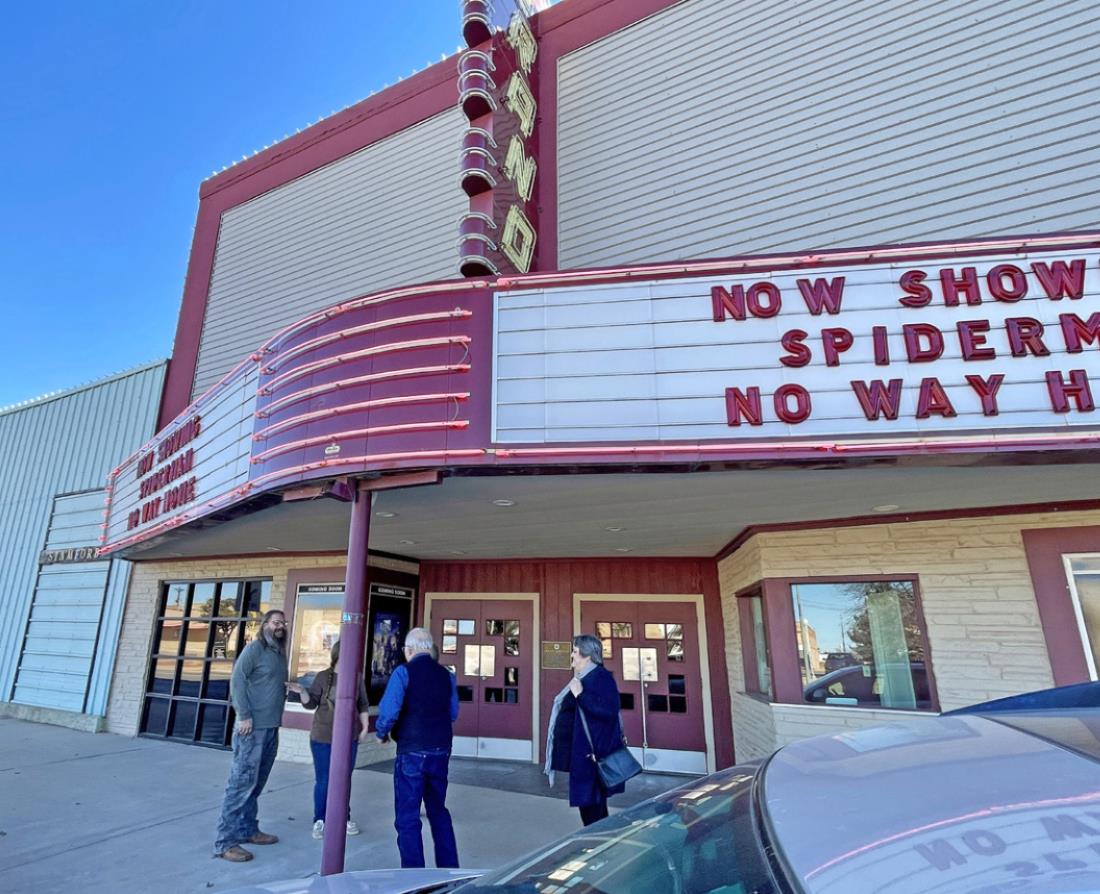
Representatives of the DCHC, who had already planned to participate in a Texas Historical Commission session Jan. 13, arranged for a visit that same day to the 1921 Grand Theater in downtown Stamford, a city with historical ties to Spur and Dickens County.
“One thing we learned in starting to show movies again,” said chamber of commerce director and theater manager Angie Johnson, “is that it’s not the city theater, it’s a regional theater.” Visitors and school field trip groups come from many surrounding towns, Johnson said, to enjoy their state-of-the-art digital projection.
High-end digital cinema audio is on the wish list for the Palace, according to Harry Bob Martin, who has helped oversee the restoration of the 1929 movie house from the start.
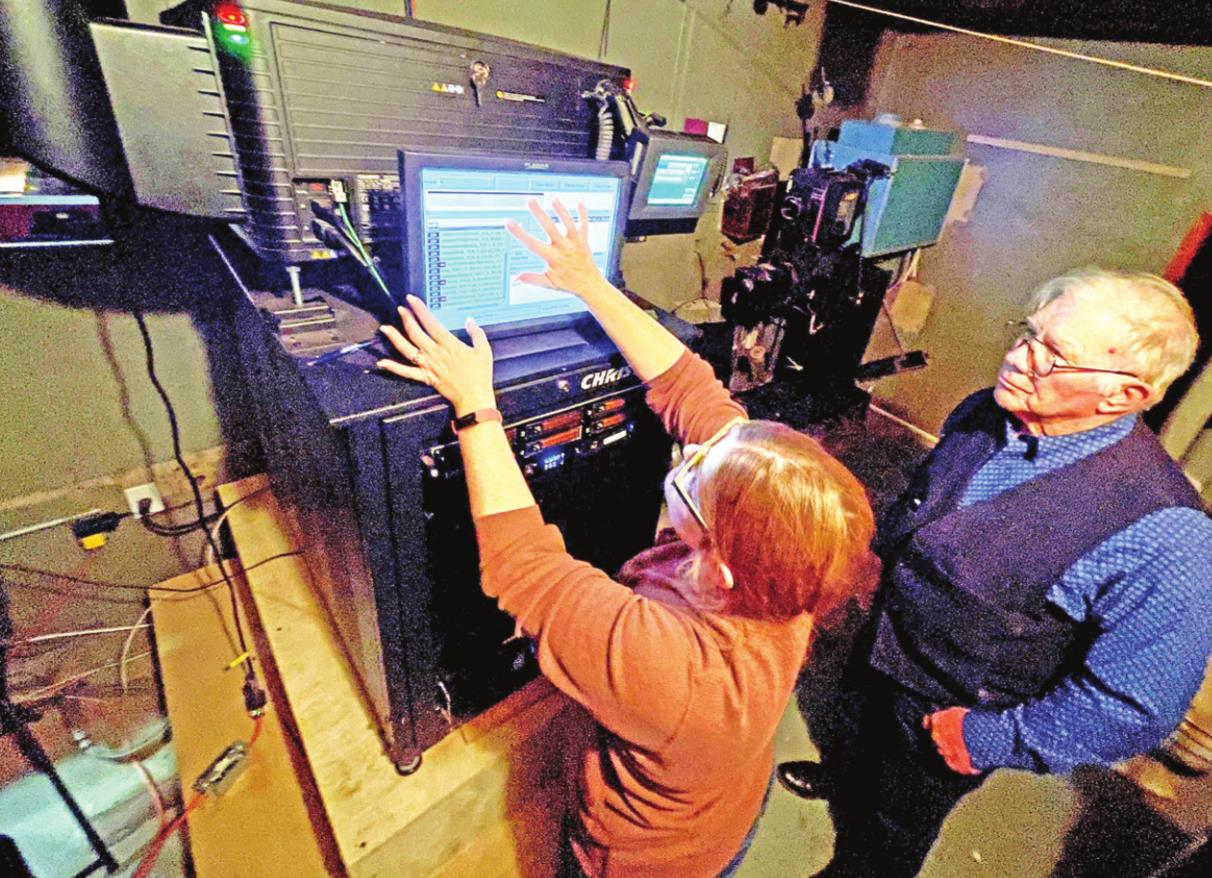
Martin and others toured the Grand’s projection room, seating area, backstage, obby, and concessions as part of the visit arranged by Stamford mayor James Decker, an attorney who’s a longtime proponent of heritage tourism and small-town economic development.
To support and promote its programming, the Grand makes use of volunteers from the community, local businesses and youth organiations to run the theater. They market their films creatively. They offer an enticing array of concessions in their generous-sized lobby. They rent out for private events. And they’ve relied on hefty fund-raising efforts to upgrade seating, restore their interior and exterior, and—most important—upgrade to a DCP cinema projection system.
While the DCP isn’t the only digital route to go for showing movies, said Johnson, it’s what major studios require for licensing first-run films. Other movie houses, like the Palace, must wait a few weeks or months for secondrun distribution.
Decker praised the Palace’s efforts, most important, the choice to retain the theater property in public hands. “Even if a historic property turns over management to a for-profit or nonprofit,” he said, keeping the physical property in the hands of the city or county means that the investment in downtown will be preserved long-term.
The Palace’s DCHC leaders are eager to ramp up the theater’s programming and facilities for 2022, and the Humanities Texas grant will go a long way toward that strategy.
Look for an expanded roster of family-friendly movies and live shows this year at the Palace as the DCHC reaches out. If you have a favorite you’d like to see, email us at The Texas Spur, spur@ thetexasspur.com, and we’ll share the word—and the fun.
- Log in or Subscribe to post comments.
