
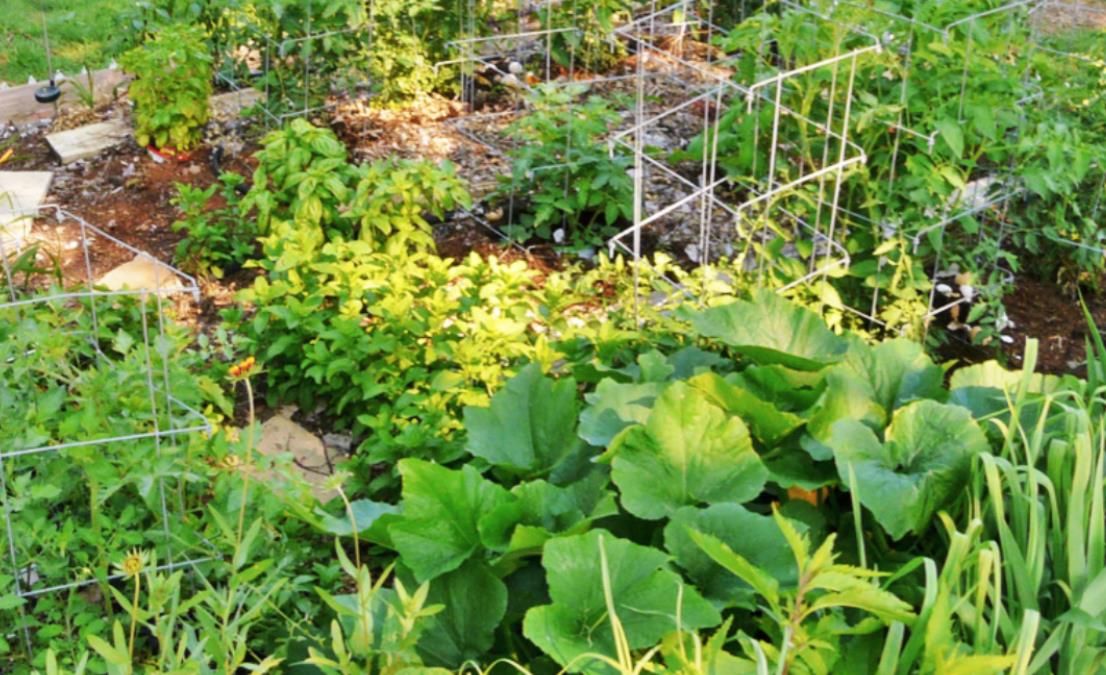
Gardeners who have waited to plant a summer garden can still plant most summer crops. With temperatures soaring into the 100s, seeds of warm-season crops germinate quickly and will catch up to the same crops planted weeks ago because physiological development of crop plants is controlled in large part by temperature.
Models based upon the accumulation of heat units, known as degree days, during a growing season have been developed for predicting optimum growth and development of many crop plants. Knowing the rate of development is helpful when predicting days to harvest.
Our searing heat these last days benefits many summer crops; heat units accumulate quicker when temperatures are higher accelerating crop maturity, leading to earlier harvests. Degree-day models are useful in crop production because, within a few days, they are accurate predictors of development.
For the home gardener, knowing the number of days to harvest is helpful in planning crop selection, rotation, and succession plantings. To the grower of processing crops knowing the days to maturity is critical in scheduling planting dates, harvest crews, and arranging for equipment at harvest.
Crops have temperature thresholds bracketed by the lower as a minimum and upper limit as maximum for best growth. The threshold is the optimum temperature range. Each crop and even varieties have specific temperatures at which crops have optimum physiological development. Below the minimum crops either do not germinate or growth is thwarted and above the maximum growth can be suspended until temperatures moderate.
The physiological development threshold models determining degree days are calculated by averaging a day’s high temperature with the low temperature and subtracting the crop’s low threshold temperature. An example for black-eyed peas: on June 11 the high temperature was 104°F, low temperature 74°F. The calculated degree days for that day: [(104 + 74)/2] – 60 = 39.
Temperature ranges for best growth of selected summer crops:
• Black-eyed peas 60°–105°
• Cucumber 75°–105°
• Eggplant 75°–95°
• Muskmelon (cantaloupe) 75°–100°
• Okra 70°–105°
• Squash 70°–100°
• Sweet corn 60°–105°
• Peppers 70°–95°
• Sweet potatoes 70°–95°
• Tomato 70°–95° • Watermelon 70°–105°
• Watermelon 70°–105°
Some information from “Knott’s Handbook for Vegetable Growers,” 4th ed.
- Log in or Subscribe to post comments.
