

October and November
are the months to set springblooming bulbs in landscapes and gardens. Bulbs need to be planted now to give them plenty of time to establish a root system before freezing temperatures. Well-established root systems are essential if robust blooms are expected next spring. If roots are poorly established because of an inadequate root system blooms may appear, if at all, and if blooms do appear they will be weak.
Planting in the early fall does two things: bulbs have a head start since the soil is still warm, enhancing the development of a robust root system and spring blooming bulbs must have a period of cold to shift the cells from making shoot tissue to making floral tissues. Without sufficient chilling, only leaves will appear next spring.
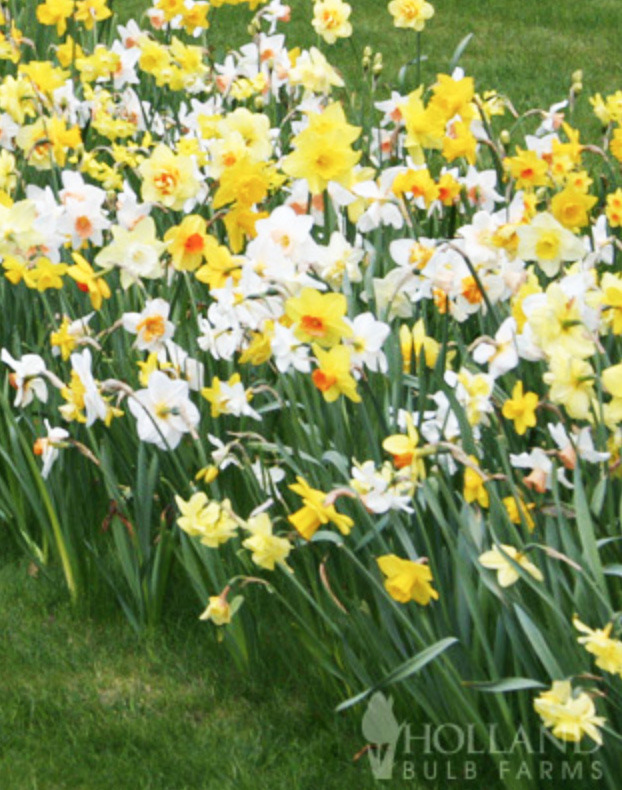
Bulbs that should be planted now are crocus, daffodils, fritillaria, hyacinths and tulips. Most of these are for sale in nurseries and garden centers. Elite varieties can be purchased from catalogs. Of these bulbs, tulips are the most chill-sensitive and to ensure robust blooms appear next spring, bulbs of tulips should have extra weeks of chilling. Tulip bulbs should be chilled in the refrigerator for 6 weeks before setting into the ground.
Be picky when selecting bulbs. Always choose the largest bulbs. Large blooms are produced from large bulbs, likewise, small blooms come from small bulbs. Check for healthy bulbs; soft or damaged bulbs or bulbs with visible mold or lesions will rot in the soil over the winter.
Plant bulbs in a location that have good drainage. Bulbs that sit in wet soils will quickly rot. Blooms will emerge from bulbs that are planted below ground, but to maintain healthy foliage and blooms, the bulbs should be planted in a location with full or partial sun, at least 6 hours a day.
Ground needs to have tilling deeply, several inches below the depth at which the bulbs will be set. Amend with organic matter. Add a bulb fertilizer before setting in the bulbs. There are commercial products with formulations specifically for bulbs, such as bone meal.
Set bulbs to the depth recommended for each bulb. Large bulbs like fritillarias, hyacinths, and tulips are planted deeply, 6 to 8 inches, while smaller bulbs of daffodils and crocus about 3 to 4 inches deep.
Water well, keeping moist over the winter. Ellen Peffley Harp, a retired professor of horticulture at Texas Tech University, writes about gardening for several Texas newspapers.
- Log in or Subscribe to post comments.
