
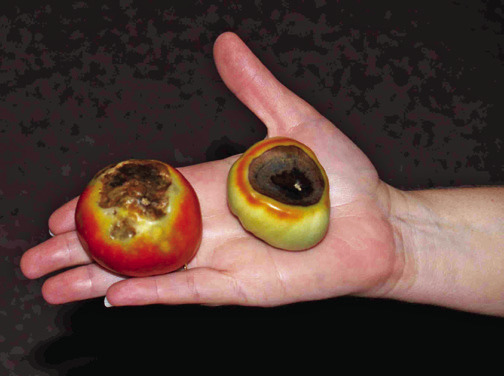
How disappointing it is to pluck a red-ripe tomato off the vine only to look at the underside and find the bottom is dark and sunken. This is blossom end rot.
Blossom end rot is a disorder and not a disease since it is not caused by a pathogen. It is commonly found in the Solanaceous plants—tomato, peppers, and eggplant— but is also found in watermelons.
In fruit exhibiting blossom end rot the tissues at the blossom end of the fruit is affected. The tissue breakdown is brought about by a complicated condition caused by inconsistent waterings, either too much or too little.
Recent rains may contribute to blossom end rotting. Consistent water applications are critical for proper growth and development of crop plants. When a water pattern is interrupted by, say a torrential rain, there is a huge flush of water that now becomes available to the plant. Roots will absorb the newly available water, which is pulled through the plant and into the developing fruit. Fruit walls that have already begun to form cannot adjust to the influx of water and the cells burst.
The gardener has some control over the conditions that lead to blossom end rot. Supply even amounts of water in consistent intervals, not allowing plants to become too dry. Ensure the soil has sufficient nutrients applied in fertilizers; avoid heavy overfertilizing with nitrogen.
There are other common conditions that are caused by pathogens. A devastating and common disease in our area are ‘the wilts,’ where plants suddenly wilt and die.
Verticillium and Fusarium wilts are fungal diseases with no cures for infected plants. Pathogens attack roots and are transported up and around the plant.
Tomatoes that have been grown in soil in which cotton has been grown and plants that have been grown in the same location, in the same soil for several years will have these fungi build up. Cotton is susceptible to verticillium and fusarium fungus and like tomatoes is a host plant. This is why rotation in the garden is critical.
To prevent or circumvent wilt, purchase tomato seed that has been bred to show tolerance or resistance to wilt. Look for seed that has V or F after the varietal name. Often the code will read VFN, which means the seed has been bred with resistance or tolerance to verticillium, fusarium and nematodes.
Ellen Peffley Harp, a retired professor of horticulture at Texas Tech University, writes about gardening for several Texas newspapers
- Log in or Subscribe to post comments.
