
County government, according to the Texas Association of Counties, might be described as “neighbors serving neighbors”—a system by which peers who drive the same roads and pay the same taxes are entrusted to make wise, well-considered judgments for the benefit of all.
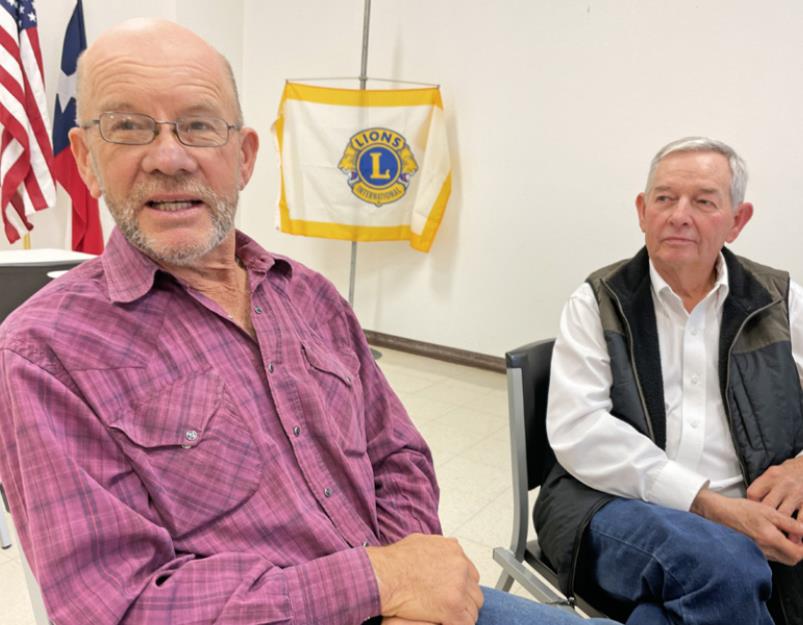
In rural Kent County, Texas, population 753, peers Jim C. White and Don Long have worked together as neighbors and colleagues on the court for the past nineteen years; Long has served even longer. And both have said it’s time to let others step up and run for their offices.
White, county judge since 2002, announced in Monday’s court session that he would not be seeking reelection. “It’s hard to say that you need to stop,” he said, “but as you get older you realize that one of these times you’re going to have to.”
Long, whose tenure as commissioner of precinct 2 (Girard) dates to 1987, also said he would not seek reelection.
The departure of both men leaves a gap that’ll take some doing to fill.
“Basically all of my time has been with the same guys,” White said. “Nineteen, 20 years, whatever things we have succeeded in or failed in, we’ve all done it together.” Roy Chisum and Robert Graham, in precincts 1 and 4 respectively, have also served on the court for many years; Daryl Ham in precinct 3 is a relative newcomer.
White first ran for public office when Long, already a commissioner, persuaded him to throw his hat in the ring. As general manager of the Farmers Co-op Gin in Jayton, the Spur-raised White brought a strong combination of skills to the table, as well as a degree from Texas Tech, a stint in the U.S. Army, and job experience, with Long, in the USDA Boll Weevil Eradication Program back in the 1970s.
White ran against the incumbent that year and won.
Long, who had worked for the Kent County Road and Bridge Department after the boll weevil program, worked breaking horses for a while, and worked for 17 different oilfield outfits in the 1970s and ’80s, was elected to the commissioners’ court in 1987. He’s had at least one challenger every election since then, he said, but has prevailed each time.
“Learning how to work with people” has been key to his longevity in the job, Long said, as well as mastering new laws passed by the state legislature every two years. But he also cites the wisdom of previous colleagues such as Bill Parks and Bob Hamilton. Parks told him that “even if someone doesn’t vote with you, they’re not necessarily voting against you,” said Long.
The ability to weigh opinions and come out with a solution, both men said, is key to guiding the rural county in a direction that’s ultimately beneficial.
Long cited an instance in the 1980s when Kent County floated a $1.5 million bond initiative that would improve water and sewer in Jayton. In his precinct north of the city, only two voters appeared to support an expensive program that wouldn’t fix anything outside of the county seat, and he was convinced the measure wouldn’t pass. But conversations centering around how many people came in to Jayton to church, or to do shopping, or to pump gas or do business at the courthouse—always availing themselves of the facilities—swayed the majority. Although Long’s research about the exact dollar figure the tax increase would represent to one voter didn’t cut any ice, he said, a reminder of the value of the frequent deliveries of gravel and dirt persuaded him.
The county commissioner, according to the TAC website, is responsible for roads and bridges within their precinct and makes policy-making budget decisions. Four commissioners, elected from a quarter of the county’s population, serve along with the county judge on the commissioner’s court.
White summed up the court’s policy-making responsibility thus: “When you’re making decisions, it may look like it doesn’t take any effort—but it involves examining codes, rules and regulations ahead of time; it’s not just show up and be counted and go home.” He has seen his mission, he said, as helping rural Texas survive.
In Kent County, where the long-standing tradition is for two monthly regular meetings of the court, the agenda often takes up three hours on each of second and fourth Mondays. Discussions are thorough and often strongly opinionated but seldom heated.
While commissioners often hold other jobs or responsibilities, they are always on call, and regularly relay road-maintenance requests to the county’s central road and bridge department. Long said that he trusts the two heavymachinery operators in his precinct and depends on them.
Unlike the four commissioners, the judge is there in the courthouse office every day. According to White, demands are constant. “You do as much as you can endure,” he said, with the many and varied requests never allowing a clear desk at the end of the day.
Increasing requirements for professional development and continuing education are a part of the job for all, with technical, communication, and agency interoperability expectations on the rise especially after 9/11.
Whatever the challenge, the court “realizes their responsibility is to come up with a solution,” White said. “You might not be certain of a direction, but after deliberation you come up with one.”
Long, who’s ready to retire and enjoy his grandchildren and horses more, said that his Christian faith has been a factor in his staying power. He also feels that prayer at the beginning of meetings guides the court’s success. “We’ve been blessed,” he said.
After the end of the November 8 agenda, conversation turned to the future of the county’s permanent school funds, and how to make the most reasonable and responsible decisions about how to invest it, along other decisionmaking challenges to come. “If you’re going to be speculative, you’re going to be held accountable for it,” commented one of the commissioners.
White feels the conservative approach he and the commissioners have chosen is a good direction for the future. he’s ready to step down as long as a qualified candidate comes forward. “We’re moving on at a rapid pace and trying to let younger minds get involved.”
“It’s been a tremendous ride for me,” he said.
A note on candidate filing for the March 22, 2021, partisan primary: While November 13 is the first date to file, due to the Covid-19 delays in obtaining results of the 2020 Census, it is possible that delayed redistricting decisions could leave districts and precincts open to challenge as late as November 29. The filing period closes at 6:00 p.m. December 13. More information is available at www.sos.texas.gov/elections
- Log in or Subscribe to post comments.
