

A Derrick Miles Mystery
APRIL 21, 2021 • NOW AVAILABLE from FIVE STAR
Five Star Publishing, a part of Gale, a Cengage Company
Excerpted with permission of the publisher
Chapter 1
The Wide-awake
{In which Capt. Derrick Miles and Dr. Frank Hooper discuss guns, hats, and boots.}
In the fifteen years during which I have been acquainted with Captain Derrick Miles, I have admitted him to be of a peculiar sort—prone to bouts of profound meditation triggered by the partaking of tea extracted from a certain cactus found in the Chihuahuan Desert, for instance, or excitable in the extreme when a moment of epiphany is visited upon him, say, in the bathtub.
But nothing prepared me for the distressing sight that greeted me late on a blustery autumn afternoon—the twelfth of October, I well recall—upon my return to our shared bachelor quarters above the bootmaker’s shop.
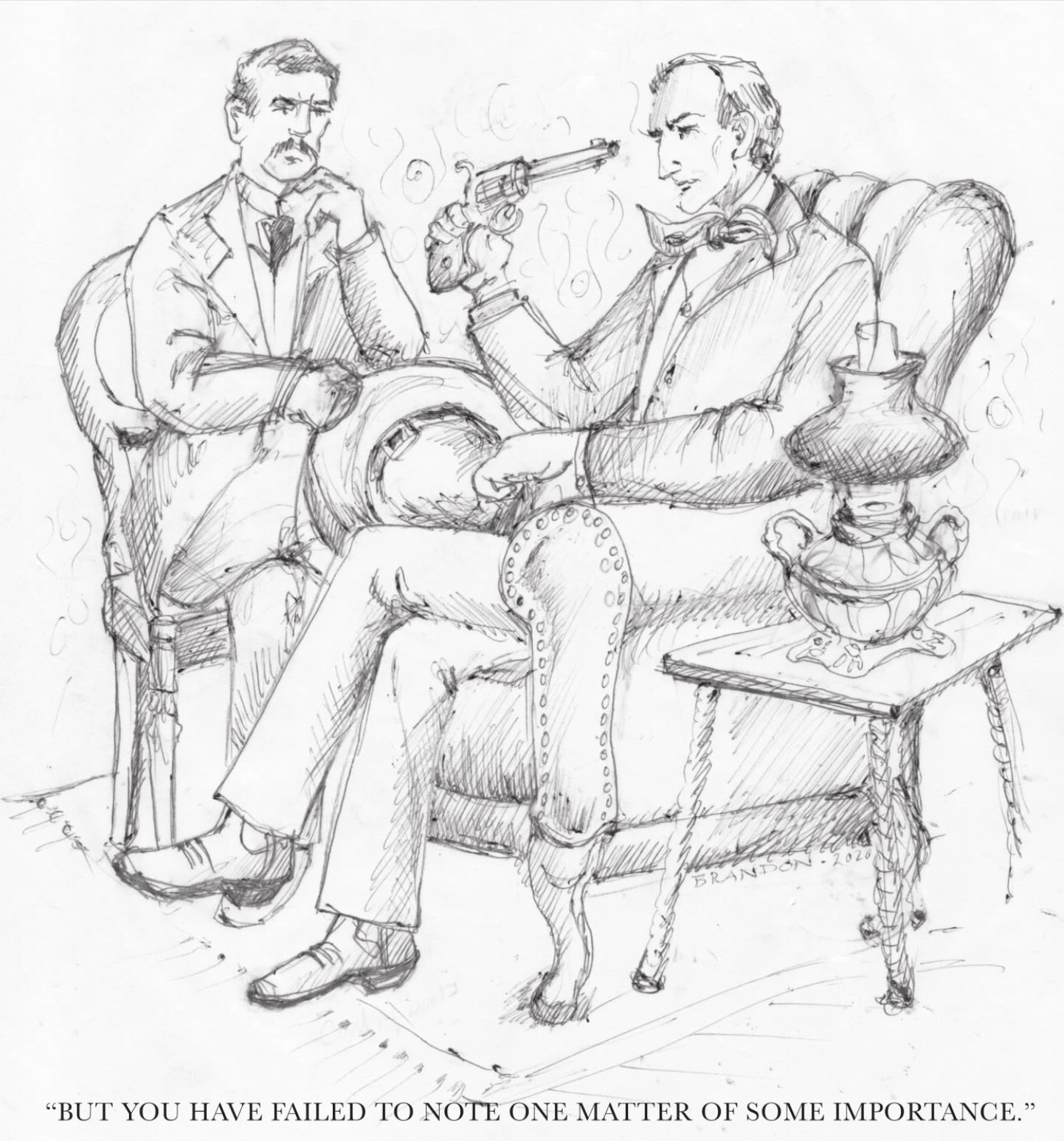
“Good God, man, don’t do it!” I shouted instinctually and almost lunged at him, before wiser caution caused me to step back. “Why don’t you . . . hand me . . . the gun?” I said in a more measured tone.
Derrick Miles, seated almost in profile to me at the teak-and-brass campaign desk as I stepped through the doorway, continued to hold the weapon at arm’s length with its barrel pointed toward the center of his face, which appeared so thin in the shadows as to be almost cadaverous. He made no move for several long seconds. I held my breath. He inched the muzzle closer and squinted his eye toward it in the waning light.
“Miles, please—”
“Bring that lamp over here, would you, Hooper?”
I hesitated to shift my gaze from the scene, as though by my very force of will I might hold all the parts of it frozen and forestall disaster.
“That oil lamp, yes, please. And light it.”
I abandoned my vigil for long enough to fetch the lamp. I slipped a friction match from the box on the table, cranked up the wick, and struck the match, keeping Miles in my sights. I lit the wick and moved closer, shining the glow on the firearm whose business end was situated a fingerbreadth from Miles’s eyeball.
“Aha, I knew it!” he exclaimed, so suddenly I almost lost my grip on the lamp.
“Knew what?” I asked in relief, as he lowered the gun.
“A hardened residue of varnish impregnated with grains of black powder.”
“As one might expect to find inside the barrel of a gun?”
“As one might expect to find inside the barrel of a gun that hasn’t been fired in some months—or years.”
“You had some concern on that score?”
“At least we know there’s no chance our visitor was a Ranger.”
Miles continued to dangle my duller intellect just out of reason’s reach, a not infrequent circumstance in our exchanges. “We’ve had an unanticipated visit. Our caller, Hooper, does not appear to have been a Texas Ranger. And that is very good indeed, since, where there is a Ranger, there also is trouble.”
“Ah, certainly.” I struggled to keep up. “You had a caller while I was away at the hospital, but did not see him?” Had Derrick Miles benefited from even the slightest contact with any stranger, he would surely have swiftly deduced the man’s occupation, birthplace, age, nationality, and more. Such were his estimable powers of detection.
Miles rose slowly from his seat and indicated the door through which I had come. “That is correct; I was out for the day as well, attending the mayor’s meeting with members of the state Railroad Commission, about which I will enlighten you later. While you and I were gone a man lingered long enough in the upstairs corridor to have dropped crumbs from his biscuit. But he also left behind two valuable possessions. The gun—a six-chambered Colt revolver commonly known as the ‘Peacemaker’—and this.”
Still holding the gun, Miles stepped over to the hat rack beside the door. From amid a row of pegs on which hung his favorite Boss-of-the-Plains Stetson, a plaid Scottish hunting cap he sometimes wore in adverse weather, an ancient and stained cavalry hat, and my own second-best black bowler, he lifted an old-fashioned, wide-brimmed sort seldom seen these days in Fort Worth, Texas.
I removed my preferred bowler from my head and rested it on the vacated peg, smoothing my hair back from my brow and brushing the dust from my moustache. I hung my overcoat, also dusty from the streetcar ride across town, on the hook beneath it. Miles motioned me to the velvet settee beside the hearth, where Mrs. Simpson’s boy had set coals to burn in the grate. I welcomed the warmth after the shock I’d experienced at first seeing Miles with the gun.
“Take a look, Hooper,” he said, turning the hat so I could inspect its inside. There I read, stamped in gold, “bollman | philadelphia | 1871.”
“What do you deduce from this information?” he asked, standing with his back to me, hands clasped behind him.
“Our visitor was a gentleman and a Yankee?”
He turned to warm his other side. “Perhaps. One of sufficient age and thrift as to have held onto his hat for two decades, and to have preserved it all the way West. You might recall, as I do from an advertisement in an old issue of Puck, that the renowned haberdasher was established in sixty-eight. And something else.”
I peered closely to examine the napless black felt of its manufacture, which appeared to me to be of superior quality but scuffed; the wide silk hatband, which was glossy but soiled; and the sweatband inside, where I noted a small paper label tucked in. “Six and seven-eighths! The owner must have a rather small head. Do you concur?”
“Indeed, my dear Hooper. You’ll catch on yet. But you have failed to note one matter of some importance.”
“I have?”
“Run your fingers across the crown, and lean in and use your olfactory sense as well. What do you detect?”
I did as instructed, and my fingers immediately picked up traces of dark particles, a whiff of which revealed the smell of—coal smoke. “The owner has arrived on the train—rather recently, I suppose.”
“Precisely. You do my methods proud,” said Miles, standing and proceeding to light the gas lamps beside the mantel as he spoke. “Have I ever told you how gratifying I find your studious attentiveness, and the faithfulness with which you record our deliberations? Some men, not necessarily radiating light of their own, possess the rare gift of reflecting it from others, and some, while not generating waves of ideas themselves, excel at bouncing back an original sound, magnified and transformed. By Jove, Hooper, I see that quality in you. I am greatly in your debt.”
He had seldom come so near to a compliment, and I must admit that his words gave me keen pleasure, for I had often been piqued by the indifference of Miles—five years my junior—to my admiration and to the continual attempts which I had made to spread the fame of his practice. I was proud, too, to think that I had so far mastered his approach as to apply it in a way which earned his approval. He now took the hat from my hands and examined it for a few minutes with his naked eyes. Then with an expression of interest he carried it to the window, where he looked over it again in the fading light with a convex lens.
“Interesting, though elementary,” said he as he returned to his favorite corner of the settee. “There are certainly one or two indications upon the hat. It gives us the basis for several deductions.”
“Has anything escaped me?” I asked with some selfimportance. “I trust that there is nothing of consequence which I have overlooked?”
“I am afraid, my dear Hooper, that at least one of your conclusions may have been off the mark. When I said that you amplified my thinking I meant that in noting your fallacies I am often steered towards the truth. Not that you are entirely wrong in this instance. The man certainly hails, originally, from distant parts. But he may have spent more time on the frontier than is immediately evident. Do no theories suggest themselves? You know my teachings. Think!”
“I can think only of the obvious conclusion that the man must be at least somewhat absentminded.”
He chuckled. “No flies on your hide, Hooper. But we can delve deeper. With what groups of wearers has such a hat customarily been associated?”
“Well, it puts me in mind of a certain country preacher I once knew, who rode the circuit in South Texas when I practiced in Galveston. A Methodist, I believe.”
“Now, it’s doubtful the owner of the hat is presently a minister here, don’t you agree?—since you and I are aware of the clergy in all the churches of this city. What, then?” Miles strode to a tall cherry bookshelf from which he pulled a bound volume. He thumbed it until arriving at a certain page. “Eureka!—here we have it.”
I cocked an eyebrow expectantly.
Miles intoned in singsong, “Of all the hats I ever see, / The wide-awake is the one for me: / ’Tis only truth when I declare, How it’s the fashion everywhere!”
I waited, unenlightened, for more.
“A bit of doggerel published in Notes and Queries, volume 10, September 1872. Penned by one Stephen Jackson, Esquire, in 1859, as ‘A New Song on an Old Hat,’ to be sung to the tune of ‘The Leathern Bottle.’”
Just for good measure, Miles lifted his violin from its stand and bowed a few notes. But the melody triggered no recognition on my part, and he set the instrument down again with a tone of resignation.
“The style of hat, my dear Hooper, is known as a wideawake. It was first popularized by two groups during the era of Lincoln: one, his ideological partisans; another, members of the Society of Friends in England and elsewhere.”
“The Quakers?”
Miles returned to reading the verse. “And what d’ye say to the huge broad-brim / That shades the Quaker starch’d and prim?” He snapped the book shut. “The poem goes on for some seven or eight stanzas of such. I’ll spare you them. Now, Hooper, make your pick. Friend of Franklin and Penn, or adherent of Honest Abe?”
I shook my head, smiling, in amazement at his virtuoso performance. “Bravo, bravo. Your ability to connect disparate bits of information astonishes. Not to mention your recall of detail, worthy of Mr. Brady’s photographic art itself.”
“Which is it, then?”
“I’ll have to venture . . . the latter choice, given the political discourse with which the papers are filled these days. Labor disputes. The Grange. Tariffs. Dealings with the Railroad Commission.”
“Very well, then, let us test your theory.” Miles picked up the hat again and handed it to me, along with the magnifying glass. The raise angle of his beaked nose and the pursed set of his lips sent the unmistakable message that I’d taken the wrong fork in the road. “What do you see?”
I peered through the glass at the black felt and ran my hand across the crown. “Mmmm . . . ouch!” Something small and sharp had pricked the tip of my right index finger. “Mesquite thorn, no?”
I licked the blood from my fingertip. “That smarts.” I continued my perusal, noting a frayed portion of the brim that appeared to have been, well, chewed. But before I could venture more, Miles strode abruptly to the mantel and leaned his elbow there thoughtfully.
“Now the prime question remains: why does a Philadelphia Quaker debark from a train on the Texas frontier, take pains to visit the office of a consulting detective, then depart again without leaving behind so much as a print of dirt from his shoe, but instead leaving his frayed hat on the bench, and underneath it his revolver? That is what we need to know.”
“He was—in a hurry?”
“One might surmise.”
“He was—indisposed, or distracted, or, God forbid, waylaid . . .?”
“Those are likewise possibilities. But let us consider that first principle of forensic science, which is—”
“Occam’s Razor,” I finished for him, having been schooled on the thesis upon various occasions. “Among numerous possibilities, the simplest is the likeliest.”
“Very good. And, our lodgings being situated above the busy shop of a certain workman, and the visitor’s arrival and departure leaving no evidence on the floorboards, what explanation might spring to mind?”
“Boots!” I cried, chastising myself that this point had eluded me. “The visitor was downstairs being fitted for a pair of boots.”
“And perhaps still is. If he is fortunate, he will retrace his steps and recall where he laid his hat.”
About that time I heard, outside the still-open hall door and below, a tap of leather on tongue and groove. Then another, and another. The taps approached with some hesitation, continuing upward. Miles moved his lips, counting the stairs silently. Fourteen . . . fifteen, sixteen . . . seventeen. He raised his fist and pantomimed in perfect time to the knock that came next.
I parroted Miles’s words. “He will retrace his steps and recall—”
A voice called out. “Hallo? I say, greeting, sirs.”
The man who peeked through the doorway was middleaged, blond, of average height, though slim as far as I could surmise, underneath the long cloth coat he wore. His beard was trimmed in the Donegal style, of medium length, sans moustache. Hatless he was indeed, though not bootless. And behind him followed a small dog, which quickly trotted past its master into our quarters.
“Good evening,” said Miles, rising, to the caller. “We were expecting you. And your canine companion, who is likely at this very minute fetching—”
“My hat!” cried the visitor. “I feared I might never recover it this time.” The dog, a medium-sized mongrel, had gone directly over to retrieve its master’s hat from the table beside the settee. The man leaned down to take the hat and pet the dog, and placed the hat again on his size-six-and-seven-eighths head. He looked quite pleased with himself for a moment, before snatching it off again. “Where are my manners?”
I went over to invite him in. “Not to worry. I am Dr. Frank Hooper, and this is my esteemed colleague, Captain Derrick Miles. Please, come in and tell us your name?”
The visitor set his hat atop his pate again for long enough to dip the front of its brim deferentially, then remove it once more. His speech was stilted and formal. “Wesley Barlow, of Estacado, Crosby County, Texas, two hundred eighty miles north and west of here as the crow flies.”
Miles cast a skeptical glance my way. “Damn, that’s bad!” he said, shaking his head.
The befuddled man blinked through his spectacles. “How’s that?”
“Only for us, in our hypotheses. Crosby County, you say?”
“Yes, sir. And late of Philadelphia, Pennsylvania, and Zionsville, Indiana.”
“Aha! And do we surmise correctly that you belong to a particular religious sect of that region?”
He nodded. “Unless that circumstance renders thee unable to assist in the matter I have come to discuss.”
“Most assuredly not,” said Miles, before asking our guest, “What does Reverend Wesley Barlow, man of the cloth, ask of Derrick Miles, specialist in crime detection? Do be seated, and apprise us!”
“Mister, sir, Mister—a humble clerk of the Society of Friends. And an attorney-at-law in said county.”
“Mister Barlow, then. Hooper and I place ourselves humbly at your service, as well, if we find we may be of assistance,” said Miles. “Before we delve deeper into your business, however, I believe there is one other item you may have left behind.”
Mr. Barlow did not register the hint at first, then burst into exclamation. “The revolver! Thee did safeguard it, I hope?”
“Have no concern on that score. It lies on the table yonder. Unloaded, I might add.”
Mr. Barlow seemed to shrink to even less of a bulk beneath the coat, as he exhaled. “I would prefer not to have carried a firearm under any circumstance, but—”
“Go on?”
“As it happens I required one for defense, and that is partly why I have come to seek thee out. But before I had the opportunity to find thee here, as I was seated there in the corridor, waiting outside thy chambers in hopes of thy return, I heard footsteps approaching, starting up the stairs, and I—I hid the gun on the bench beneath my hat.”
“You didn’t wish, as a man of peace, to be mistaken for a desperado?”
“Something like that. The footsteps came no farther, and I retreated into the shadow of the corner.”
“Heavens, man!” I cried. “Were you being pursued?”
“Not exactly . . . it’s simply that I had not gone abroad in such a metropolis, nor in such a vicinity of evil, in many years, and after what has transpired in recent days I must have acted out of an overabundance of caution.”
“And these—recent events gave you cause for fear?” asked Miles.
“Quite so. I traveled a full day and night by coach and then a day by train to bear witness of some extremely distressing occurrences in our region. Along the coach route our party of four—plus the driver and his guard—were beset by threat of beast and, at the very end, disembarking from the train compartment here at the very outskirts of the city only blocks from thy door, I encountered crime and vice of a most venial sort. After I alighted from the arduous journey at nearly dawn and proceeded on foot to my hotel, a blackguard leapt from the shadows and demanded money. I was able to satisfy him with a few coins from my pocket, my purse being well hidden, but as I withdrew I was accosted from another direction by a—a—”
“A grifter? A cutpurse?” I offered.
“I hesitate to say it. A woman of—eh, easy virtue.”
Miles suppressed a smile. “Hell’s Half-Acre,” he said. “I must apologize on behalf of our adopted city. Fort Worth has become the standard-bearer for unsavory activity, I’m afraid—what with all manner of cowpunchers, carpetbaggers, and camp followers coming and going, with often questionable motives. I hope you weren’t worse harmed.”
“No, God be praised, except for thoroughly ruining my footwear as I ran senseless for blocks in search of a gentler quarter. I felt compelled to arm myself at the first opportunity, however. I went straightaway to Fowler’s pawn shop and purchased the piece at second hand, then sought out a cobbler to repair my boots. I had no idea I’d landed literally at thy doorstep when I left them with Lewis downstairs.”
“That makes two matters about which I have been correct, at least,” said Miles.
“What are those?” I inquired.
“That there’s truly no more useful site for a detective’s office than upstairs from one of the first places any newcomer will go upon arriving in the city—the bootblack’s—and that any man who leaves his gun behind on a bench isn’t accustomed to shooting for a living.”
Barlow let out a sigh. “Thee is most true on the latter statement. In my law practice I have specialized in land transactions, contracts, wills, that sort of thing. Nothing that would typically bring me into contact with the criminal element.”
Miles went over and picked up the man’s gun, and handed it butt-first to its owner. “Your next task might be to acquire a holster,” he said. “And to clean your Colt thoroughly before you insert it.” He then returned five bullets into the man’s palm.
I stepped in to smooth over the awkward moment. “Might I offer us all some nourishment?” I took the opportunity to suggest. “You must be ravenous, Mr. Barlow, if you’ve had no meal or rest since morning.”
“I slept away most of the day at the hotel,” he admitted. “And thee is right, I would be most thankful for a morsel. I’ve had nothing other than the dry biscuits I brought with me from the train.”
The dog, as though sensing the mention of food, perked up its ears.
Though it was nearly the dinner hour and the wind was still blowing mercilessly outside our windows, I lifted the telephone receiver on the side table and called downstairs for Mrs. Simpson, who grudgingly agreed to send her boy around to fetch a tray of sandwiches for us from the saloon. We were not at a loss for libations, as Miles and I customarily kept a goodly selection of whiskies and ports on hand. Mr. Barlow refused any, accepting only water.
Miles settled into the armchair near our guest and sipped his Jameson’s, neat. “Let us learn more about the recent events you mentioned, Mr. Barlow.”
“Yes, right. I came to thee, Derrick Miles, because I recognized that I am myself a simple man but now faced with a most serious and extraordinary problem. Recognizing, as I do, that thee is the second highest expert in the West—”
“Indeed, sir! May I inquire who has the honor to be the first?” asked Miles with some asperity.
“For strictly practical and business matters the work of the Pinkertons must always appeal strongly.”
“Then had you not better consult them?”
“I said, sir, to the precisely practical mind. But in matters of solving great mysteries it is acknowledged that Derrick Miles stands alone. I trust, sir, that I have not inadvertently—”
“Just a little,” said Miles. “I think, Mr. Barlow, you ought to just get down to business and tell me plainly the exact nature of your problem.”
The wind, at that moment, whipped the downstairs door shut as Jake the servant boy trudged up the seventeen stairs with our supper. The dog twitched its ears in interest but did not move from its spot. We fell to our repast as Mr. Barlow laid open the case. •
To Be ConTinued in The Texas spur
LIKE WHAT YOU’RE READING? Stick with us as The Wolf Hunt offers a few more chapters in newsprint. Maybe we could entice you to order your own copy now from the publisher, or your favorite online or bricks-and-mortar bookstore. Or simply check it out at your local library!.
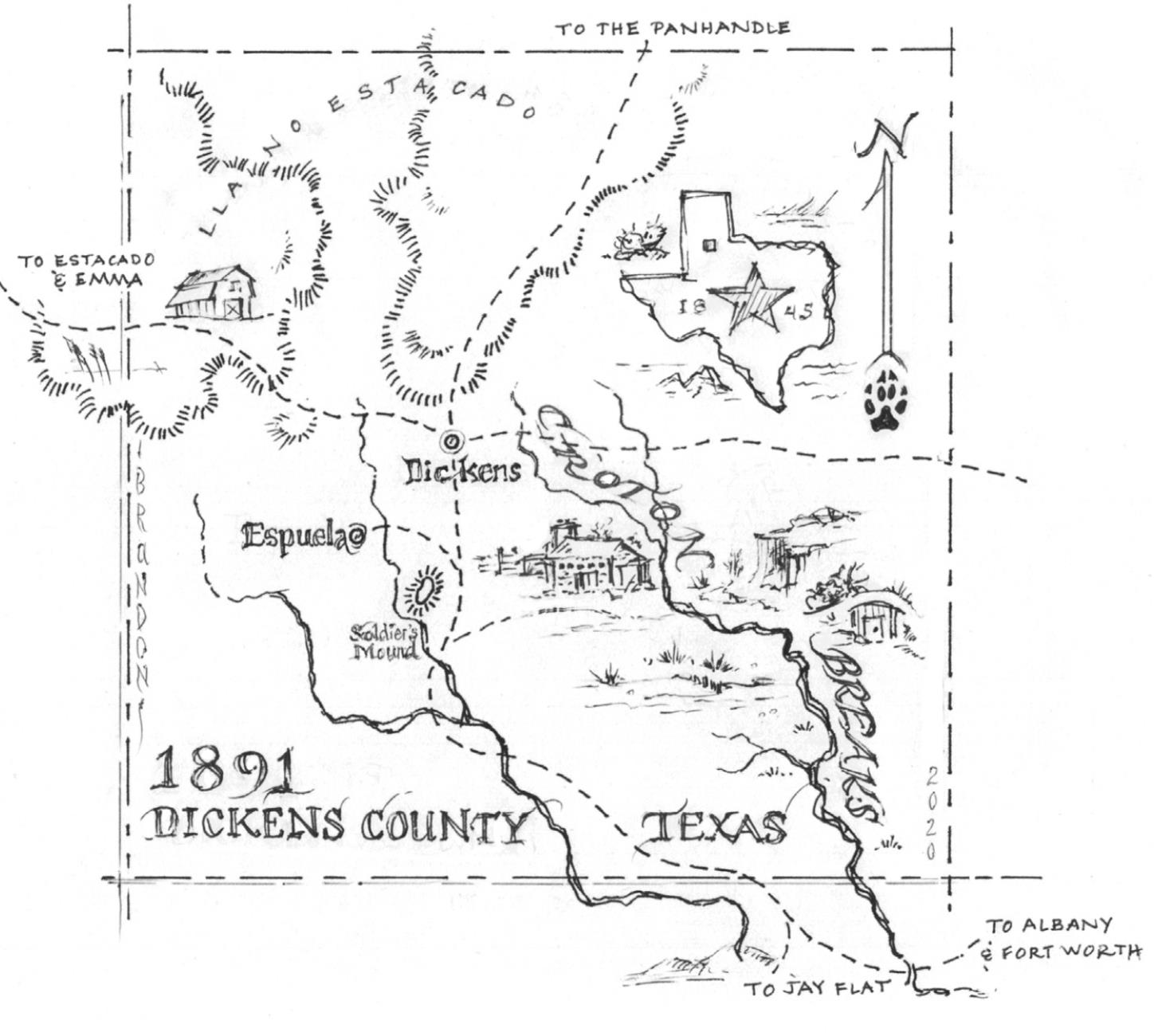
* This story owes its inception to an autumn ramble through the Croton Breaks, and to early enjoyment of classic mystery tales, for which the author
LONG AGO, IN 2020 when the world of books seemed to rock along as it always did, with publication dates slated for a season some nine to twelve months out, it seemed a grand plan for the publisher of The Wolf Hunt to support a promotion reminiscent of 19th-century popular novels—that is, serialization as “parts” in periodicals. Thus we proudly launched the first installment on April 23, 2020. The next day, the coronavirus pandemic bumped schedules out by six months, and The Wolf Hunt became a spring 2021 title. We’re pleased to resume the fun now, starting over with Chapter 1 a full year after its initial appearance.
- Log in or Subscribe to post comments.
