
CUISINE & CULTURE
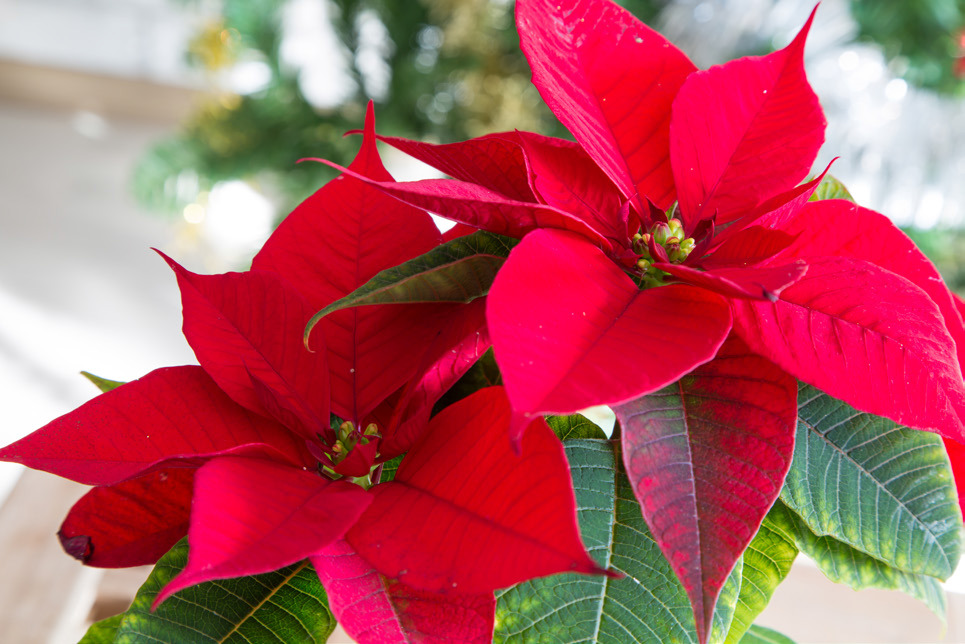
It’s January, and houses are returning to their pre-Christmas décor. But now what to do with those poinsettias? Some hang on until they end up in the compost bin or landfill while others end up being cared for by eager, knowledgeable gardeners. Getting poinsettias to rebloom can be a 2025 mission.
Poinsettias are perennials that can live many years after their brilliant red bracts have faded and blossoms are spent. They have an exacting schedule that needs to be followed to rebloom for next year’s Christmas season. Following is a month-by-month care guide for reblooming poinsettias.
January, February, March. Water poinsettias when leaves droop and media is dry to the touch. Apply lukewarm water to the base of the plant until water drips out the bottom of the pot; discard this water. Place the poinsettia in bright light at day temperatures between 65° and 75° F. Keep away from drafts and cold windows; poinsettia foliage is damaged at temperatures of 50°F or less. Fertilize infrequently with light nitrogen applications when plants cease blooming.
April. Harden off plants for their transition from indoors to outdoors. Slow vegetative growth by increasing intervals between waterings. Plants can be moved outside when night temperatures are above 60° F and day temperatures are between 65° and 75° F.
May. Repot into larger container. Cut stems back to 4 inches in length. Water regularly; fertilize with light applications of N-P-K. Protect from strong winds and high light intensity.
June, July. Lightly prune top growth by shortening lanky stems to promote lateral growth. Follow May watering/ fertilizer regime.
August. Protect against harsh winds and high temperatures. Move to partially shady location. Continue water/ fertilizer regime. Prune lightly through this month.
September. Keep outside until temperatures drop to 65° F or less. Continue water/fertilizer regime.
October. Two months before the desired December bloom date, place the pot in complete darkness from 5 p.m. to 8 a.m. every day. Do not miss a day; even 4 seconds from a light bulb will interrupt or stop the reblooming process. During the day move to a brightly lit, warm room. Continue same watering and fertilizing regime.
November. Continue the long night/short day regime until bracts are showing color and flower buds form. Provide bright light with temperatures between 65 and 75° F.
December. Follow January care and enjoy your 2025 poinsettia blooms!
Some information from ftd.com
Ellen Peffley Harp, a retired professor of horticulture at Texas Tech University, writes about gardening for several Texas newspapers.