
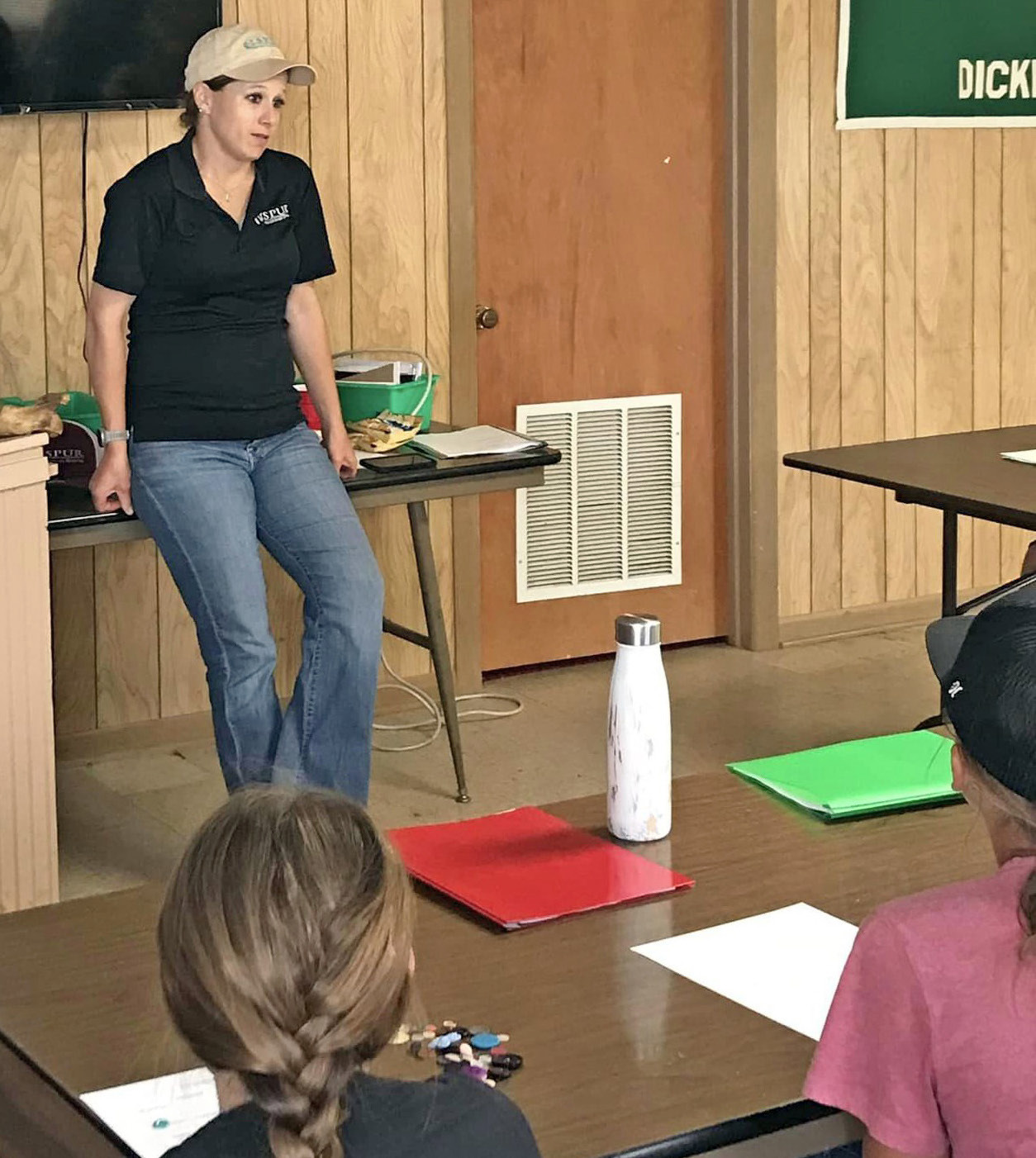
Veterinary science, the first of five Dickens 4-H Summer Day Camps, was completed on Tuesday June 18 at the Dickens County 4-H center. Ten members were in attendance. The day started out with a visit from Dr. Joyce Osgood, DVM, of the Spur Veterinary Clinic, who told us about the process involved in becoming a veterinarian. She also showed us some various veterinary specimens and discussed a variety of veterinary diseases that she deals with on a daily basis.
The next session focused on medications, primarily the various ways to administer them, how to write a veterinary prescription, then a hands-on clinic on how to draw up injections. The members then practiced both intramuscular (IM) and subcutaneous (SQ) injections on oranges.
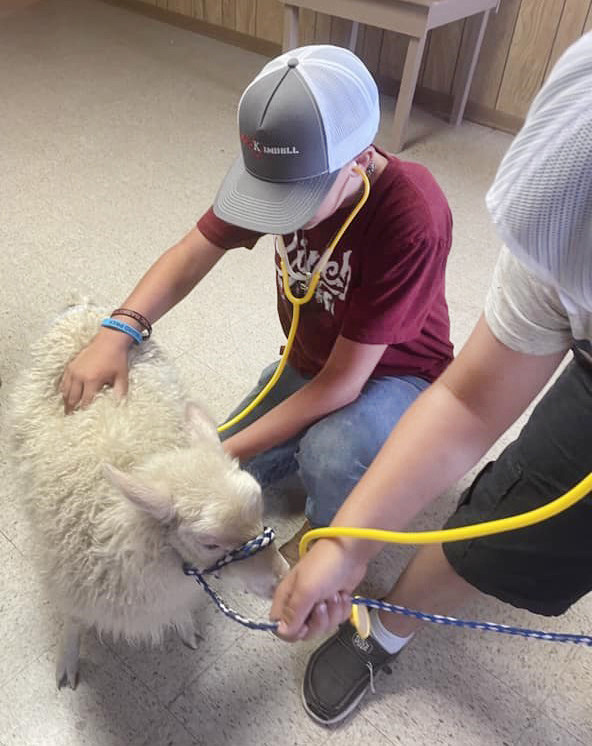
Vitals signs in animals were discussed in the next session. How to take Temperature, Pulse and Respirations in various species was learned. Also talked about were various situations where vital signs could be abnormal. Stethoscopes were then distributed, and everyone practiced taking pulse and respiration on both sheep and rabbits.
After lunch, we had another guest Topher Dalton of TimberCreek Charolais come out and discuss various ways to identify cattle and the reasons to do each kind. The members also learned about the different record keeping methods in the assorted identification methods. He also discussed how feed yards implant growth pellets into cattle and the reasons for this. Then everyone got to practice tagging and tattooing cardboard cattle ears.
The swine section was next, with Amanda Spiva, CEA for Dickens County, teaching everyone how the notching system of identification for pigs was done. We then practiced both reading and writing ear notches. Spiva explained how it is important to breeders and to people who judge livestock to be able to quickly and accurately interpret the pigs’ ear markings.
An important aspect of veterinary medicine is what the inside of the animal looks like and how its organs are arranged. The members next had the opportunity to dissect a fetal pig. They were able to identify the organs of the chest and dissected open the heart to see the chambers and saw how many lobes there were in the lungs. They were able to follow the trachea down to the lungs. They also inspected the abdominal cavity, identifying the stomach, intestines and bladder.
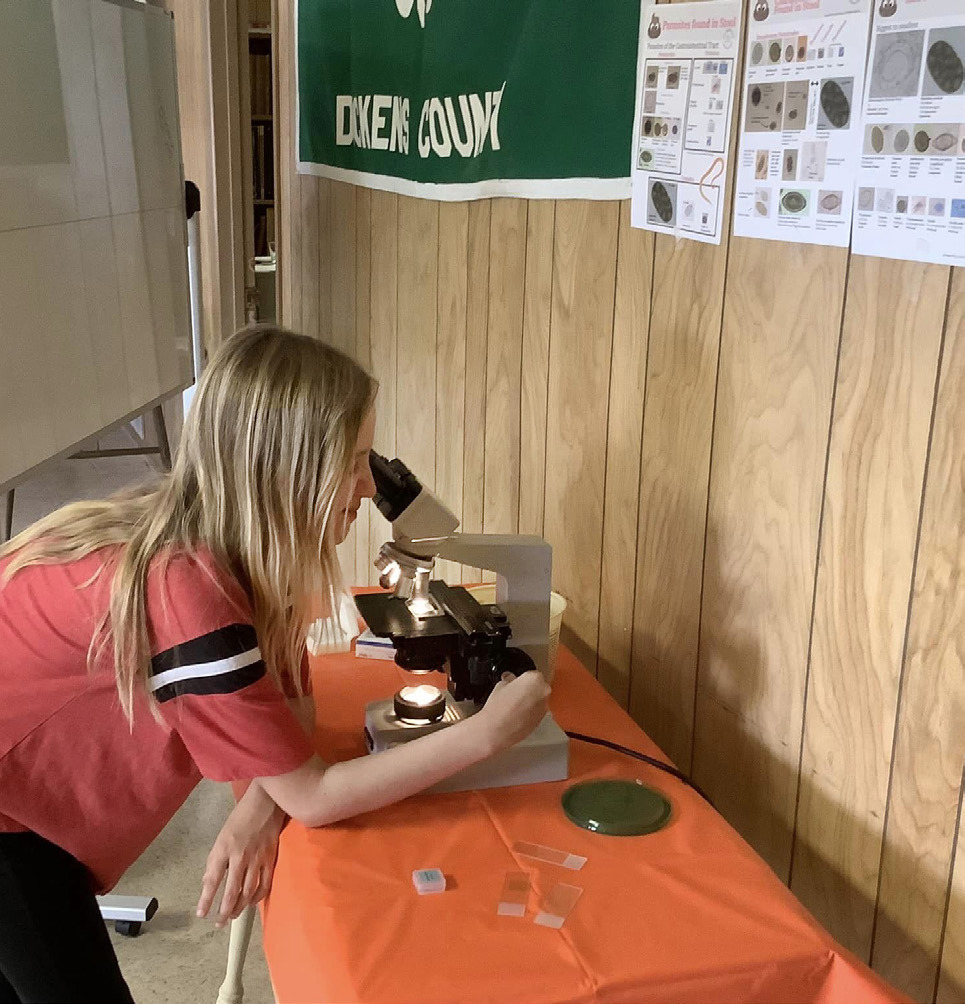
Last, they were able to examine horse and sheep feces to try to identify parasites, worms or eggs that were in the specimen through a microscope.
There are several other day camps scheduled for the summer. Contact the County Extension Office or check the Dickens County Facebook page for more information.
