
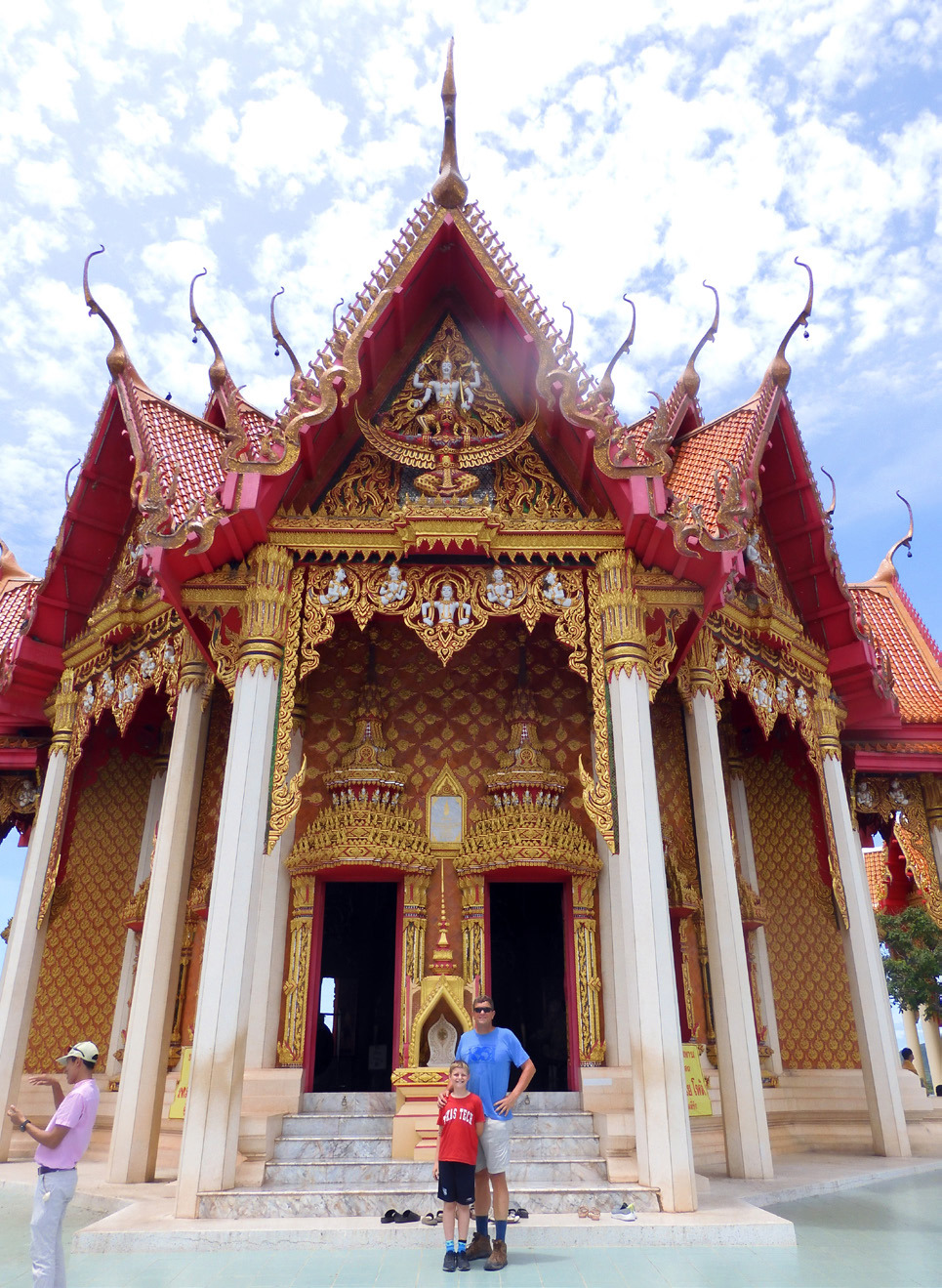
David Pafford of Spur and his son Caleb continue their travels through Asia, arriving for a sojourn in Thailand. “If you would like to see more photos and hear the ‘long version’ of our story,” wrote Pafford, “please visit the website www.farther-beyond.com/ circumnavigation. I hope you will join us each week to hear the latest report.”
Suebsak Macharoenrungrueang went by “Vun” (pronounced “woon”) when he attended school in Spur during the 2020–21 school year.
You can imagine why. Foreign exchange students with names Americans would find difficult to pronounce often adopt Americanized monikers to fit in better and make communication easier with classmates and teachers. I usually oppose this practice. A name is a very personal thing, and I want to learn how to say a kid’s name correctly, rather than just calling them “Bob” or something.
When I heard track and field announcers try to say Macharoenrungrueang, Vun seemed like the better option. He went by Vun at home in Thailand, too, so that made me feel better.
Vun faced many obstacles during his academic year in America. His placement agency just about threw up their hands in trying to place students in the wake of Covid. Texas was probably the only place he could have come. A second agency picked up Vun’s pool of applicants late and were looking for an emergency placement for him. We enjoyed hosting exchange students, and invited him to join us, late though it was.
I felt bad for him. Like many East Asian students, DAVID PAFFORD PHOTOS
he was a shy and a bit introverted. He has since told me that this is born of a major cultural difference. He had to sort of adopt an American outgoing persona to function with us. I would guess this is a bit more common that we might think. He really spoke almost no English when he arrived. I felt like the company that endorsed his ability to complete schoolwork in English had done him a disservice. He spent hours at night in his room translating everything. He was an extremely hard worker. He also was still completing work from his Thai school. All of that translating was exhausting. Functioning in a second language is mentally exhausting, even if you have a moderate understanding. Part of the reason Vun spent so much time alone in his room initially was that he just needed a break from thinking and interacting in English.
Often he did not understand Stephanie’s guidance or questions. He nodded yes, even when he didn’t understand, in an attempt to be compliant. This only exacerbated the situation. We were never angry at him for this, but it made basic things like preparing for school or church or even just dinner a bit difficult. We felt love and sympathy for this poor, kind, extremely polite young man who was just in over his head as an exchange student.
Vun’s English improved while he was in America, but communication was still difficult on the day he returned to Thailand. Immersion is generally the most effective language learning approach, but Vun did not let his return home become a barrier to continued improvement. Vun’s language skills have improved exponentially as he continued to study. He is now completely fluent, though some Americans might have a little bit of difficulty with his accent.
Vun is navigating life very well. He is making his way through Assumption University, a prestigious institution in Thailand that even educates some members of the royal family. Vun’s extended family runs a large fertilizer sales and distribution company in Kanchanaburi. Most of the extended family members live at this facility.
Upon arrival, Caleb and I were welcomed in just like family. The cultural imperative to show hospitality was almost overwhelming. Someone from the family — usually Vun — was assigned to guide us to different tourist locations each day. We were fed more than we could have ever eaten, showered with gifts, and provided with rides and a very nice place to stay the entire time we were there. It was difficult to escape to other parts of Thailand without a family escort.
When I say extended family, I mean extended. Vun’s grandfather and great uncle live on site, as do several aunts and uncles and so many cousins that they wear red shirts numbered one through fifteen so they can be more easily differentiated. Many of these children are a little shy, too, but most eventually warmed up to us, playing bingo or riding hoverboards.
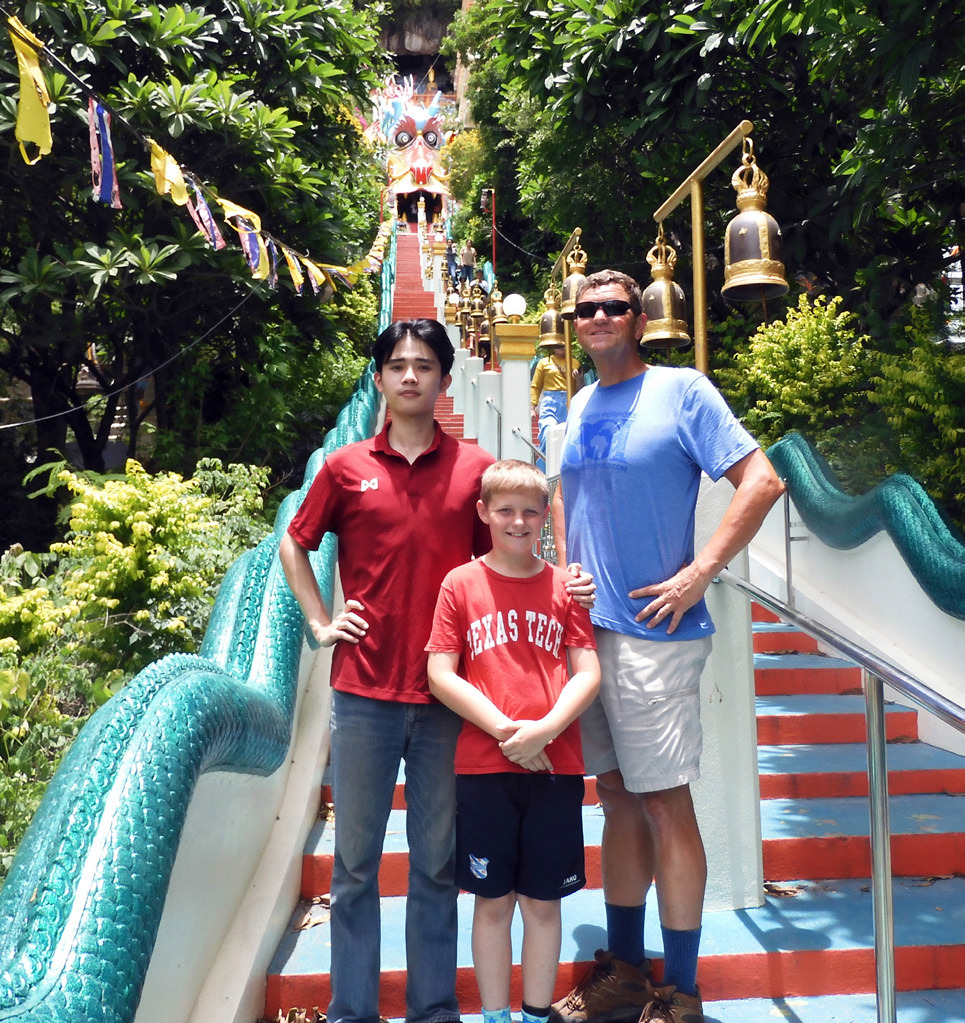
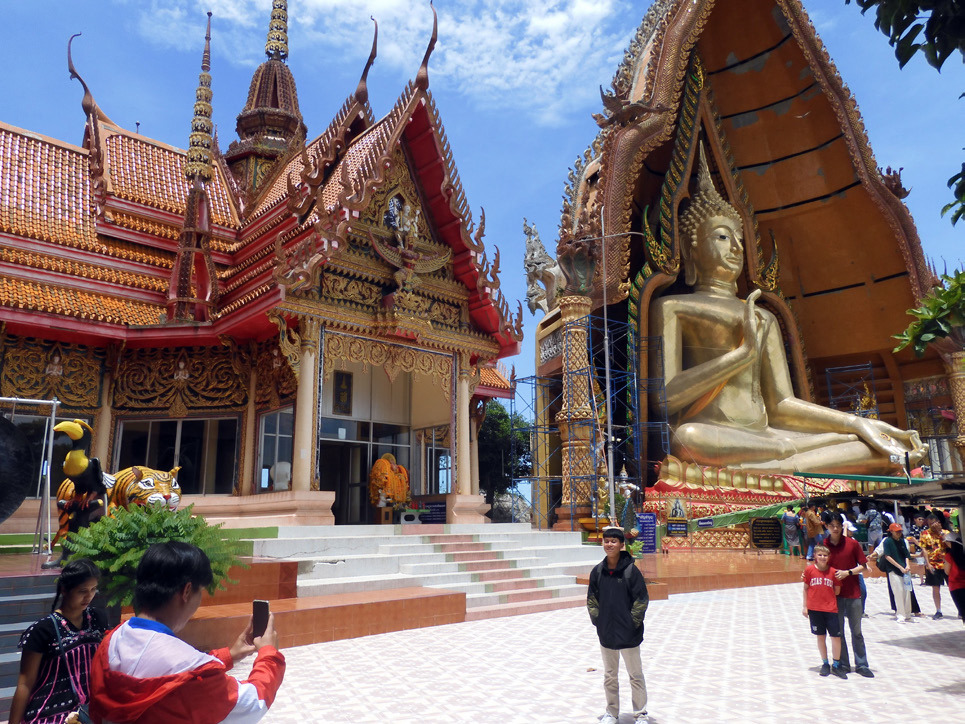
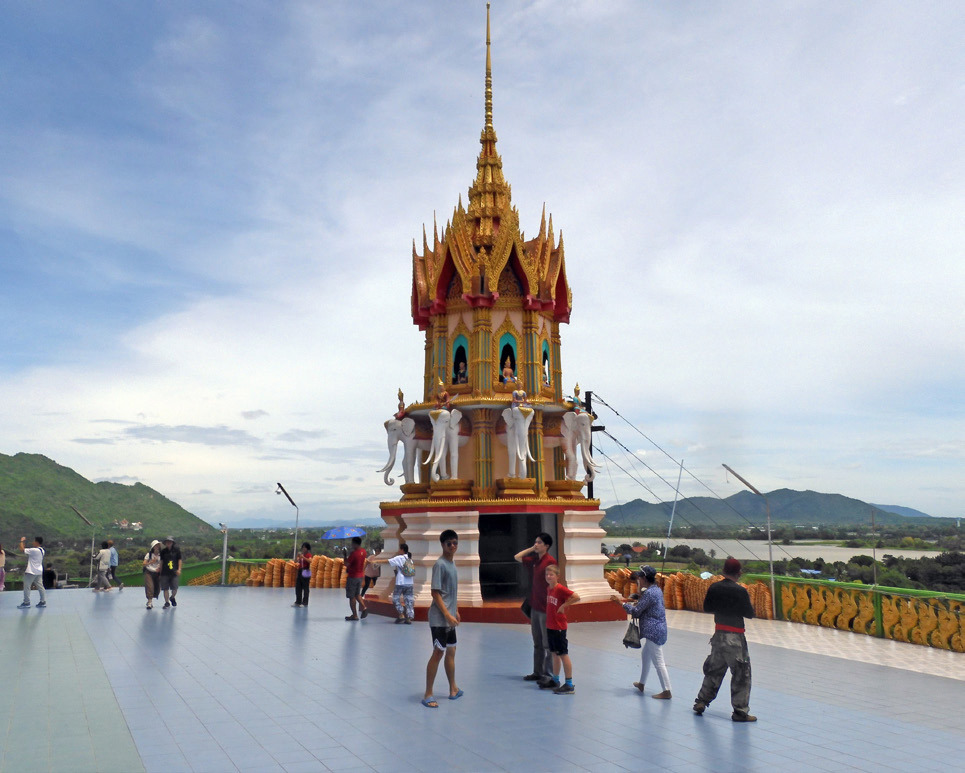
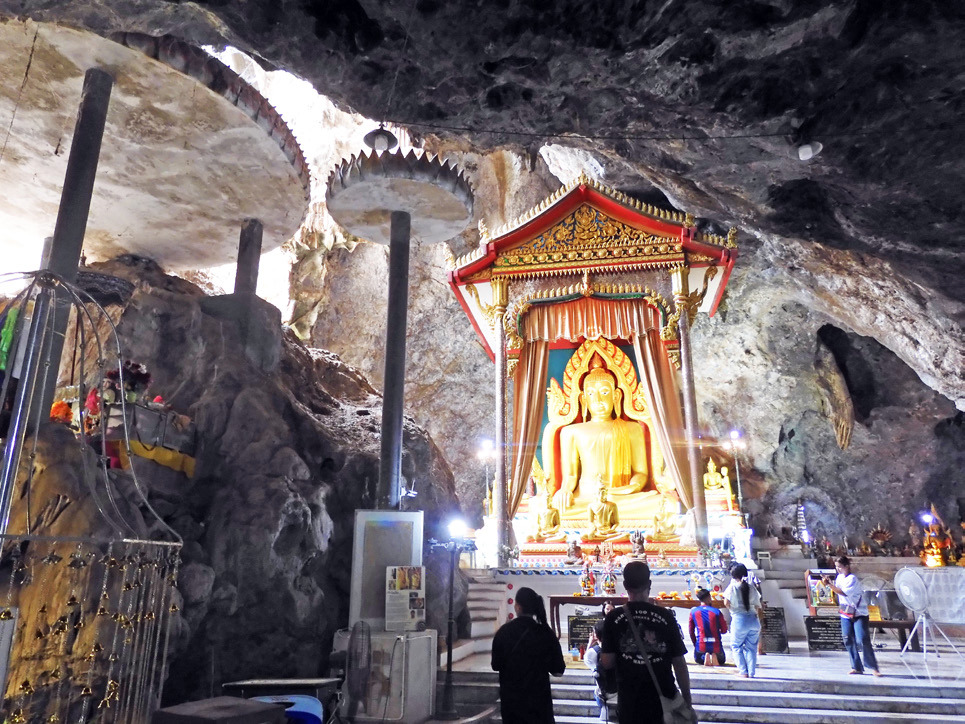
Every day began with a meal. On our first day we visited a Buddhist temple themed after tigers. A different temple had a Buddha statue in a cave. You had to climb up through the mouth and throat of a dragon to get to the cave. There are differences in Buddhism as practiced in Thailand from that in Nepal. It is a synchretistic affair on the whole. Parts are borrowed and shared with Hinduism and other religions. In fact, Buddhism as a whole often seems like a philosophy as much as a religion. The Buddhists we saw offering incense at shrines were doing so for good luck or to ask for a personal favor rather than as an act of worship. Buddha himself insisted that he was not a god. Nevertheless, the temples are impressive and do contain worship regalia. The temples we saw around Kanchanaburi were of the Thai style influenced by China, with multiple arched roofs, red coloring with gold plating, gold tongues of fire, dragons, eagles and stylized animals of other types.
Later that afternoon, we visited two sites associated with the “death railway.” During World War II, Japanese forces in Burma became somewhat isolated from other Japanese land units as the Japanese fleet became more and more depleted in the wake of the Battle of Midway. They lost so many aircraft carriers, they could not protect shipping headed around the Malay Peninsula to Burma. There was no effective overland route, so the Japanese decided to force allied P.O.W.s and conscripted workers (romusha) from occupied parts of Asia to build one, and quick. Thousands of workers died of overwork and infectious jungle diseases, exacerbated by malnutrition. A part of this construction was fictionalized to make the movie “Bridge on the River Kwai.” We visited one of the cemeteries, and walked across the bridge.
Our day concluded with a massive meal where we eventually had to turn bowls upside down on the tops of our plates to prevent more food from arriving. We played with the children, and I answered all sorts of questions about fertilizer, agriculture, American politics, world politics and many other subjects. It was a wonderful day, and just an introduction to the hospitality we would be shown by Vun’s family at Kanchanaburi.
