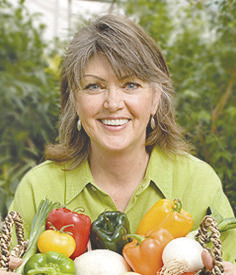
From the garden ELLEN PEFFLEY
Try growing vegetables to replace nutritious food for some of those supplemental pharmaceuticals found in a bottle. Gardens can hold solutions to a healthy lifestyle and nutritious diet.
The new federal initiative called Food is Medicine is a strategy developed “to reduce nutrition-related chronic diseases and food insecurity to improve health in the United States” (odphp.health.gov). Statistics on the odphp. health.gov website: 60% of U.S. adults have diet-related chronic disease, about 18 million people in homes experience food insecurity, and $4 trillion is spent in health care - an astounding indictment of American health.
The website provides resources to prevent, manage, and treat diet-related disease, promote health and wellbeing through nutrition, reaffirming access to high-quality nourishment is essential for well-being.
Nowhere in this government website is a suggestion for individuals to grow their own food for access to highquality nourishment.
It is not difficult to grow your own vegetables. They can be grown in long rows, in raised beds, or in containers.
Containers are perfect for gardeners who have limited space or lack arable soil. Container gardening is simply growing in pots, great for vegetables and herbs—no weed battles. How easy is it to take a few steps out the door and harvest personal squash, tomatoes or basil. Prospects are limited only by the gardener’s resourcefulness.
Start by deciding which vegetables or herbs to grow then fit a pot to their mature size. Fitting the pot to the plant means providing ample soil for root system development. Tomatoes and squash are deep rooted plants; peppers and eggplant not quite as deep; onions, lettuce, spinach, and radishes are shallow-rooted plants; most herbs have shallow root systems. All plants need at least 12 inches of soil in which to grow but deeper-rooted plants need triple that amount.
Keep in mind that large vegetables in large pots will be heavy and not easily moved once the pot is filled with soil. Smaller containers are easier to handle but they hold less soil and dry out faster.
After choosing the plant to be grown and deciding upon the pot, choose location. Most edible garden plants need 8 hours of sun daily. Spring crops like lettuce may grow best in filtered sunlight with some protection from full sun.
Want access to high-quality nourishment? Try growing vegetables for your very own, personal “food as medicine.”
Ellen Peffley Harp, a retired professor of horticulture at Texas Tech University, writes about gardening for several Texas newspapers.