
David Pafford of Spur and his son Caleb continue their travels through India, including a visit to the border with Pakistan. “If you would like to see more photos and hear the ‘long version’ of our story,” wrote Pafford, “please visit the website www.farther-beyond. com/circumnavigation. I hope you will join us so many people, so much love, so much culture, so much history, so much potential, so many swindlers, so much filth, so much congestion, so much chaos.
In 2022, India surpassed China to become the most populous nation on the planet. There are people everywhere. Most are going somewhere, many others are trying to take you somewhere, still others are trying to sell you something, and a pretty significant remainder are just lying there.
We saw people sleeping on the street, on benches, on ledges, in the train station, and just about everywhere. People are constantly pressing against you, pushing past you, cutting in front of you, hitting you with their packs or bags if they have them. Most people just pack what they have in plastic sacks. The streets are jammed with cars, rickshaws, carts. Once during our visit, we got caught in a traffic snarl so bad, we couldn’t even walk through it. We were afoot, and eventually gave up and took a different route.
Poverty in India is real. Neighborhoods all over the country have randomhanging, tied-together electric wires strewn about haphazardly. My first night in Amritsar, I nearly walked into a nest of about three dozen twisted wires with their exposed junctions.
Skinny children with matted hair countless times came up to me in the street begging for 10 rupees— twelve cents. One poor fellow begging in the train station when we left had one foot sticking about six inches out of the bottom of his torso, and was swinging himself around on that and his hand on the opposite side. As difficult as his life would be in the best of locations, imagine going through life with this disability in Amritsar, India.
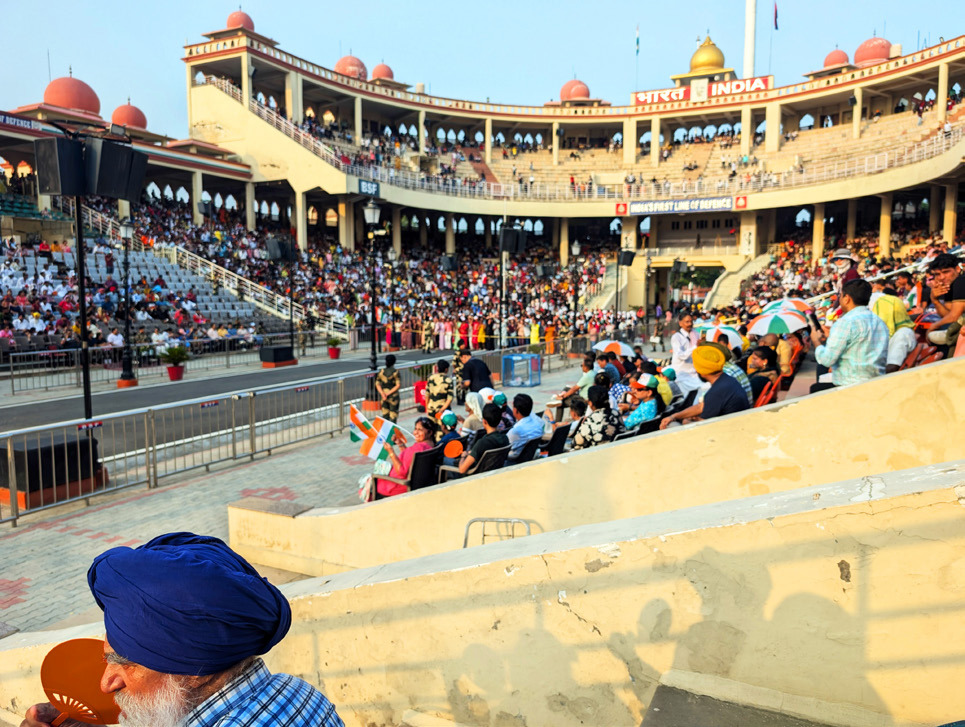
During our stay in Amritsar we traveled to the Attari-Wagah border to observe the retreat ceremony, a military procedure by which the flag is lowered at sunset. We took a motorized rickshaw all the way out to the Pakistan border from our motel in Amritsar’s old town. Each country has built stadium seating so that visitors can observe this parade of sorts that has been going on since the country was partitioned in 1947.
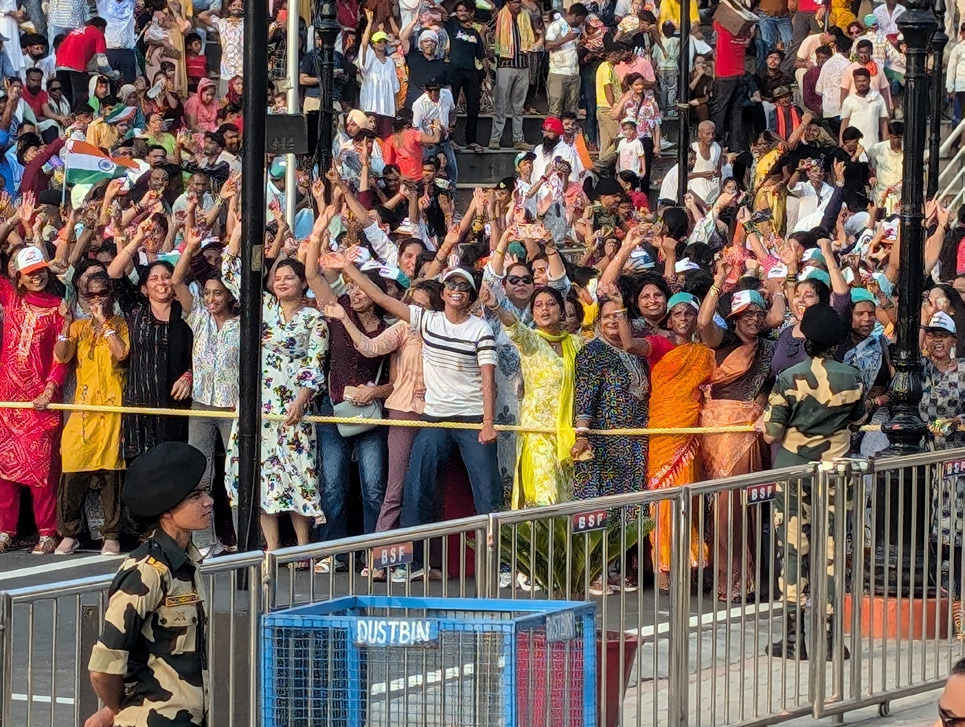
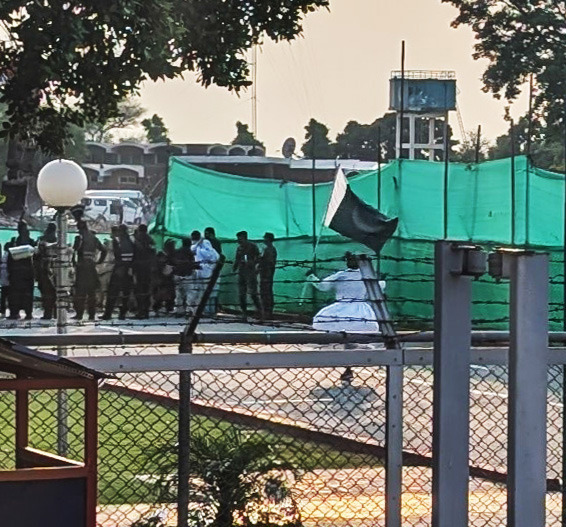
As foreign guests, we were offered a fast-track entry into the stadium for the free ceremony, and given prime seats. We had been advised to arrive early, and so sat in the sun for a good hour or so before the festivities began. About an hour before sunset, music and videos began playing on the India side. Something was being played on the Pakistan side as well, but we couldn’t hear it. A huge group of dancers formed in the street below us, jumping up and down and dancing to the music, chanting and singing. I looked across to see what was happening in Pakistan. A one-legged man in a white robe slowly hobbled out to the center of the street carrying a Pakistani flag. All of a sudden, he dropped the crutches, held the green flag with its crescent and star over his head, and began spinning at an amazingly fast rate, even for someone with both feet. His robes twirled out around him like a Southern debutante’s dress. This was a pretty impressive stunt. Nevertheless, the onelegged flag bearer seemed a little sad compared to the dancing mob of colorfully dressed ladies on the India side.
Periodically between songs, a mustachioed Indian Border Security Force officer in a beret would come out with a microphone as if he were at a World Wrestling Federation event and pump up the crowd with challenge and response chants. After a long sustained battle cry, he called out, “Hin-du-staaaaan… ,”and the crown hollered back, “Zin-da-bad!” This means something like “Long Live India.” Apparently this is also chanted at India-Pakistan cricket matches. That seems entirely appropriate. The whole thing was kind of like an international pep rally. I’m pretty sure the Pakistanis were chanting something similar on their side.
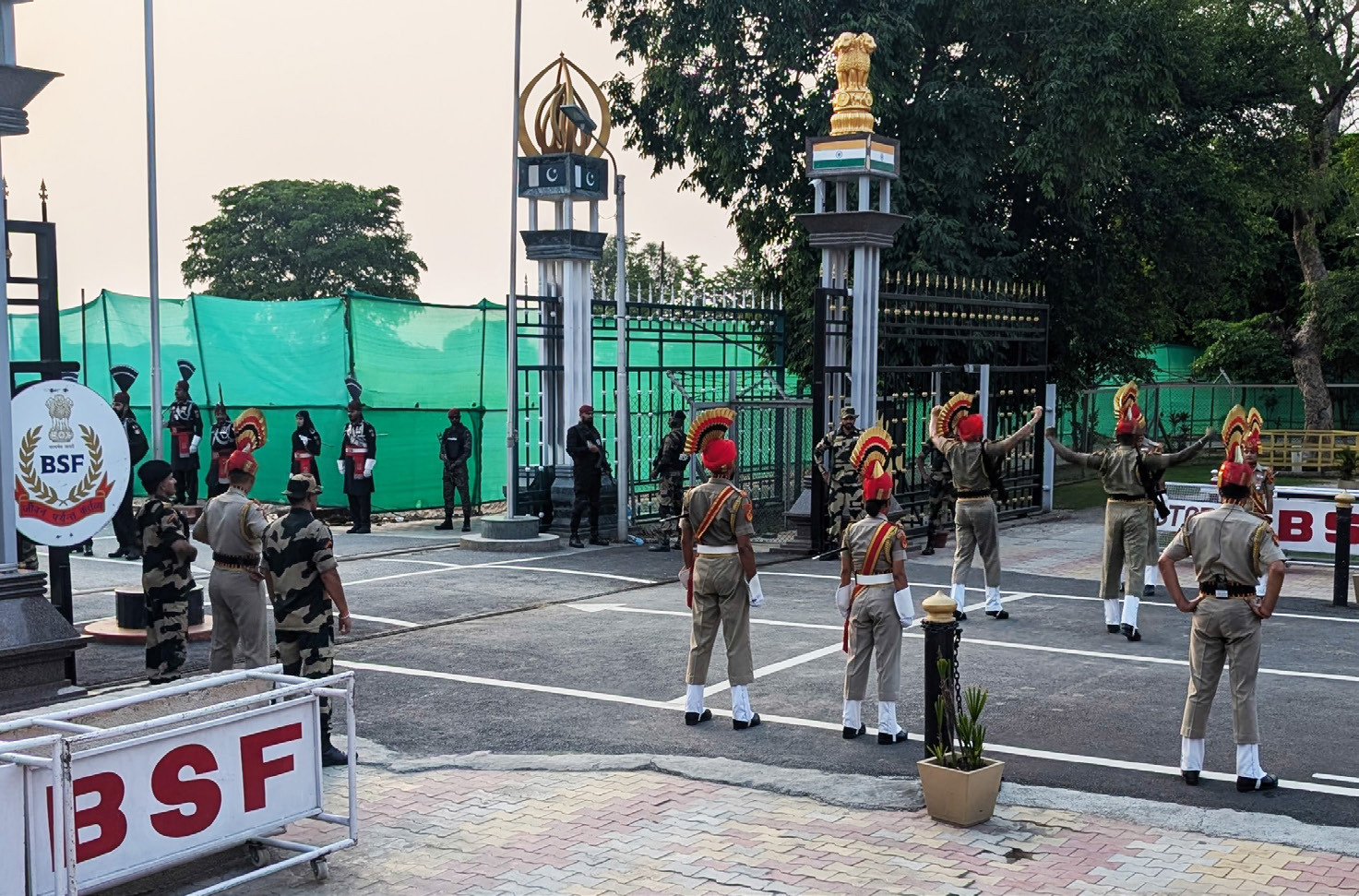
The main event featured high-stepping border guards with fan-shaped crests on their hats marching out and ceremonially opening the gates between the two countries in what resembled a kind of fascistlooking dance-off.
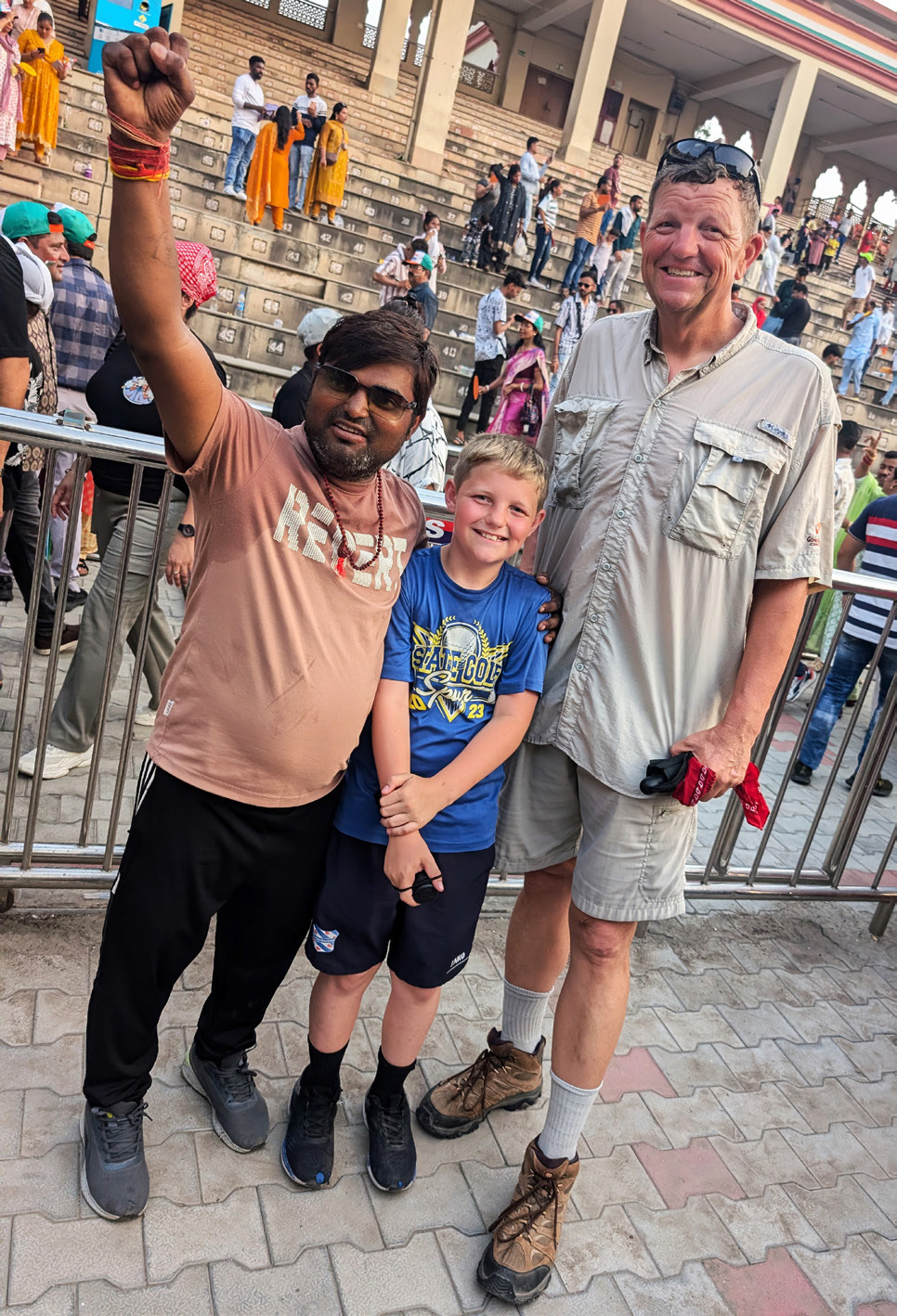
Two of them eventually meet across the line in a very formal, stiff handshake. Then, the two flags are lowered simultaneously, and the gates are closed. The parade itself was not all that long, but with the buildup, it took about an hour. It was quite the patriotic production, and nowhere were Indians more excited to see us than here, to share their love of country. We probably took more pictures with strangers that day than the president.
Eventually the BSF insisted we and the Indian tourists taking selfies with us move along toward the gates. That’s probably a good thing—otherwise who knows how long we’d have been there. One very enthusiastic, stocky little fellow was especially excited to see how Caleb had been charmed by the ceremony, and kept hollering at him, “Hin-du-staaaaan,” futilely trying to get him to correctly pronounce “Zin-da-bad!”
Both he and Caleb had fun with the effort. I got a kick out of it, too.
“Hindustan, Zindabad!”
