

David Pafford of Spur and his son Caleb arrived back home in Spur last week, with more than 100 days of memories and experiences to talk about. “If you would like to see more photos and hear the ‘long version’ of our story,” wrote Pafford, “please visit the website www.fartherbeyond. com/circumnavigation. I hope you will join us each week to hear the latest report.”
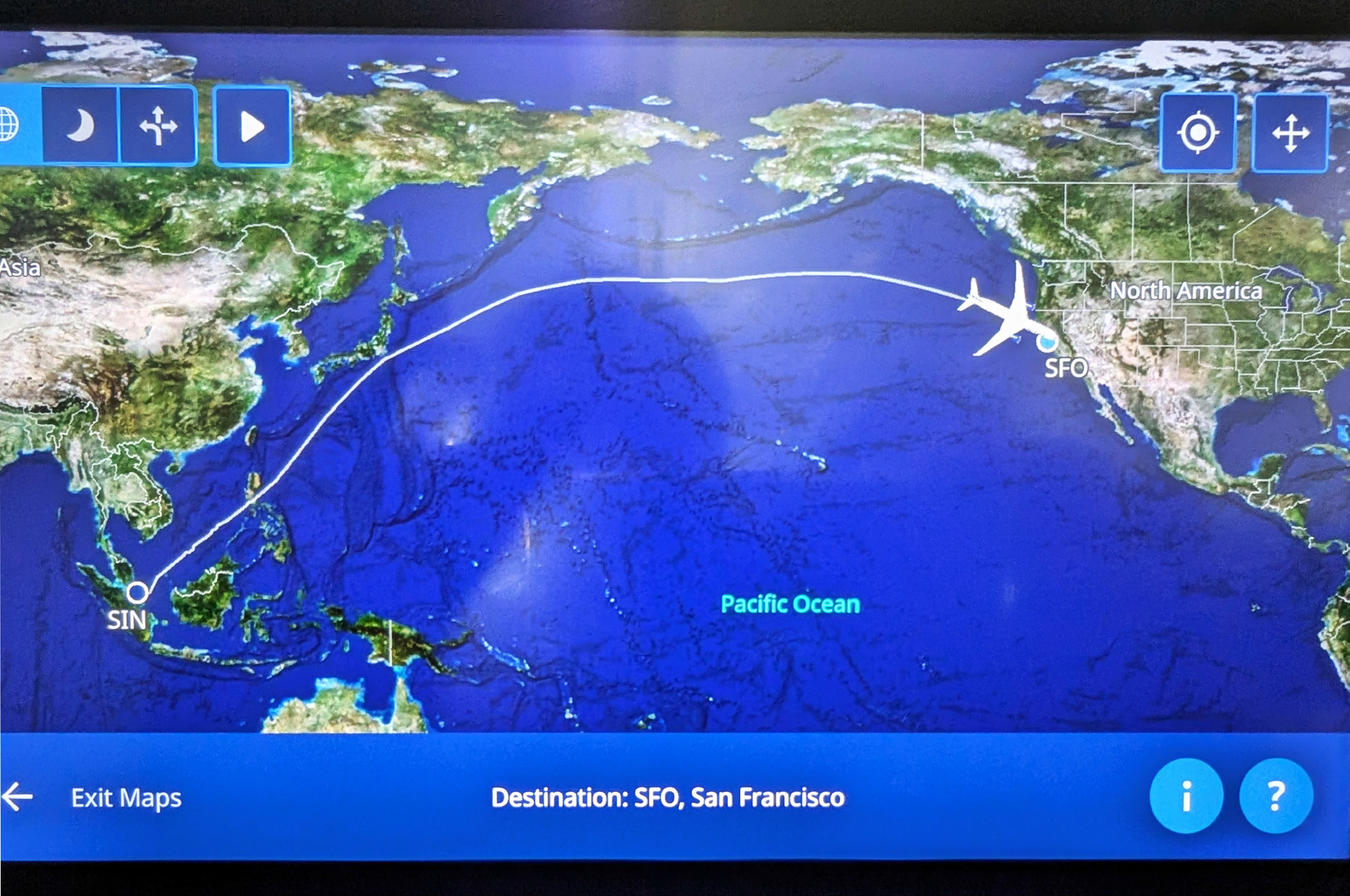
Caleb and I took off from Singapore at 8:50 a.m. on August 30, bound for San Francisco. We landed at 8:47 a.m.—the same day! We spent a couple of days farming in California before reaching home on the first of September. It was a great trip. We learned so much. I could attempt to list the things I learned, but could never contain that in an article of this That question is impossible to answer. There were things I enjoyed about every place we visited. Many of them also had clear detractors. There were a couple of countries were were only in for a day or two. We only visited small swaths of some very large countries. It wouldn’t be fair to evaluate them that way. I prefer to describe how my experiences compared to my expectations.
I knew that there were some historical sites I wanted to see in Istanbul, but I was blown away by the breadth and volume of historically significant venues just in that city. Although the Turks do not emphasize Byzantine history as much as Ottoman, the sites are still there. Istanbul offers thousands of years of history and multiple important empires, and was at the crux of commerce, religio, and political interchange from antiquity until at least the early 20th century. The location is stunning. Other than admission to a few of the top venues, the city is inexpensive and very easy to navigate, and the food is delicious. We just saw the tip of Turkey’s iceberg. I would love to come back and experience the rest of the country, with all of its beauty and other historical and biblical sites.
I did not have high expectations for Southeast Asia. I wanted to see our former exchange student, Vun, and we got a cheap flight back from Singapore to San Francisco. But I just expected a hot, tropical place with some different landscapes. The people we met in Thailand were amazing, the temples are beautiful and diverse, the food is great (and inexpensive), and the green scenery struck me as very pretty. It is also a nicely developed modern country, where we visited. The geography got only more beautiful as we traveled down the Malay peninsula. The contrast between the coastline and the highlands in Malaysia was breathtaking. The food was even better than in Thailand, and the convergence of cultures and cuisines made for a wonderful experience. Singapore was the perfect end to the trip, with its crisp efficiency and interesting example of what can be accomplished with good planning.
Q: How much did the trip cost?
Of course, no one will ask that directly. I know you’re wondering, though. Either that, or you have already just dismissed the trip as an out-of-reach luxury. Although I have not added up the total, I did keep track. Travel can be expensive, and the portion of the trip I shared with Stephanie and Kimberly was at times eye-wateringly expensive, even when we utilized economy accommodations and prepared many of our own meals.
Travel does not have to be like that, however. I frequently lampooned Stephanie for visiting only expensive countries. As soon as Caleb and I hit Eastern Europe, our expenses plummeted. They sank further once we reached Asia. Airplane tickets are potentially the biggest expense, but careful shopping can mitigate this. My ticket from Toronto to Edinburgh was just over $200. The Singapore to San Francisco leg cost just under $500. The regional Asian flights were generally less than $100. We spent between $1,200 and $1,300 per person on plane tickets.
In India and Eastern Europe we used trains. In most other places we used buses. European trains tended to be expensive. Long-haul bus and train tickets were often anywhere between $10-$20 elsewhere, sometimes less. In cities, we often used public transportation. Those rides are usually less than $1. Western European trains, on the other hand, can cost more than air travel. In a few places where public transportation was not feasible for what we were doing, I rented cars. This generally cost less than $40 per day.
Once we got to Asia, food and accommodations were very inexpensive. In India and Nepal, we often hired rooms for $10-$12 per night. Sometimes we paid closer to $20, but that included a prepared breakfast. You can pay for American luxury chain hotels like Hilton in many tourist areas. We did not do so, but we also did not opt for the cheapest room we could find. We always got air-conditioned rooms with WiFi and clean beds. In India and Nepal especially, I paid an extra dollar for refundable reservations so I could inspect the room prior to accepting it. In some instances I paid for luxury accommodations when it seemed like a good deal. We had a full twobedroom apartment in a high-rise with a gym and a rooftop pool in Kuala Lumpur for less than $50 per night.
You can find expensive food in many cities and tourist areas, but it is easily avoided. Our program was usually to eat breakfast in the motel, eat snacks, fruit, or street food during the day, and to visit a sit-down restaurant for supper. We tried to find restaurants where locals might eat on an average day—something equivalent to the Turnaround Top Cafe, Caprock Cafe, or Ponderosa back home. In many Asian countries, a delicious full evening meal could be had for less than $3. Sometimes we paid twice that, but almost never as much as $10.
The expense “wild card” was always admissions. Nearly all historical sites outside the United States—especially once you leave Europe—charge foreigners a higher price than locals. Sometimes it is 10 or 20 times as much. Our guided tour of Topkepi Palace in Istanbul cost a ridiculous $95 each. The church with the best medieval mosaics was free to enter. It cost 22 times as much for me to visit the Taj Mahal than it does for an Indian. But 22 times the local rate was still only $13, which seems fair for a landmark of that caliber. Neighborhoods, parks, scenery, public spaces, people-watching, architecture, urban skylines, natural landscapes and things of that nature are nearly always free.
The expense of travel has a lot to do with where you go. Europe, Australia, New Zealand, the U.S. and Canada are going to be expensive. Asia, Africa and Latin America are cheap. Even with the lower cost of goods and services in Asia, expenses eventually accumulate. The trip becomes surprisingly affordable, however, when compared to the opportunity cost. Had I stayed home, I would have gone out to the movies, bought tickets to entertainment venues, occasionally eaten out, gone on a two-week domestic summer vacation, and generally just lived on the American economy. Traveling on a modest budget really isn’t more expensive than what I would have done here if I had stayed home. I consider the travel far more interesting and rewarding.
Q: Why did you go so fast/slow?
I have been asked both of these questions dealing with time, and both are legitimate. I was gone 103 days, which is a long time to be away from home, but not long enough to “see the world.” It is more my style to research one or two places thoroughly, and then visit for a couple of weeks. While circumnavigating could possibly be done faster, it would have been frenetic. I wanted to experience the places we visited in a meaningful way. Being gone for three and a half months did not really bother me. I was limited (kind of) by Caleb’s school schedule and the amount of time I felt comfortable managing the farm from abroad. From the start, I knew that we needed to leave just after school let out and that we should not push our return past Labor Day.
Our primary issue with time was that we had to keep moving at a more rapid pace that was completely comfortable. Researching things to do, making transportation and accommodation bookings a few days in advance, and recording what we had done all had to be woven into our schedule in a way not necessary for a one- or two-week trip to a single destination. I jettisoned a few countries from my original plan and occasionally just rested in place for a couple of days. There weren’t many days off, however. Most people who do these round-theworld trips take nine or twelve months. We met one traveler in Ushguli, Georgia, who had taken 18 months off to see the world. They establish a base camp in an area and just live there for a while while exploring at a more leisurely pace.
The problem is that you can’t really see the world in three and a half months. But then, you can’t see the whole world in eighteen months either. We ultimately made a series of compromises that allowed us to circumnavigate while seeing a huge program of amazing places in the time we had on a budget we were comfortable with. If I do a similar trip in the future, I will limit the number of stops so as to spend more time in each place. As it was, our trip was like a restaurant sampler plate of the world. We tasted many places and cultures. Some we will return to for a bigger portion. Some I won’t need another slice of. My appetite for travel is not slaked forever. I learned a lot, though, and future trips will be better informed.
