
From the garden
Water is precious in West Texas.
Last week’s rains brought much needed relief to our long drought. If those raindrops could have been captured, gardeners would have a no-cost water source for their crops. Rainwater harvesting is simply the collection and storage of rainwater.
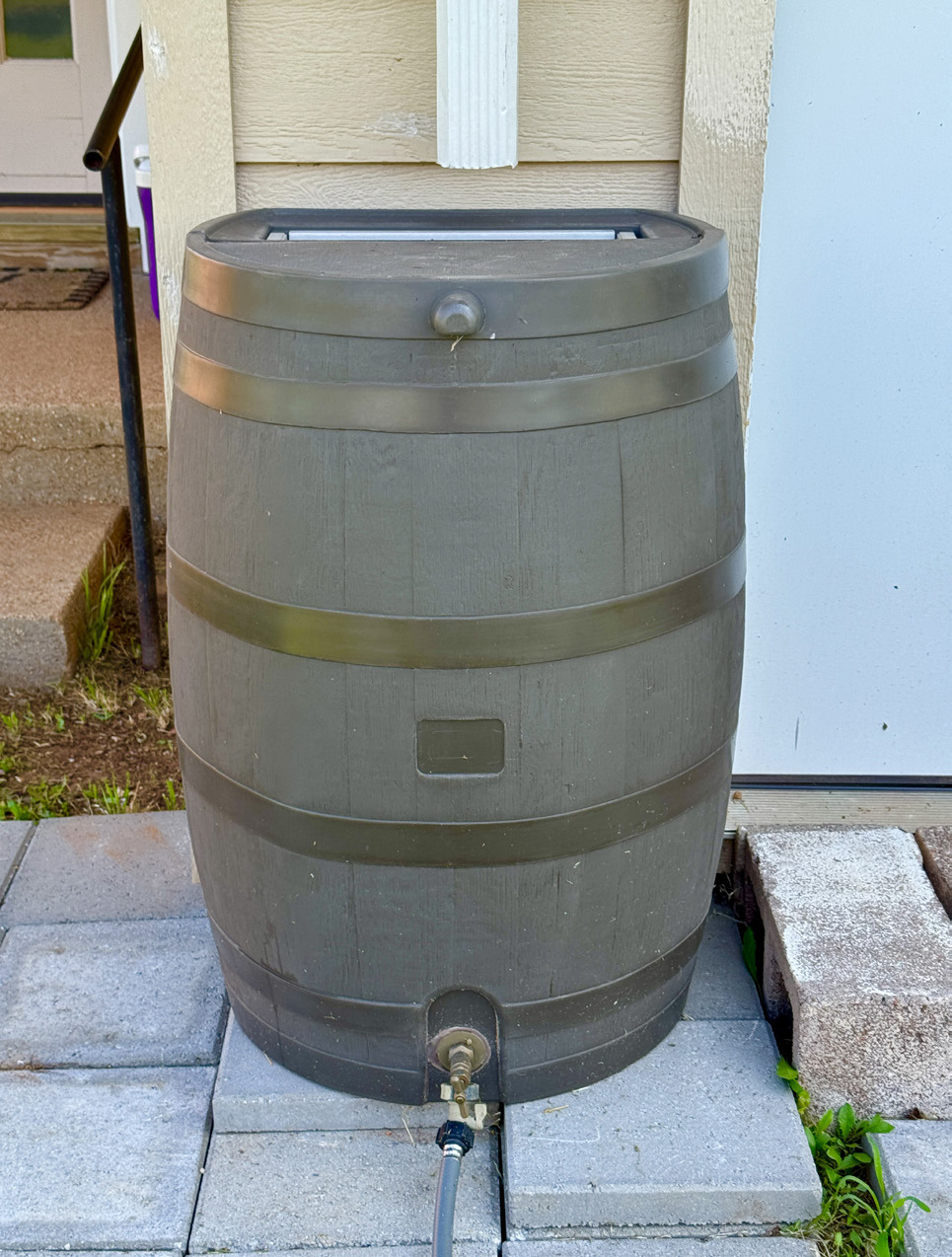
Collecting rainwater requires no external energy source. All you need is a catchment, a hard surface such as a rooftop, with gutters that direct water flow from downspouts into holding containers like rain barrels. Harvested (captured) runoff can be stored for later irrigation of gardens and garden beds.
Rain barrels are usually made from 40- or 55-gallon polyethylene barrels that are free of chemical or oil contaminants. Opaque and tan-colored barrels are attractive, but darker colored barrels reduce algae growth. Locate barrels at the bottom of downspouts close to the garden. Elevate barrels to allow for gravity flow; insert hydrants into base of barrel for delivery of water. Covering with mesh screens keeps out mosquitoes and debris.
The quantity of water harvested depends upon:
• amount of rainfall falling within a given timeframe
• slope of catchment area; the steeper the slope, the faster the runoff
• size of catchment area determines quantity of harvestable rainwater • size of gutters affects amount of water channeled to collection barrel
• size of rain barrel The quantity of rainfall harvested from a catchment area is called the runoff coefficient—that is, the percent of rain hitting and recovered in the catchment area as influenced by the above variables. The higher the percentage, the greater the runoff; usual recoverable percentage is 90. The formula to calculate amount of rainfall harvested from a catchment area: HARVESTED RAINWATER (gallons) = CATCHMENT AREA (ft2) xRAINFALL(in.)xRUNOFF COEFFICIENT (%) As an example, using a runoff coefficient of 90%, 90 gallons of rainwater can be collected from a 1-inch rain channeled into a rain barrel off a 10 x 10 (100 ft2) garden shed or greenhouse roof.
Rainwater harvesting systems may be tax exempt. The 77th Texas Legislature passed Senate Bill 2, which exempts rainwater harvesting equipment and supplies from sales tax (Subchapter H of the Tax Code Section 151.355). The Office of the State Comptroller has sales tax exemption applications.
Details on tax exemption are published by the Texas Water Development Board (twdb.gov) in “The Texas Manual on Rainwater Harvesting,” a complete guide on catching and using rainwater.
Ellen Peffley Harp, a retired professor of horticulture at Texas Tech University, writes about gardening for several Texas newspapers.