

In a desolate corner of Kent County, Texas, last Thursday, the wind was blowing at its usual 8-milesan- hour clip, enough to kick up white clouds of dust far along the caliche road as the motor coaches arrived from Lubbock.
But the sun was bearing down brightly, unimpeded by any other clouds.
And for Clearway Energy, that was a good thing.
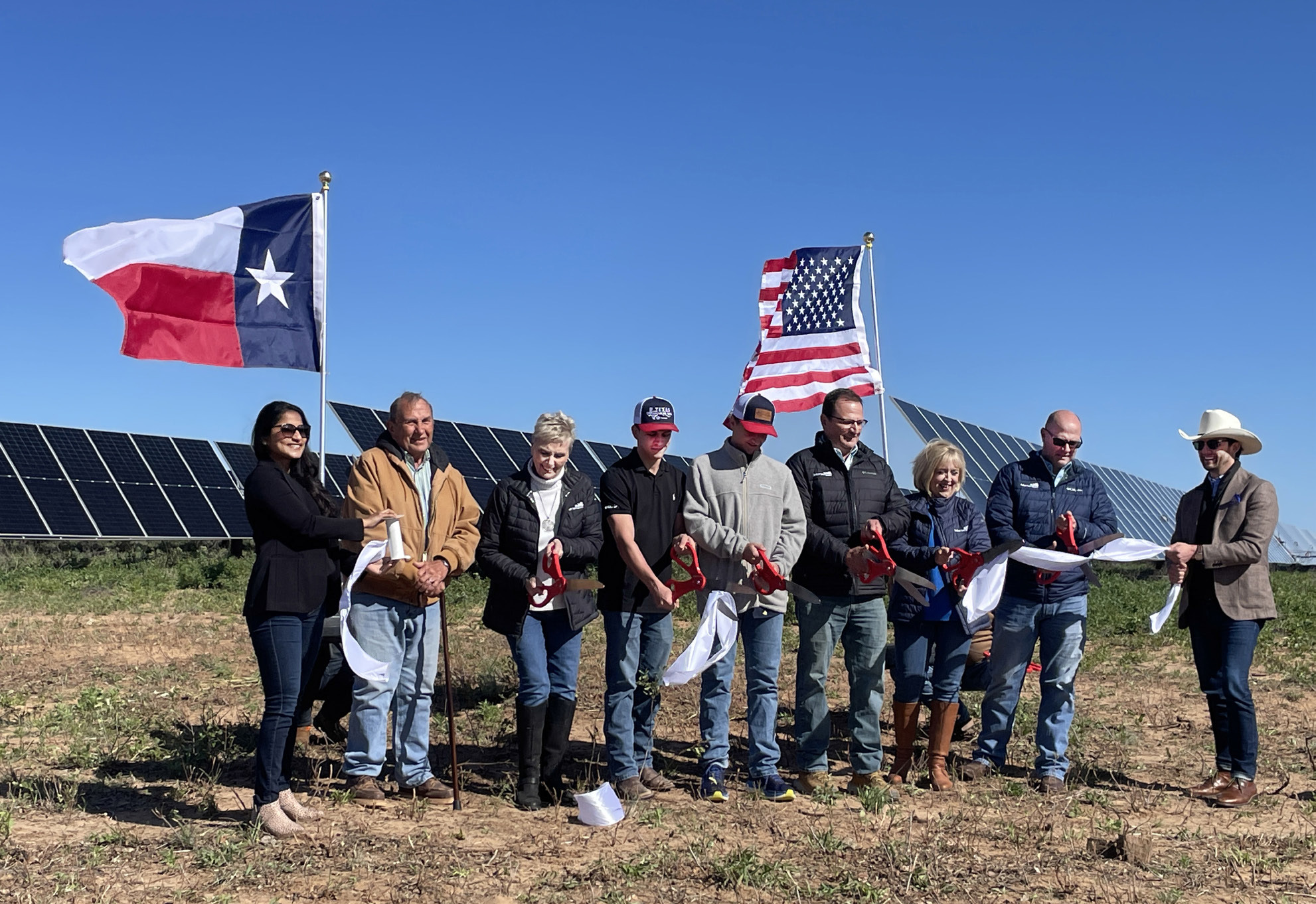
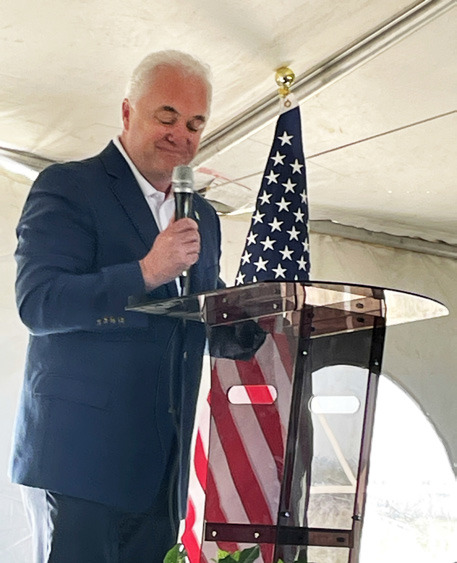
The San Francisco– based corporation, with offices in Houston, cut the ribbon on its recently energized 452-megawatt solarpower generation facility situated on 5,000 acres of Morrison Ranch lands off FM233. Corporate staff, partners, and representatives of the landowner family were on hand for the ceremony following a breakfast and remarks held in a tent set up onsite. Kent County Judge Layne Coulter and county commissioner Robert Graham also attended.
“We look forward to decades of safe operation and being good partners,” said John Woody, Clearway senior vice president of development, who noted that the project came online earlier this year after facing “some of the most significant headwinds our industry has ever faced” during Covid-19 shutdowns, supply-chain challenges, and inflationary trends.
Clearway expects the project, when both phases are complete, to generate enough electricity to power more than 190,000 homes each year. With the opening of Phase 1 it will also begin generating an estimated $5.4 million in property taxes and wages for Kent County in its first year.
According to a PILOT (payment in lieu of taxes) arrangement approved by the Kent County Commission in 2019, for the project’s first years, benefits will go to the county’s only school system, Jayton-Girard ISD.
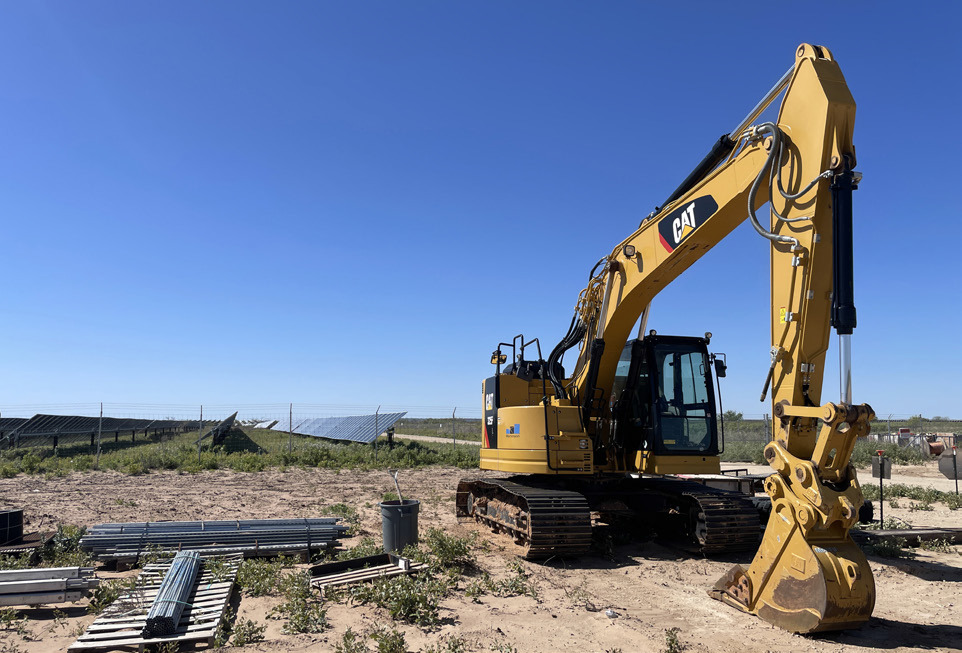
While the first phase of the project was under construction, said Woody, some 400 workers in various trades were involved. He expects a dozen staff, primarily technicians, to remain employed now, under the supervisor of plant manager Lee Decker.
Representatives of four companies that are major purchasers of RECs (renewable energy credits) from Clearway were on hand to discuss their sustainability initiatives: Jim Gowen, VP of Sustainability, Verizon; Ryan Hunt, Vice President, Toyota Boshoku Corporation; Don Lynch, vice president of quality, strategy, and transformation, SKF USA Inc. (Michigan); and Fernando Giasi, indirect material purchasing manager of Mexico-based Nemak, an e-mobility provider.
“I know everything’s bigger in Texas, but I had no idea how big this solar farm could be,” said Lynch.
What would in due time become the Texas Solar Nova facility began around 2012 when renewable-energy developers began reaching out to the current owners of the Morrison Ranch, said Linda Beth Morrison Swenson, whose grandfather J.B. Morrison acquired a wide swath of acreage in the 19th century.
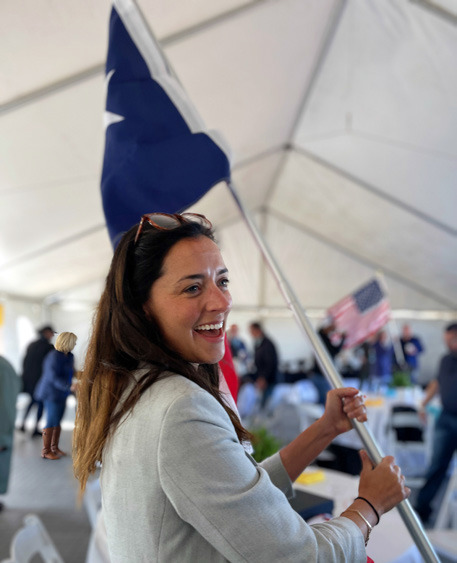
The Swensons date back to 1898 when the Morrison forebears “homesteaded on land nobody else wanted,” said John Eric Swenson in brief remarks to those gathered under a windblown tent for a delicious breakfast prepared by Hotel Turkey owners Pat and Tina Carson. “We are very thankful as a family” for Clearway’s involvement, Swenson said.
Back then “the land was in a strip not originally surveyed because of the shinnery,” explained Linda Morrison following the ribbon cutting; the thinking was that the low, tight oak growth might impede effective grazing. “But the grass out here grows like crazy,” she said, and it’s supported cattle ranching operations ever since.
The presence of highvoltage CREZ electrical transmission lines, however, was likely the amenity that first attracted the energy industry—along with the prospect of negotiating with a single landowner rather than dozens of smaller parcels.
Clearway got involved in the project in 2015, said John Woody. In addition to working with the Morrison/ Swenson family, the firm had to raise capital (some $660 million was eventually invested in Phase 1 alone), procure materials, line up construction contractors (top-25 builder, developer, and engineering services provider Mortenson handled the construction phase), and securing customers for RECs.
Neighboring communities such as Dickens County reaped some short-term benefits during the construction of Phase 1, with short-term rental income, patronage of local retailers and restaurants, and municipal utility usage.
Energy and sustainability.
Not all neighbors are thrilled to have the giant solar plant on their horizon, however rosy the prospects for a renewable energy source, and economic benefits, may sound.
Paul Scioli of the Ruby Ranch, situated alongside the Texas Solar Nova plant in Kent County, has claimed that the array of more than a million photovoltaic panels, along with impacts of grading, construction, fencing, and eventual disposal are already damaging local land, habitat, and air.
Woody feels that Clearway will be an environmentally responsible tenant, with plans already in place for re-grading and reclamation of disturbed areas such as construction laydown yards. Water usage, he said, should be minimal now; “there’s no planned washing” of panels, with even the area’s scant rainfall deemed sufficient to keep them clean. Recycling options are available as with wind turbine blades.
Asked about proactive community involvement, Woodysaidhelooksforward to Clearway being a good corporate citizen—assisting with community initiatives as well as incorporating learning opportunities such as educating people about renewable energy, and bringing visitors out to thesite.Thecompanyhopes to“spawnmorehomegrown talent and make it easier to do other projects elsewhere,” he said.
As for the Morrison acreage— where the headquarters and other buildings remain out of the viewshed of Texas Solar Nova’s phase 1—the sun will continue to shine on the shinnery, and the land will generate profit in a way early-day settlers could never have imagined.