From the garden ELLEN PEFFLEY
May has been declared Native Plant Month by The Garden Club of America (gcamerica.org). The Garden Club of America began the Native Plant Month Initiative (NPMI) “to increase awareness of the critical role native plants play in supporting a healthy environment, helping wildlife and pollinator populations thrive, reducing the use of pesticides and fertilizers, cleaning air and water, and so much more”. The initiative brings together multiple disciplines, a collaboration between the Horticulture, Conservation, and National Affairs and Legislation committees of the GCA (Lydia Chambers, Vice Chair, Conservation and NAL Garden Club of America).
This raises the question, what is a native plant? It depends upon the group offering the definition. “Native plants” for botanists and native-plant enthusiasts are those plants that were endemic, growing naturally, in a particular region before European colonization.
The definition for “native plant” of the USDA is a plant that lives or grows naturally in a particular region without direct or indirect human intervention.
The Native Plant Society of Texas (npsot.org) may have the most accurate evaluation of what qualifies as a native plant by looking at an area’s Ecoregions. “Ecoregions are areas where ecosystems (type, quality, quantity of environmental resources) are generally similar.”
Texas has 10 Ecoregions identified by the United States of Agriculture and Texas Parks & Wildlife (npsot. org/resources/native-plants/native-plants-database/). Ecoregions are identified by analyzing an area’s geology, landform, soil, vegetation, climate, land use, wildlife, and hydrology.
Texas is a huge state with land area of 266,807 sq. miles, second only to Alaska in size. Annual rainfall ranges from 8 inches in West Texas to 56 inches per year in East Texas. Topography ranges from sea level to flat tabletops to high mountain peaks.
Our West Texas readership is in Ecoregion 3, the Southwestern Tablelands, which flanks the High Plains with canyons, mesas, and dissected river breaks. Natural vegetation in Ecoregion 3 is grama-buffalo grass, some mesquite-buffalo grass, juniper-scrub oak-midgrass savanna on escarpment bluffs, and midgrass prairie with low oak brush along parts of the Canadian River (Ecoregions of Texas, 2007, Griffith et al.).
In summary, for gardeners in our readership area plants native to Ecoregion 3 are grasses. Every other plant has been introduced. Exercise caution when a plant is marketed as a “Texas native plant”.
The Native Plant Society of Texas can be reached at (830) 997-9272, P.O. Box 3017, Fredericksburg, TX 78624.
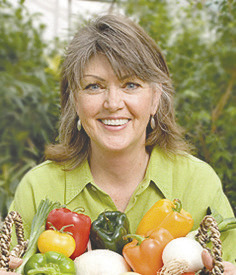
Ellen Peffley Harp, a retired professor of horticulture at Texas Tech University, writes about gardening for several Texas newspapers.